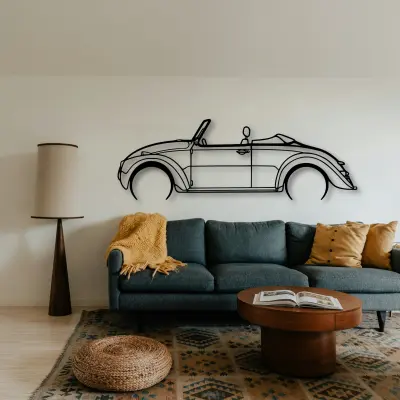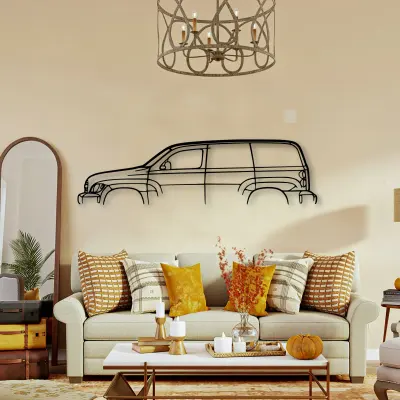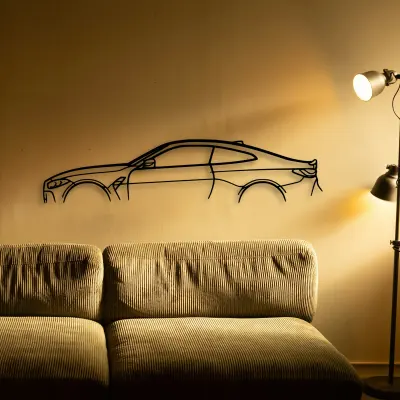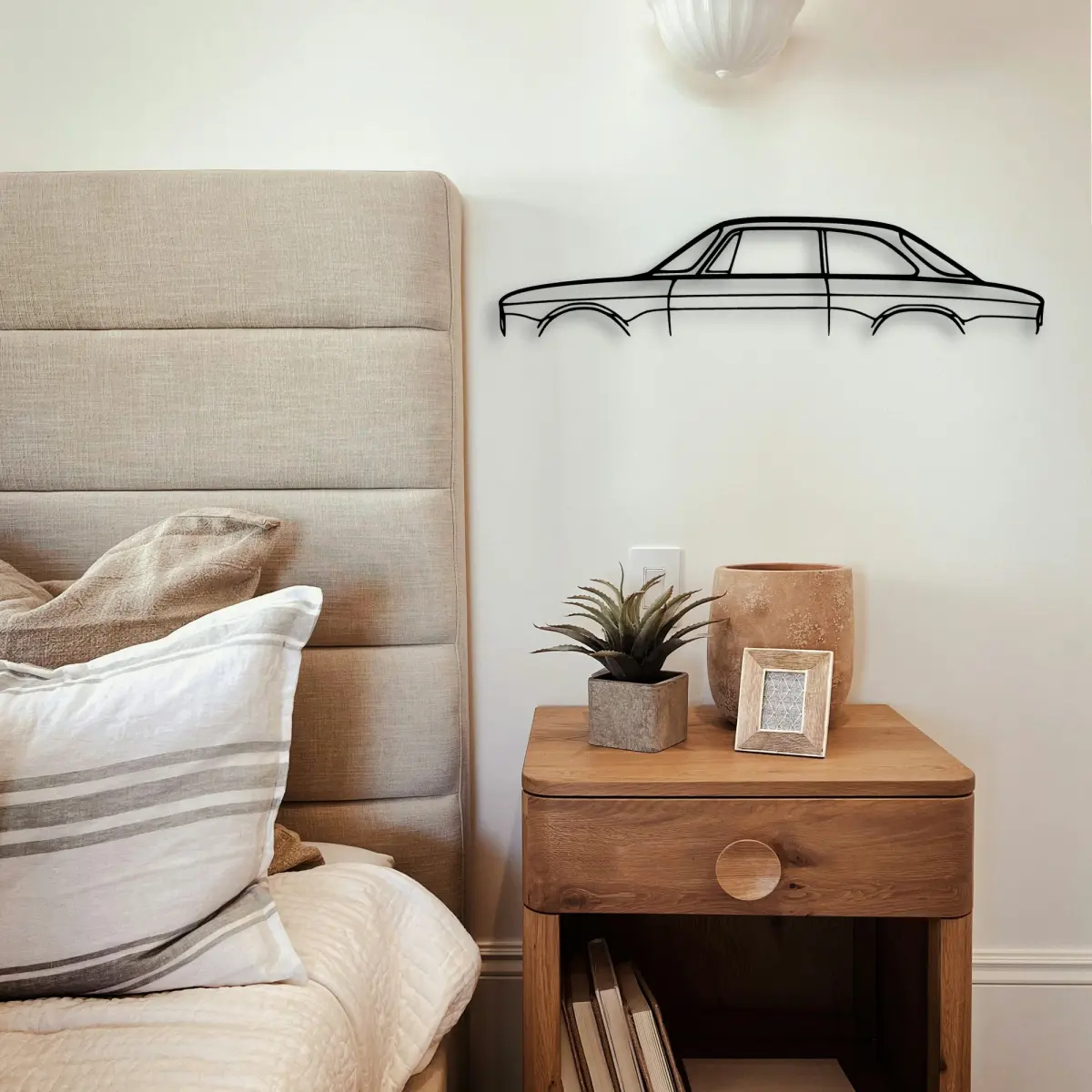
When you reduce a Alfa Romeo Gtv 1973 to one line, every proportion has to earn its place. That is what makes silhouette wall art a different kind of collectible, and why the Alfa Romeo Gtv 1973 rewards a second look.
The Alfa Romeo Gtv 1973 dates to 1973, and that year's proportions are exactly what the cut outline keeps, the roofline and the stance are period-correct, not stylised.
The Alfa Romeo Gtv 1973 pieces in our range are cut from sheet metal and delivered ready to fix to the wall, with the price stepping from $69.95 at 50 cm to $209.95 at 140 cm, a range that lets the same outline work above a desk or across a full wall.
Finish and care
A quick wipe keeps a Alfa Romeo Gtv 1973 presentable. There are no solvents to worry about and no glass to clean.
- indoor display; keep away from sustained damp.
- Mount with the supplied fixings; light pieces need only a single secure point.
- Dust with a dry cloth, no solvents required.
Why metal, not print
A print flattens a car into a rectangle. A cut silhouette keeps the car's own shape as the edge of the object, so the Alfa Romeo Gtv 1973 comes across as a form on the wall rather than a picture of one.
The difference between a print and a cut silhouette is the difference between a photo of a car and the car's own shadow.
Cut-metal pieces
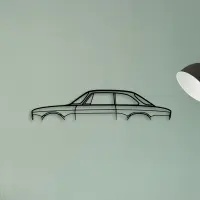
How the piece is made
Each Alfa Romeo Gtv 1973 silhouette starts as a digital profile of the car, then is cut from sheet metal. The result is a single clean edge, no frame, no glass, no colour.
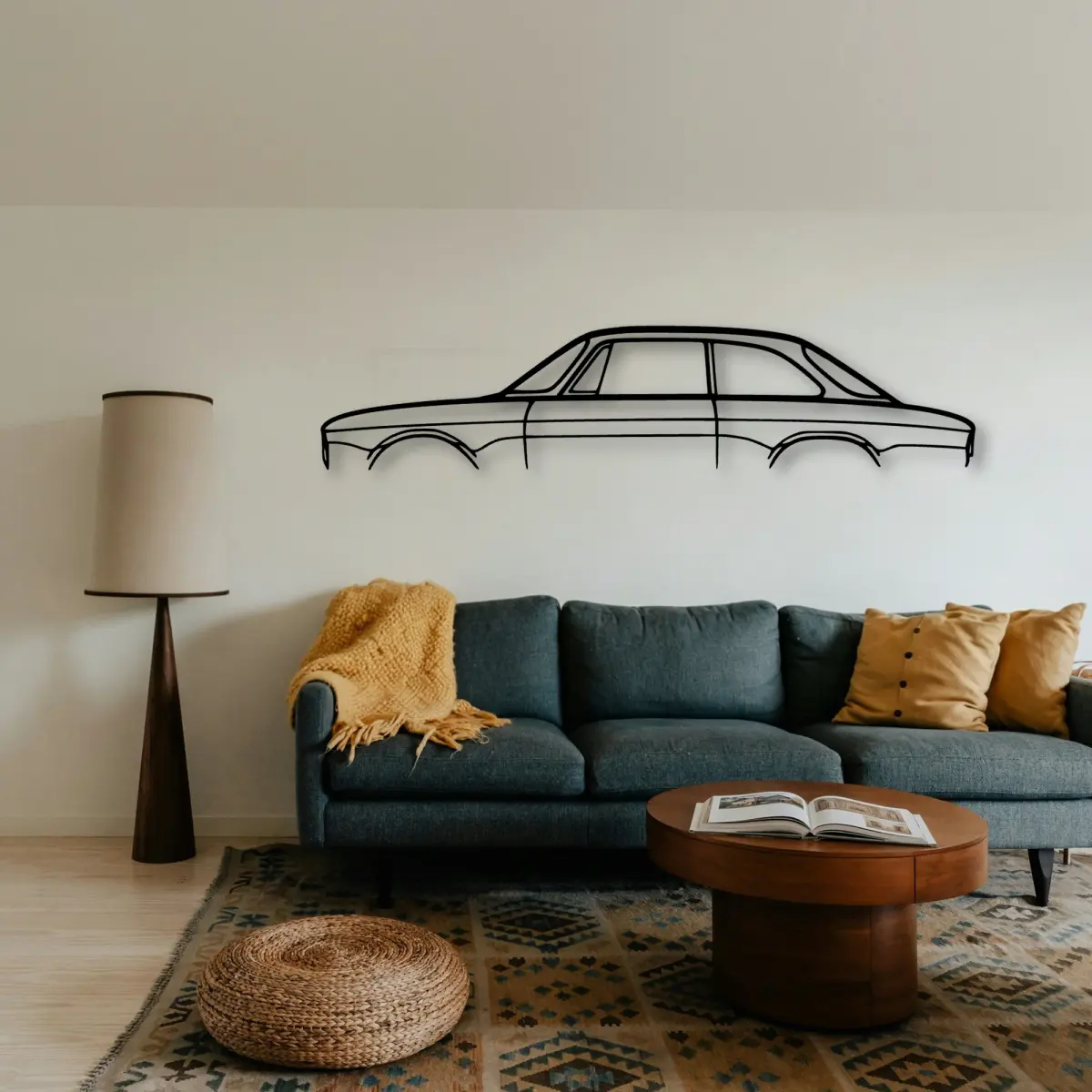
Why this outline holds up
As a Alfa Romeo shape, the Alfa Romeo Gtv 1973 carries a brand outline you recognise before you read a badge, which is why the silhouette works as wall art.
The difference is the edge. A print has a rectangular border; a Alfa Romeo Gtv 1973 silhouette is bounded by the car itself.
The pieces are made for indoor walls and mount with the included fixings. Because there is no exposed paper or canvas, they are robust to the bumps of a hallway or a garage.
The Alfa Romeo Gtv 1973 is cut, not printed. The car's own outline becomes the edge of the object, which is why it works as a form rather than a picture.
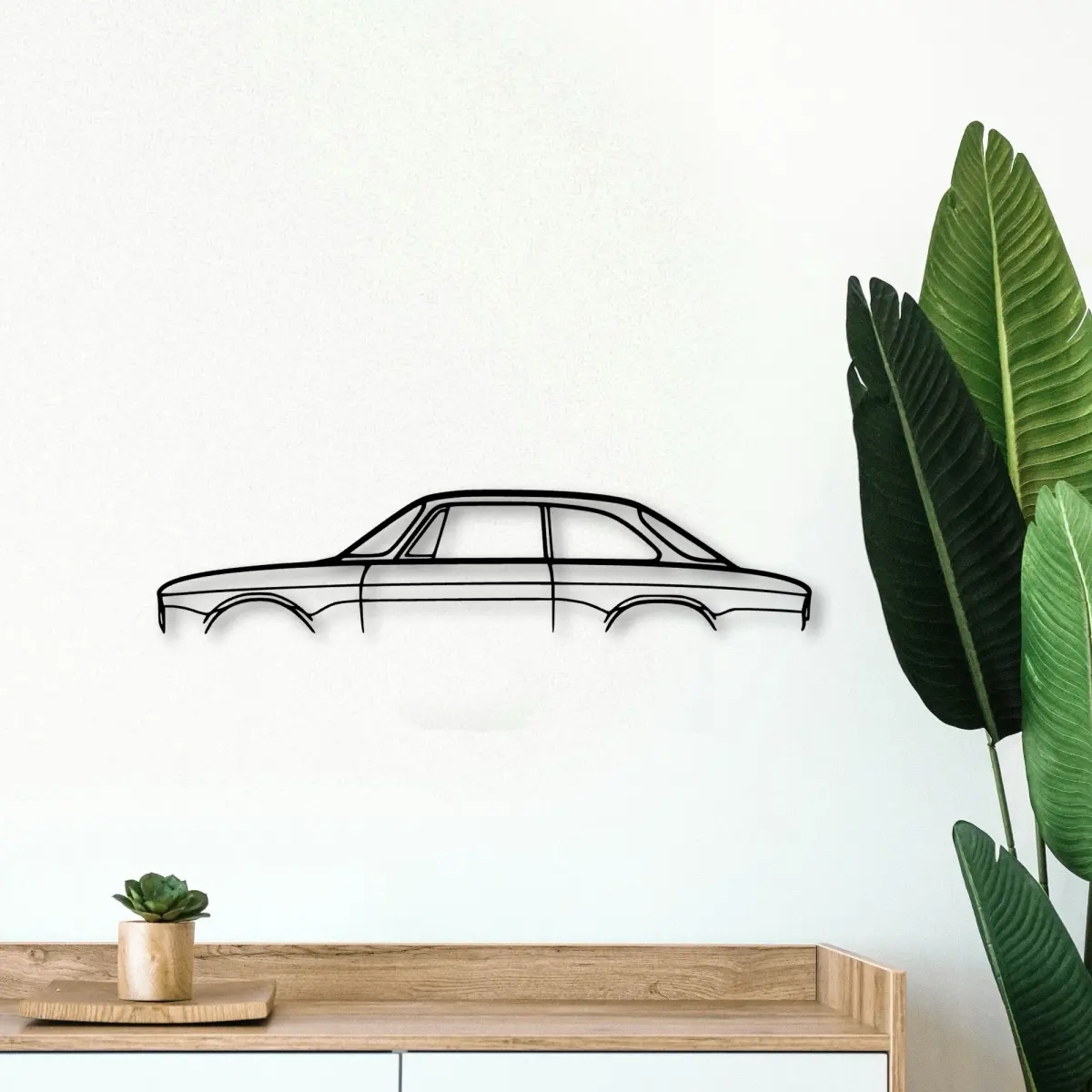
The silhouette is the cheapest way to own the shape without owning the car.
Drawn from the 1970s, the Alfa Romeo Gtv 1973 already had the roofline and stance that a laser-cut silhouette is built to preserve.
Quiet rooms suit a smaller silhouette; loud rooms need one that can hold its own from across the space.
A dedicated wall beats a crowded one. Give the car room and it repays the attention.
Resist the urge to fill. An empty margin around the outline is what makes it feel considered.
Think in edges, not pictures. The cut defines the object, and the shape defines the cut.
The room sets the size. A busy wall wants a bigger outline to hold its own; a calm wall lets a smaller piece breathe.