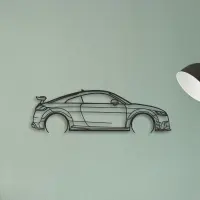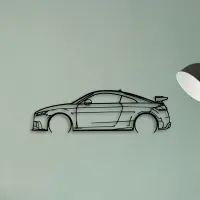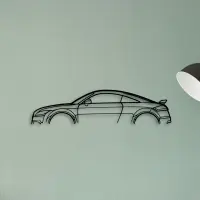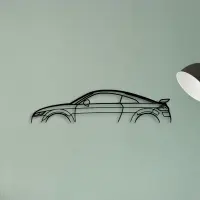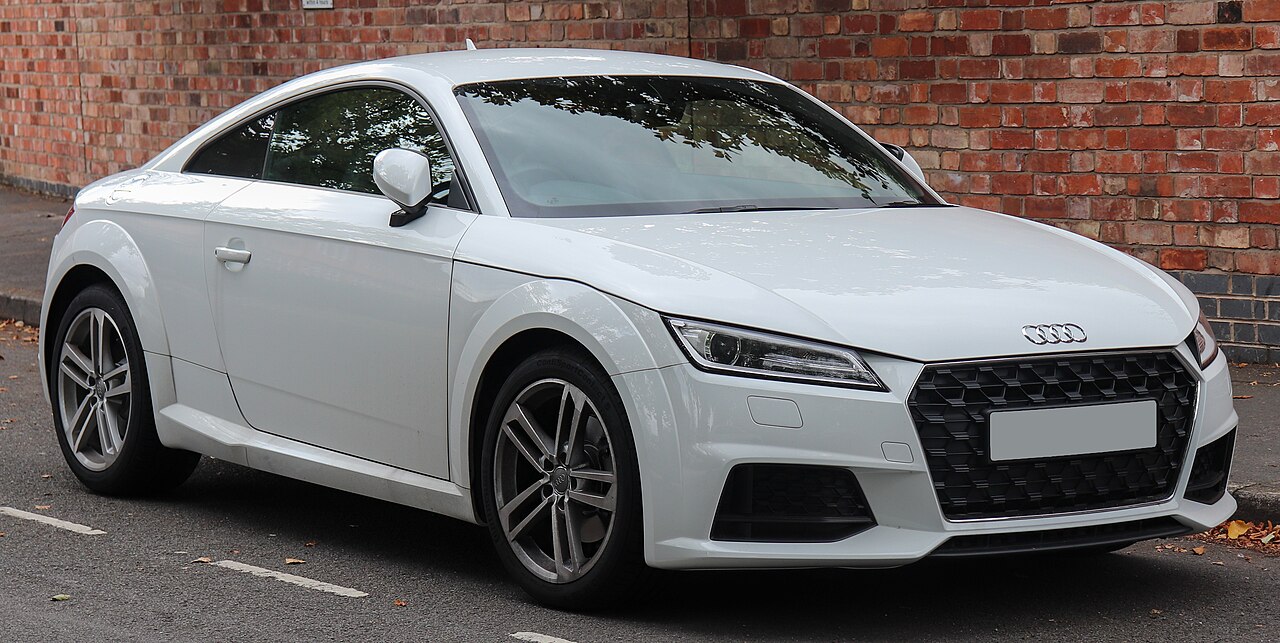
The Audi TT debuted in 1998 and instantly became one of the most recognisable cars of the 1990s, with a clean, Bauhaus-inspired shape that looked like nothing else on the road. Based on Volkswagen Group mechanicals but styled as a design statement, it proved that a relatively affordable sports coupe could also be a genuine style icon.
Generations and evolution
8N (1998–2006)
The original, by designer Freeman Thomas — a pure, rounded coupe and roadster that defined 1990s car design.
8J (2006–2014)
A more muscular second generation that kept the TT's spirit while adding everyday usability and more power.
8S (2014–2023)
A sharper, more angular evolution with a virtual cockpit, carrying the TT's design DNA into the modern era.
Design language and the silhouette
The TT is all about pure shape: a rounded, almost aluminium-lump silhouette, a wide low stance and clean surfaces. That first-generation profile is one of the most distilled sports-car designs of the modern age. Because we cut every Tinvibe piece from 2 mm steel to the car's true outline, the traits that make the Audi TT recognizable — its roofline, stance and key details — are exactly what the metal keeps, in matte black powder coat across five sizes from 50 cm to 140 cm.
Production, sales and availability
Audi has not published a single lifetime TT total across its generations, so we avoid quoting one. The first-generation 8N is already regarded as a modern classic.
The TT in the Tinvibe collection
We cut the Audi TT as a laser-cut steel silhouette in five sizes from 50 cm to 140 cm, finished in matte black powder coat. The designs below are drawn from our catalogue for this nameplate.