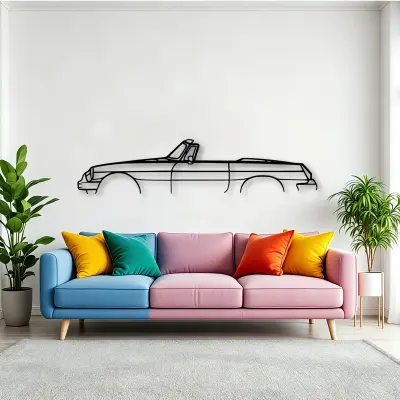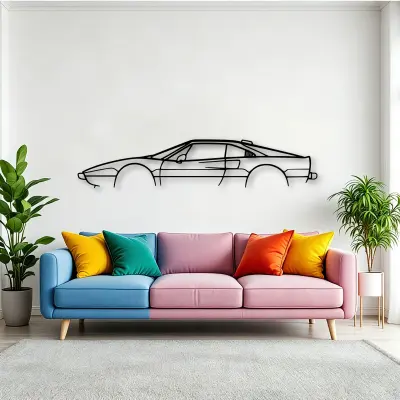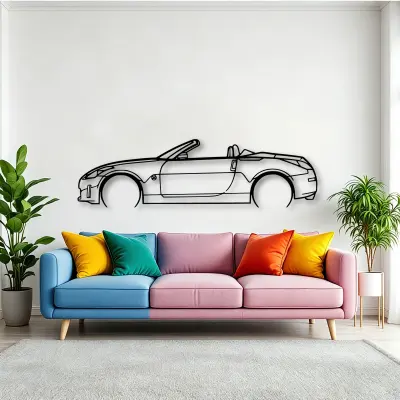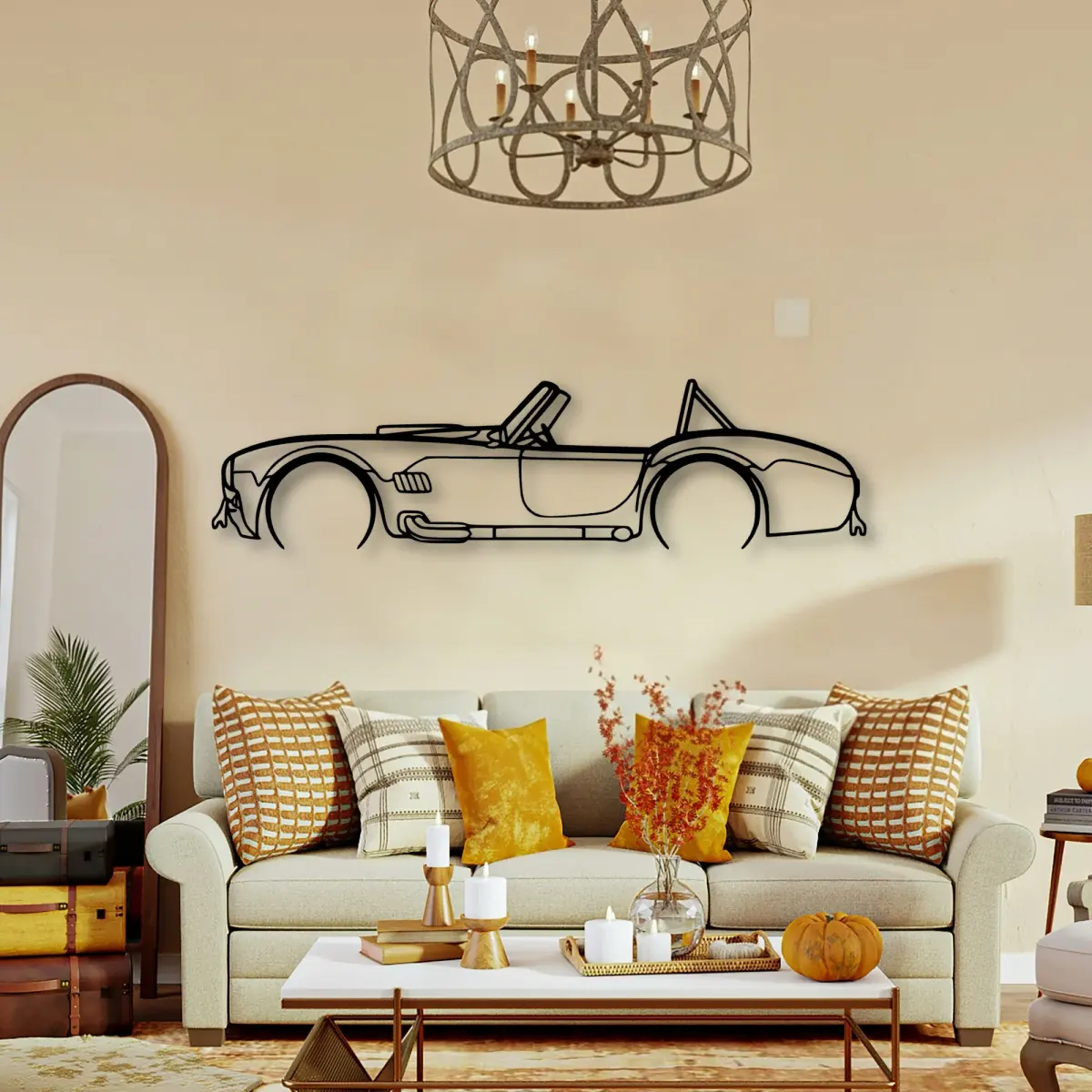
A laser-cut Shelby & Cobra piece carries no colour of its own, which makes it a forgiving subject — and a demanding one, because every shadow counts.
The Shelby & Cobra Cobra 1966 dates to 1966, and that year's proportions are exactly what the cut outline keeps — the roofline and the stance are period-correct, not stylised.
The Shelby & Cobra pieces in our range are cut from sheet metal and delivered ready to mount, with the price stepping from $69.95 at 50 cm to $209.95 at 140 cm — a range that lets the same outline work by a workstation or across a full wall.
More than one on the backing
If you collect, let the Shelby & Cobra be one of a set with a rule. Next to its rivals, the differences are obvious.
Build the set
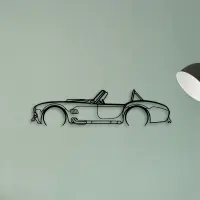
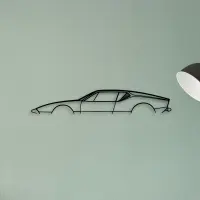
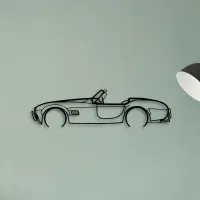
Era written into the line
You can often date a Shelby & Cobra by its roof alone. The cut keeps those period cues so the shape reads as a moment without a caption.
Small pieces deserve detail
A 50 cm Shelby & Cobra profile is easy to overlook but great to photograph. Get close and show the cut edge as a detail, not a thumbnail.
Reading it from across the room
A Shelby & Cobra profile has to work at distance, not just up close. At 120 cm it keeps its identifying line legible from the other end of the room.
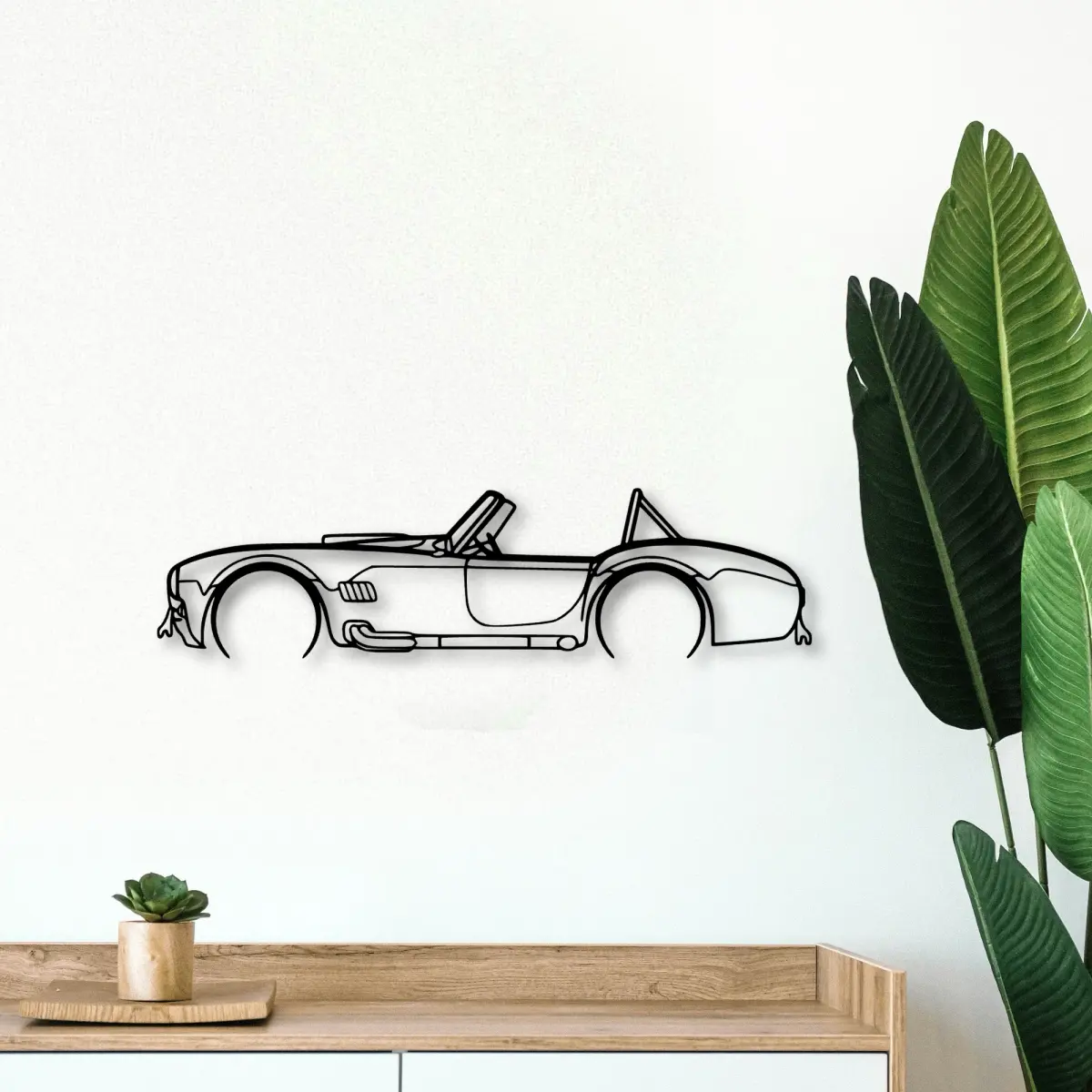
Why it suits a den wall
Garages reward honest shapes. The Shelby & Cobra cut from steel belongs there in a way a framed poster never quite does.
Size ladder, one outline
Size ladder, one outline. The Shelby & Cobra is offered from a 50 cm shelf piece up to a 140 cm statement, all cut to the same profile.
- 50 cm — a shelf or a study; an accent, not a feature.
- 80 cm — still modest, but reads across a doorway.
- 100 cm — the safe feature-wall default.
- 120 cm — for rooms where the car is the subject.
- 140 cm — the full statement piece.
Light from the side reveals the cut; light from the front flattens it. Aim for the reveal.
A row of identical small frames fights itself. One larger outline settles the backing instead.
Scale matters more than people expect. A piece that is too small disappears; one that is sized to the backing reads as intentional from the doorway.
The right size is the one you forget to notice because it fits the backing so well.
The room sets the size. A busy wall wants a bigger outline to hold its own; a calm wall lets a smaller piece breathe.
Metal keeps its line. Unlike paper, it will not curl, fade, or bow under a warm lamp.
Read it from the doorway, not up close. The whole point is the gesture the line makes at a distance.
Placement is a quiet decision. Sightline for a statement wall, slightly by a workstation, and well clear of a door swing that would clip it.
A profile travels. Move it between rooms and it still makes sense, because the shape is the message.
Hang it where the light lands first. The edge you notice on the way in is the edge worth cutting.