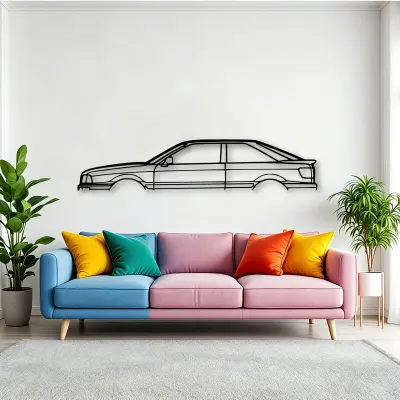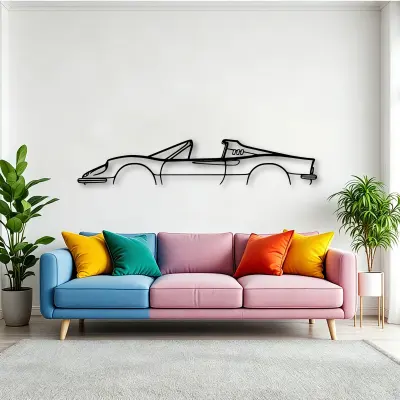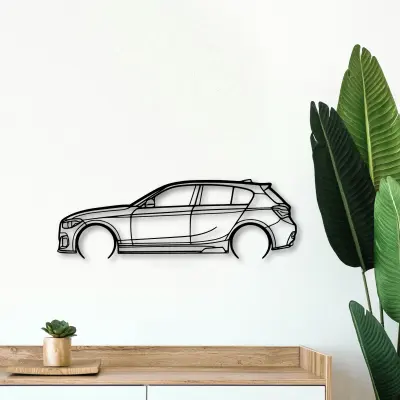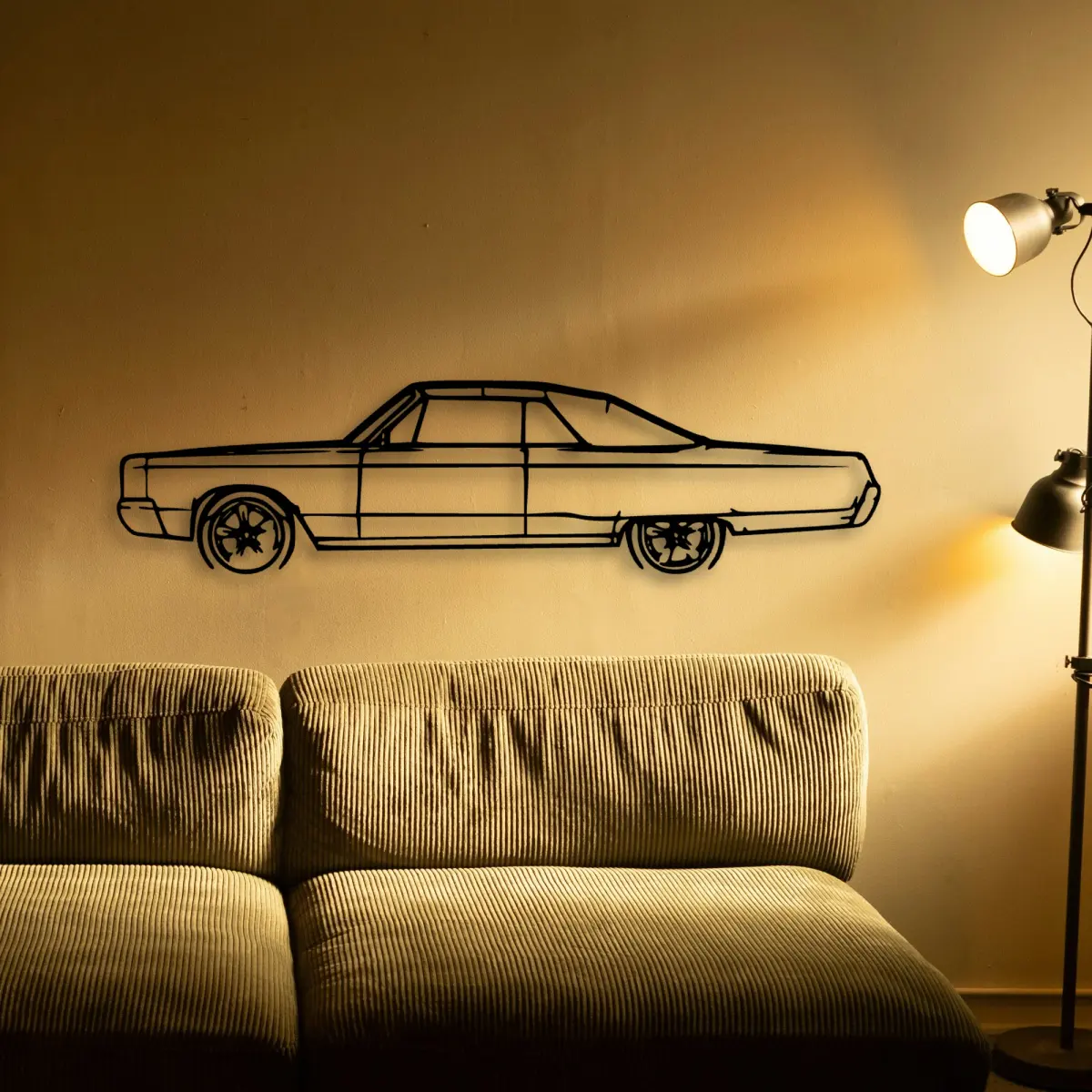
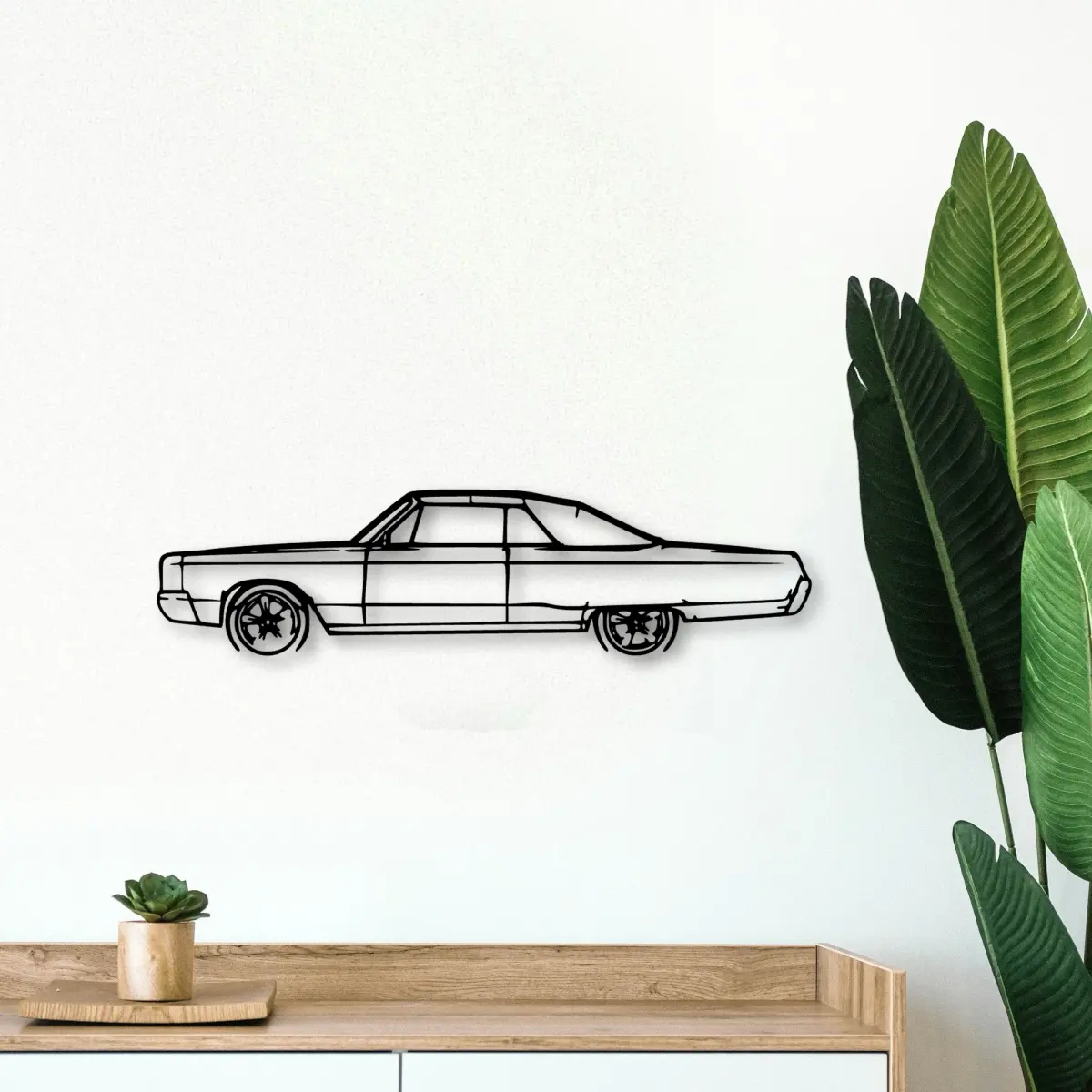
Most car art chases a colour, a badge or a moment. A laser-cut outline does something harder and more honest: it keeps only the stance, and asks the Chrysler Newport Convertible 1967 to carry its whole character in a single edge.
The Chrysler Newport Convertible 1967 dates to 1967, and that year's proportions are exactly what the cut outline keeps, the roofline and the stance are period-correct, not stylised.
At Tinvibe the Chrysler Newport Convertible 1967 is offered as a laser-cut outline in five options, from 50 cm to 140 cm, finished for indoor wall display. The smaller sizes suit a shelf or a study; the larger sizes take a full shed or living-room wall.
How the piece is made
The Chrysler Newport Convertible 1967 is cut, not printed. The car's own outline becomes the edge of the object, which is why it reads as a form rather than a picture.
Finish and care
A quick wipe keeps a Chrysler Newport Convertible 1967 presentable. There are no solvents to worry about and no glass to clean.
- wall display; keep away from sustained damp.
- Mount with the supplied fixings; light pieces need only a single secure point.
- Dust with a dry cloth, no solvents required.
Why metal, not print
The difference is the edge. A print has a rectangular border; a Chrysler Newport Convertible 1967 shape is bounded by the car itself.
The difference between a print and a cut shape is the difference between a photo of a car and the car's own shadow.
Cut-metal pieces
Why this outline holds up
As a Chrysler shape, the Chrysler Newport Convertible 1967 carries a brand outline you recognise before you read a badge, which is why the shape works as wall decor.
Each Chrysler Newport Convertible 1967 shape starts as a digital profile of the car, then is formed from sheet metal. The result is a single clean edge, no frame, no glass, no colour.
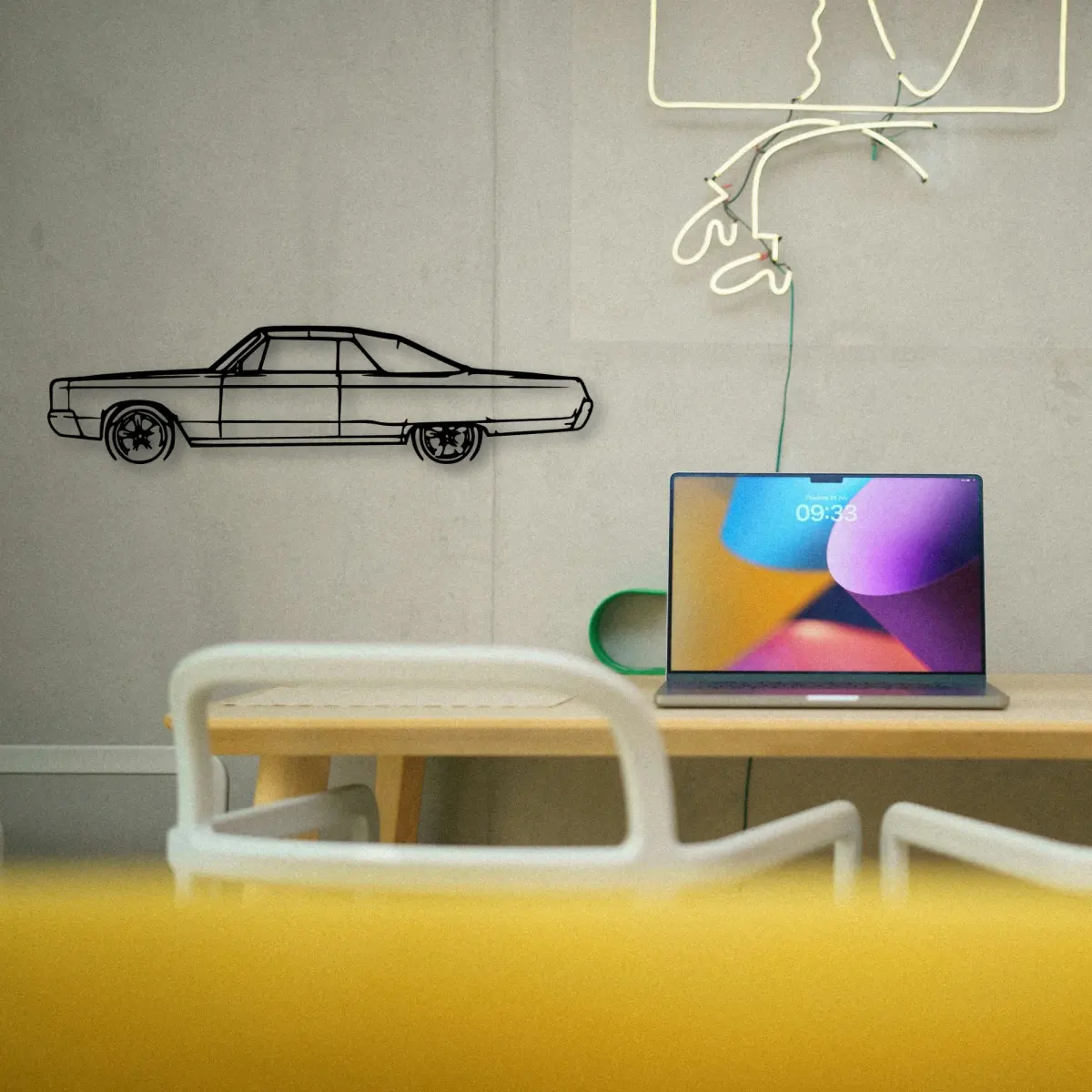
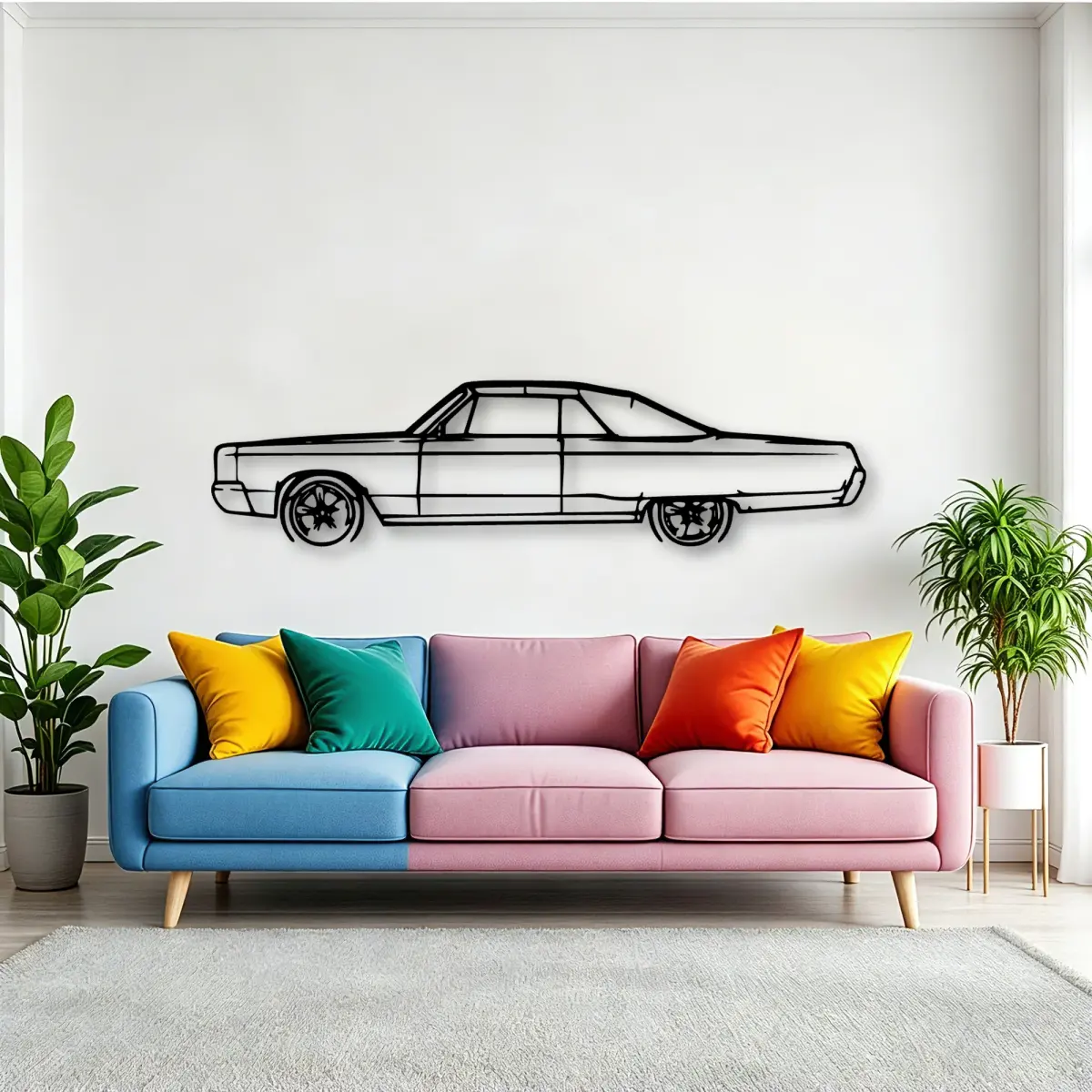
The pieces are finished for indoor wall display and mount with the included fixings. Because there is no exposed paper or canvas, they are robust to the bumps of a hallway or a shed.
A print flattens a car into a rectangle. A cut shape keeps the car's own shape as the edge of the object, so the Chrysler Newport Convertible 1967 reads as a form on the wall rather than a picture of one.
The convertible body style is the reason the Chrysler Newport Convertible 1967 reads as it does from the side; the cut keeps those proportions rather than smoothing them away.
Drawn from the 1960s, the Chrysler Newport Convertible 1967 already had the roofline and stance that a laser-cut shape is built to preserve.
Colour is optional here. The outline carries the identity, so the wall behind it can stay exactly as it is.
Think in edges, not pictures. The cut defines the object, and the shape defines the cut.