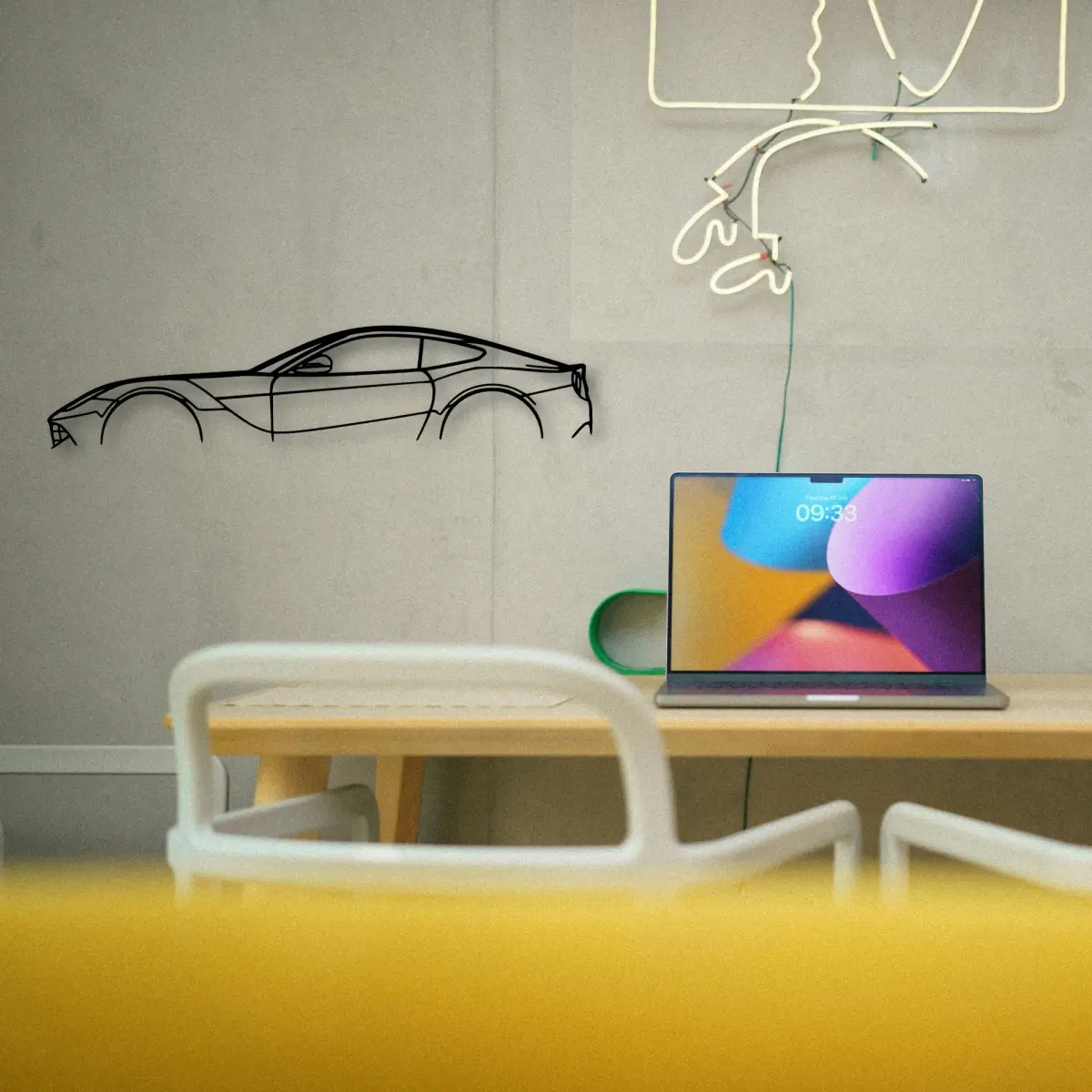
A cut-metal silhouette strips a Ferrari F12 back to the one thing that makes it recognisable: its outline. That outline is the whole point, and it is worth understanding before you choose a piece for the wall.
At Tinvibe the Ferrari F12 is offered as a laser-cut metal silhouette in five sizes, from 50 cm right up to 140 cm, finished for indoor display. The smaller sizes suit a shelf or a study; the larger sizes take a full garage or living-room wall.
See the outline
The Ferrari F12 in profile is the fastest way to judge the shape.
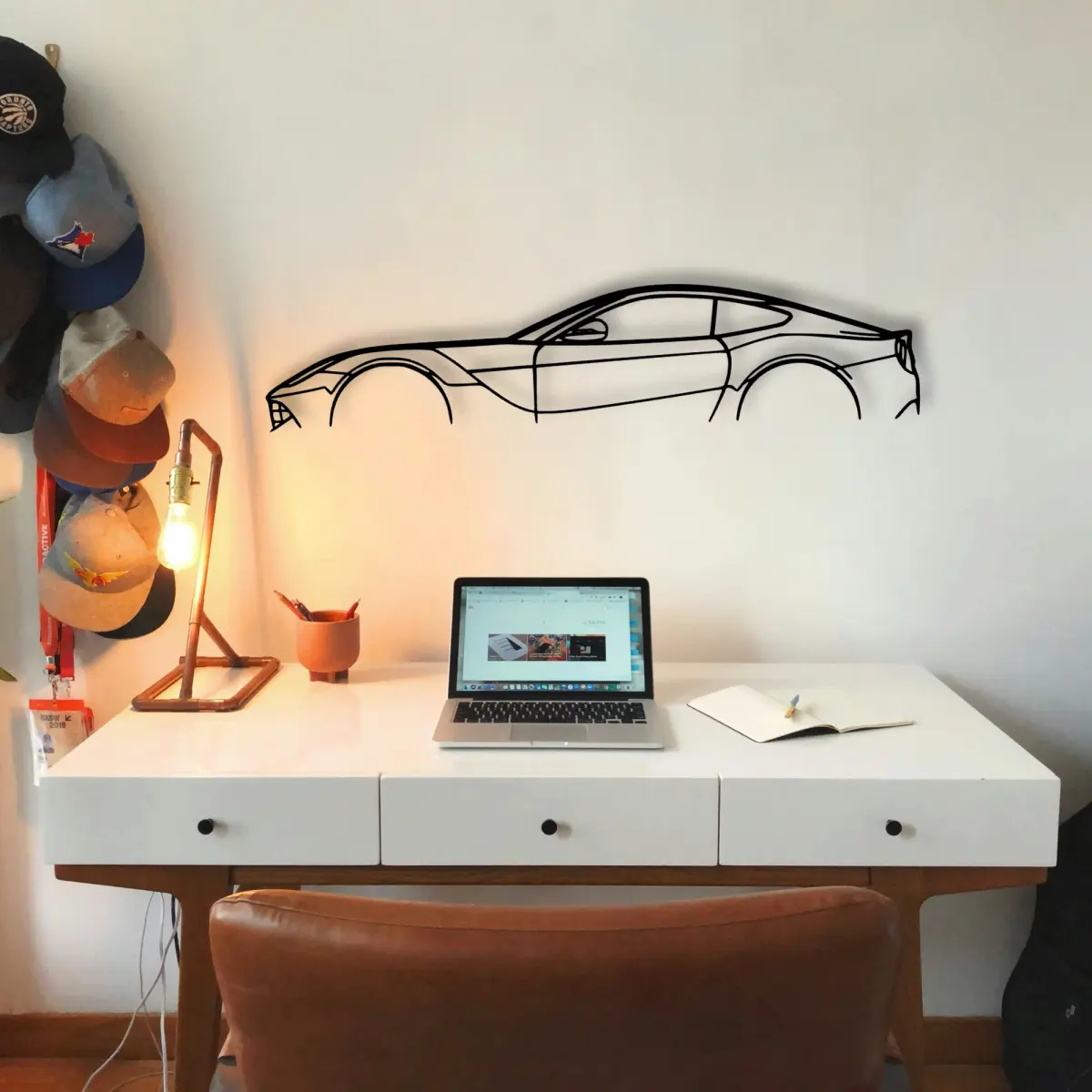
Make, written in the outline
You can often guess the make of a Ferrari F12 from the line alone. The Ferrari F12 is a small lesson in how a brand draws, reduced to a single edge.
Judging a cut piece
When you look at a Ferrari F12 silhouette, check that the line you remember from the real car is the line that survived the cut. If it is, the piece reads correctly from from the other side of the room.
A good silhouette is not a drawing of a car. It is the one line the car cannot hide.
See the line for yourself
Why it suits a garage wall
A Ferrari F12 in cut metal is built for the spaces cars actually live in. The Ferrari F12 over a workbench or a parked car reads instantly, because the room already speaks the same language.
Cut versus photograph
A photo of a Ferrari F12 includes reflections, shadows and context that distract. The cut removes all of it and leaves the line, so the Ferrari F12 reads as a shape rather than a snapshot.
Overhangs front and rear
The distance the body reaches past the wheels, the overhangs, is pure silhouette language. A short front overhang on the Ferrari F12 makes it look eager; a long one makes it look settled.
- Short overhangs read as sporty and taut.
- Long rear overhangs read as touring or load-carrying.
- The balance between the two is the car's attitude in one line.
Why this outline holds up
As a Ferrari shape, the Ferrari F12 carries a brand outline you recognise before you read a badge, which is why the silhouette works as wall art.
A good cut keeps the line you already know. If the Ferrari F12 silhouette matches the outline in your memory, it will read as the car.
How it works as a silhouette
In outline, the Ferrari F12 is defined by the rise of the beltline. Those are the things a silhouette artist has to get right.
- The beltline: where glass meets body, the strongest horizontal in the profile.
- The roofline: its curve or flatness sets the whole mood of the piece.
- The wheelbase: long or short, it is what makes the car look planted or lively.
Take the panels away and the Ferrari F12 is just a few strong lines. Get those lines right and the Ferrari F12 reads correctly from across the room.
The character line
The Ferrari F12 gets its tension from a single pressed line along the flank. A silhouette can only hint at it, but placed right, that hint is all the brain needs.
Cropping the profile
A silhouette is a deliberate crop: wheels, glass, roof, and nothing else. For the Ferrari F12, the crop is the argument, it says these few lines are the whole car. The Ferrari F12 lives or dies by that decision.
- Full side: the complete proportion.
- Low crop: roofline and stance.
- Rear-biased: overhang and tail character.