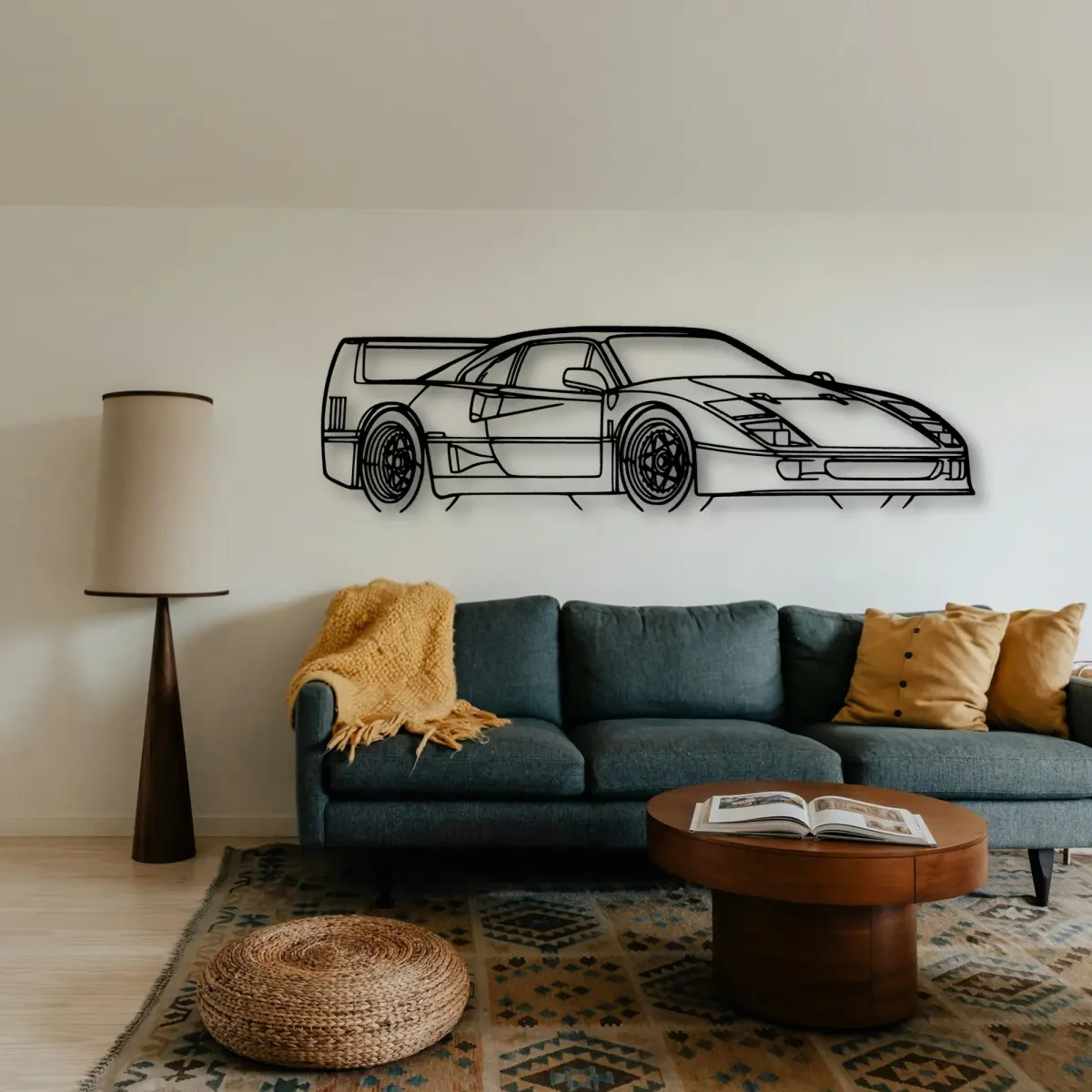
Most car art chases a colour, a badge or a moment. A laser-cut metal silhouette does something harder and more honest: it keeps only the side profile, and asks the Ferrari F40 to carry its whole character in a single edge.
At Tinvibe the Ferrari F40 is offered as a laser-cut metal silhouette in five different sizes, from 50 cm right up to 140 cm, built for indoor display. The smaller sizes suit a shelf or a study; the larger sizes take a full garage or living-room wall.
The racing outline
A motorsport profile is all attitude. The Ferrari F40 keeps the low, wide read that makes the shape read as speed even when it is bolted still.
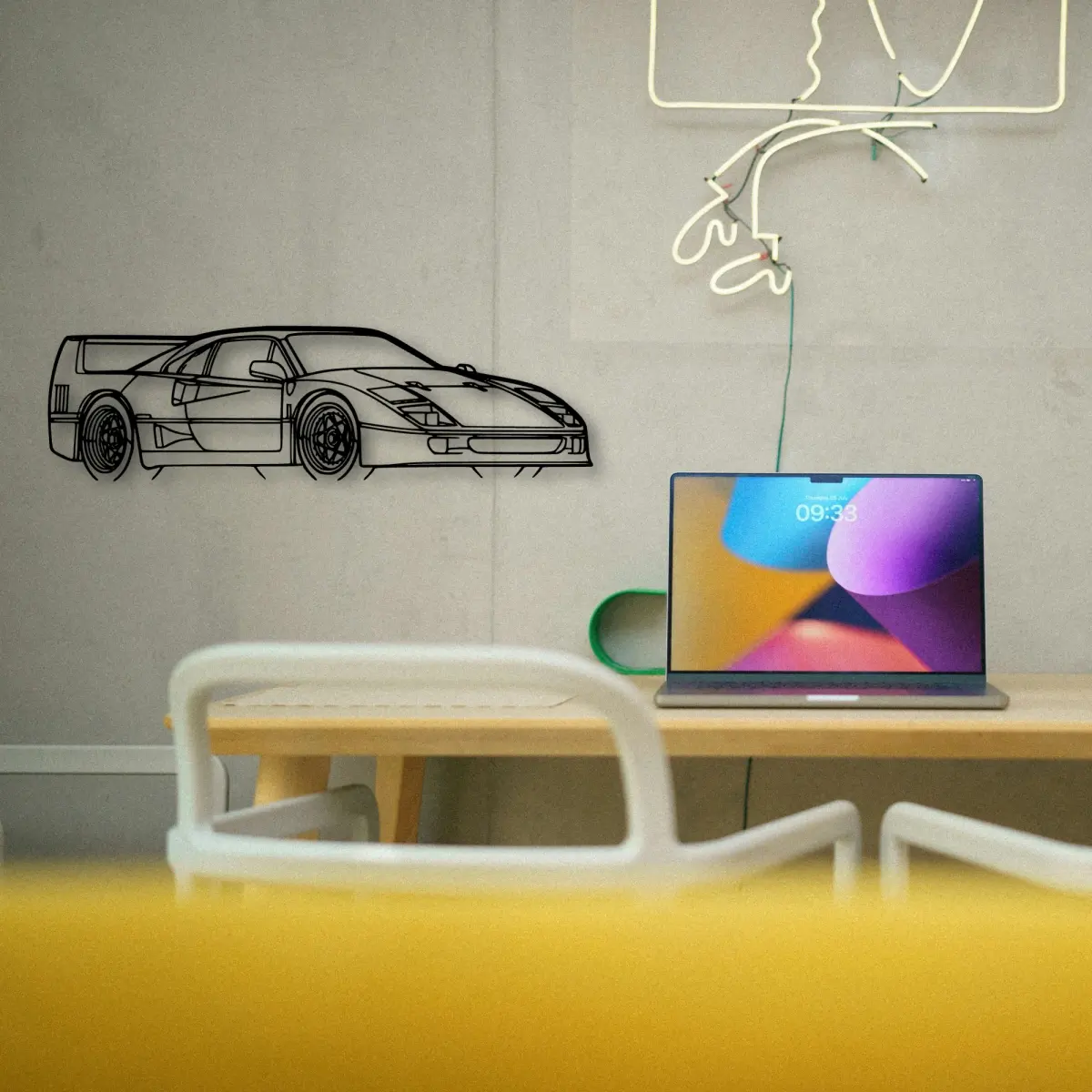
Sizing a tribute wall
A tribute wall wants one anchor. A 120-140 cm Ferrari F40 piece gives the wall a centre without dictating a colour scheme.
- 120-140 cm as the anchor of a tribute wall.
- Pair with a smaller second car for depth.
- Keep the bottom edges aligned so the wall reads composed.
Why it works on a wall
No livery, no number round, just the shape. The Ferrari F40 works on a wall because the stance does the talking.
Performance silhouettes
Why this outline holds up
As a Ferrari shape, the Ferrari F40 carries a brand outline you recognise before you read a badge, which is why the silhouette works as wall art.
For a tribute wall, go large. A 120 cm or 140 cm Ferrari F40 outline holds its own next to a number plate or a helmet, and it will not clash because it carries nothing to clash with.
Race-bred cars have a particular silhouette: low, wide, and impatient. The Ferrari F40 keeps that shape in metal, and because a silhouette removes the livery, what is left is pure stance.
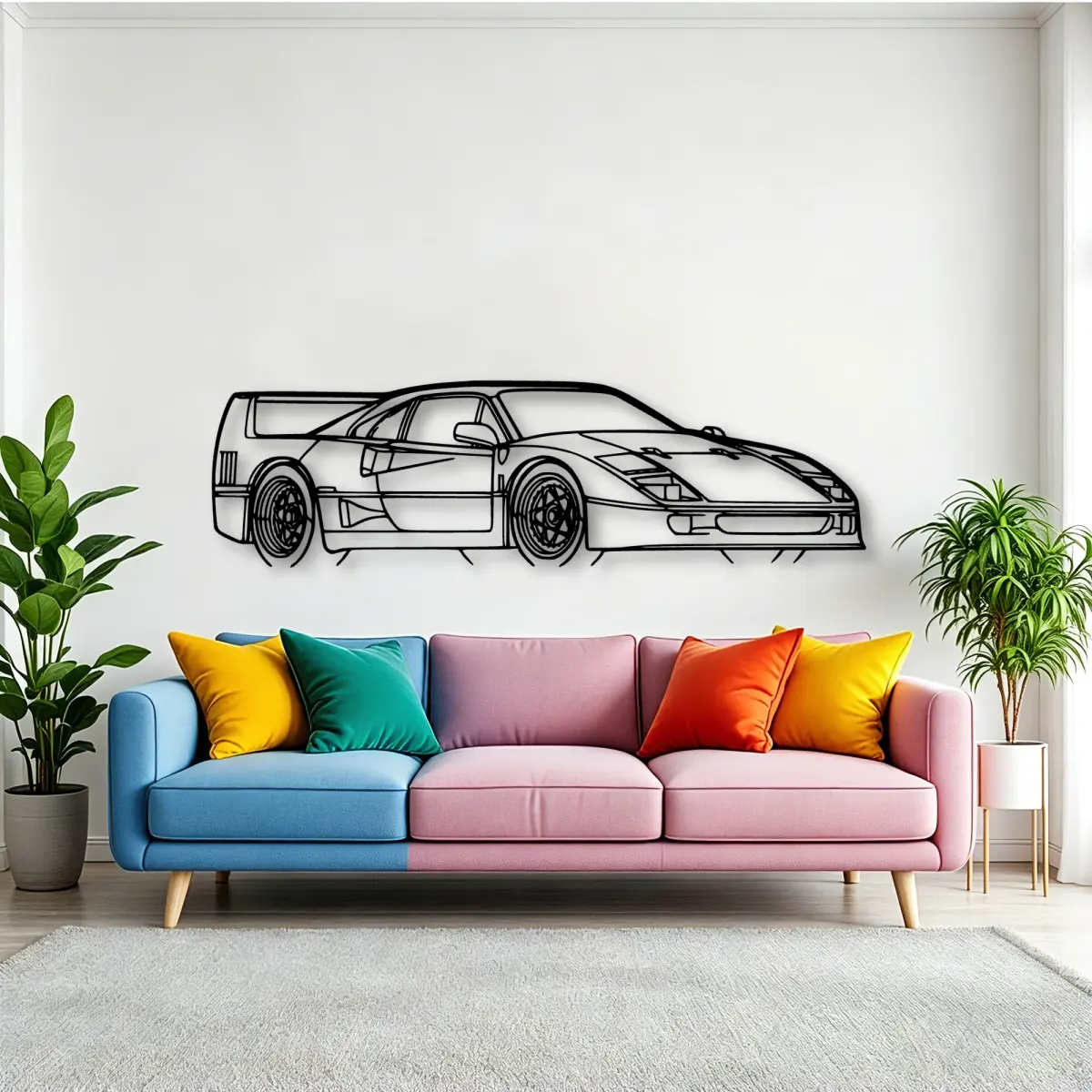
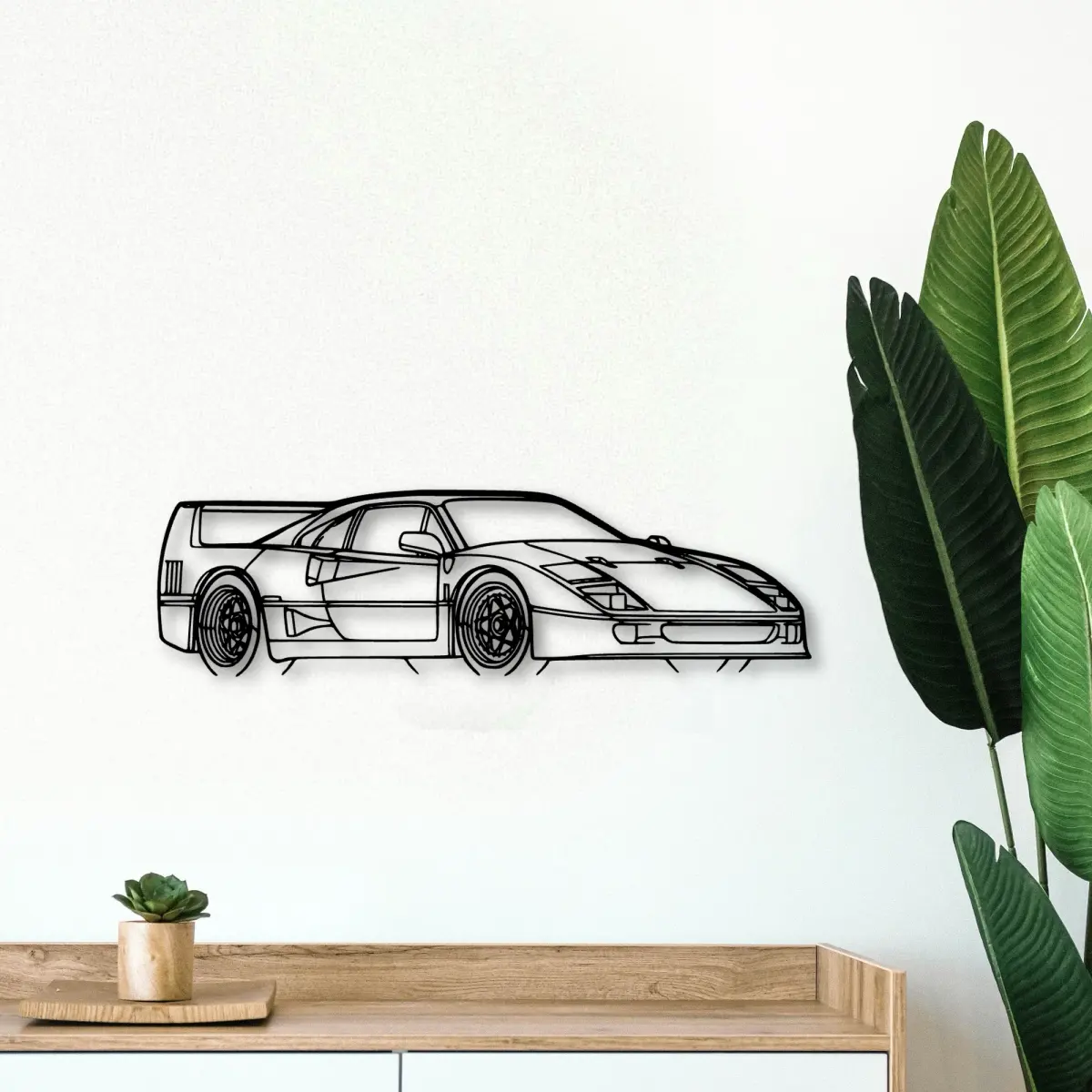
A Ferrari F40 outline reads like motion even when it is stationary. The proportion alone suggests speed, which is exactly why it suits a garage or a fan's study.
A silhouette travels. Move it between rooms and it still makes sense, because the shape is the message.
Resist the urge to fill. An empty margin around the outline is what makes it feel considered.
A laser-cut Ferrari F40 keeps the exact side profile measured from the real Ferrari, no colour, no livery, just the line that makes it recognisable.
The F40 is the specific car behind the Ferrari F40; the outline is taken from its production side profile, so the shape is the real one.
The shadow line is the second drawing. Where it falls tells you as much as the metal itself.
A single strong subject is easier to live with than a wall that argues with itself.
Treat the wall like a frame, not a shelf. One piece, placed with intent, is enough.
The car is the content; the cut is the grammar. Get the grammar right and the rest follows.
wall art works best when it earns its place rather than filling a gap. A single well-chosen outline does more than a row of hesitant decoration.
Think in edges, not pictures. The cut defines the object, and the shape defines the cut.