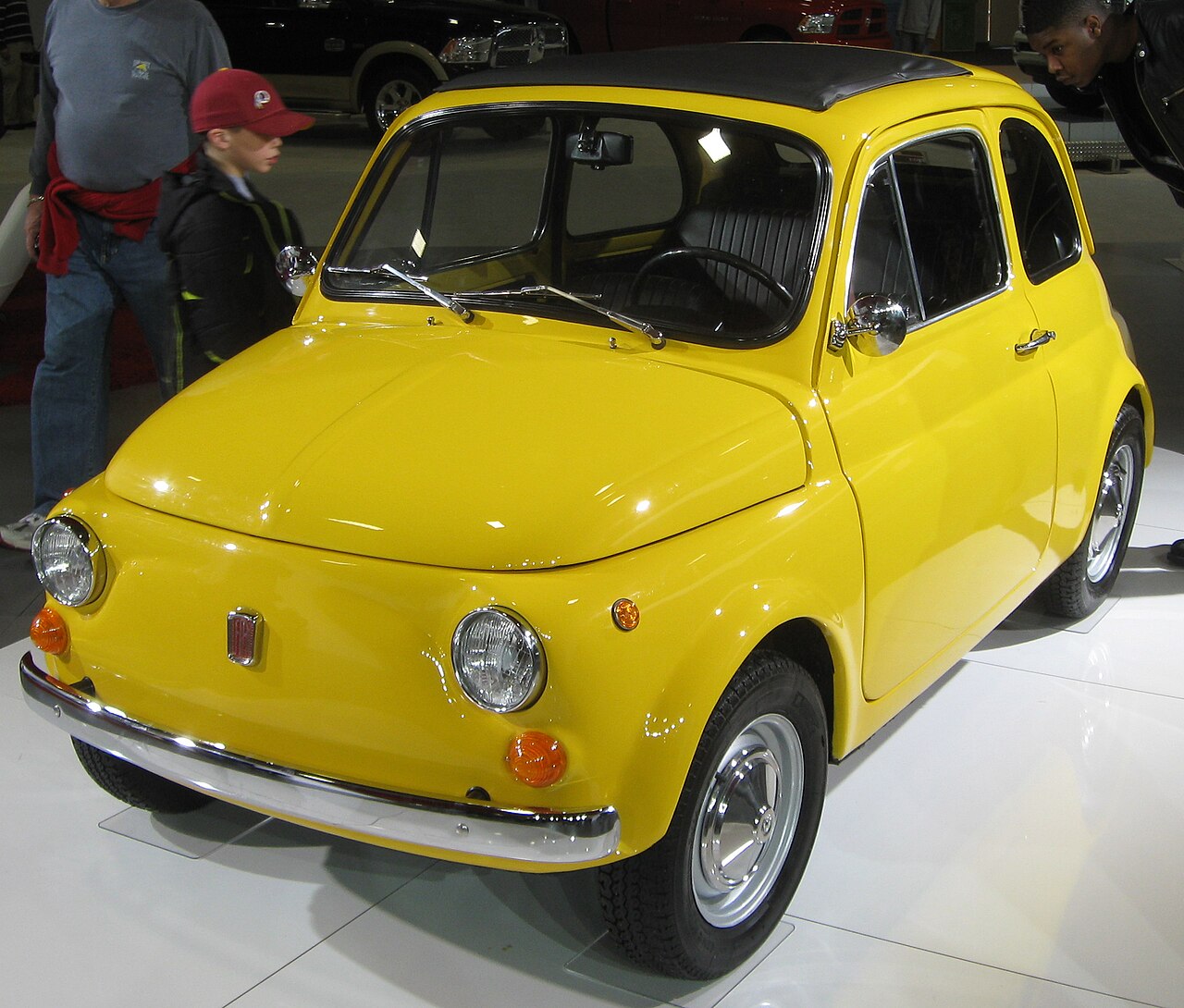
The Fiat 500 — the 'Nuova 500' — launched in 1957 as a tiny, rear-engined city car designed to motorise postwar Italy. Small, cheap and cheerful, it became an icon of la dolce vita and the defining car of the Italian economic miracle, staying in production until 1975 and inspiring a modern revival in 2007.
Generations and evolution
Nuova 500 (1957–1960)
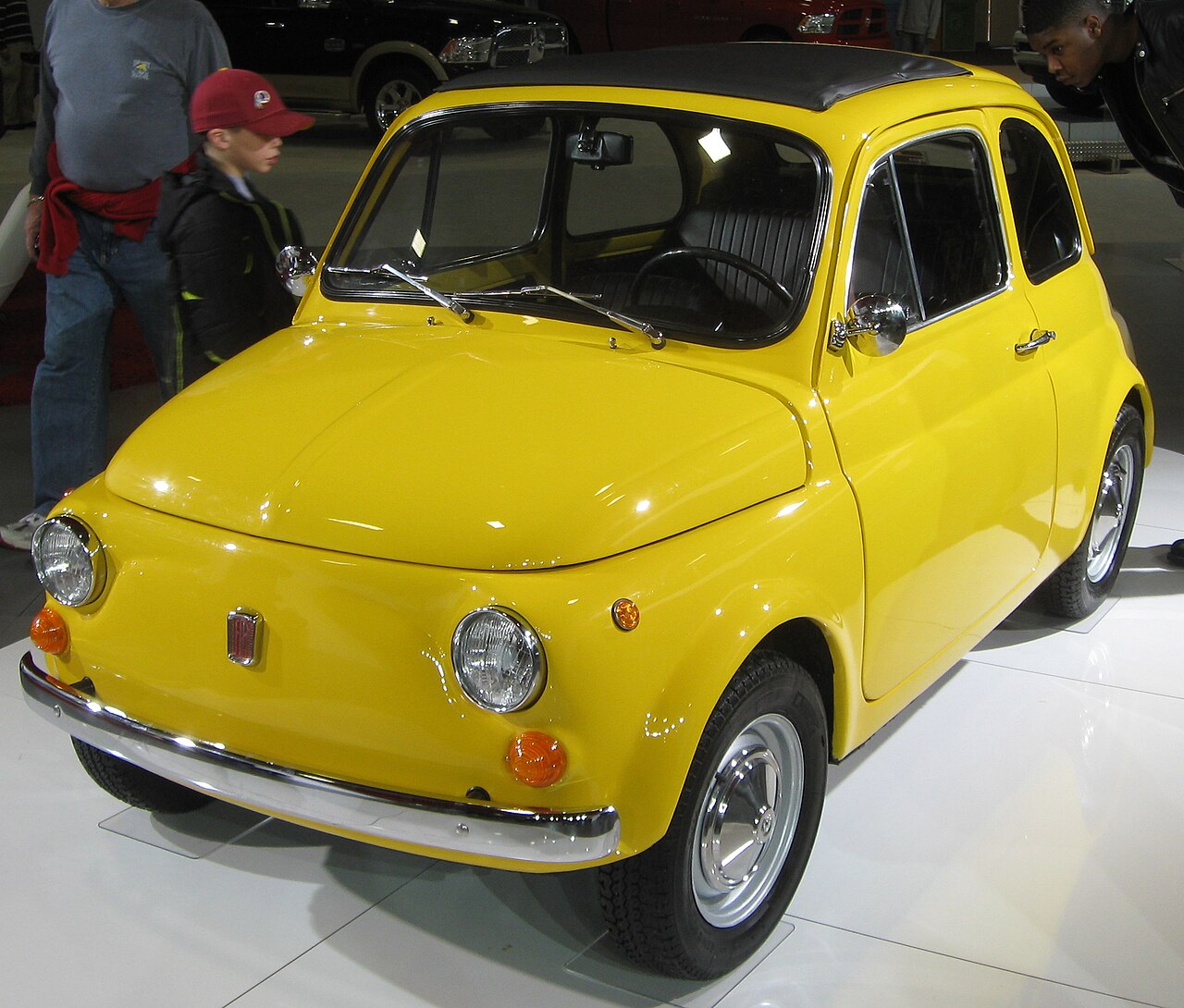
The original 479 cc two-cylinder rear-engined mini that established the template.
500 D, F, L and R (1960–1975)
A long run of updates — including the 500D with its sunroof — that kept the little Fiat in production for nearly two decades.
2007 revival (2007–present)
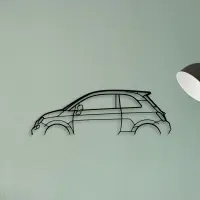
A modern, front-engine retro revival that carried the 500's charm into the 21st century.
Design language and the silhouette
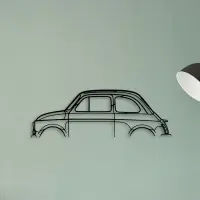
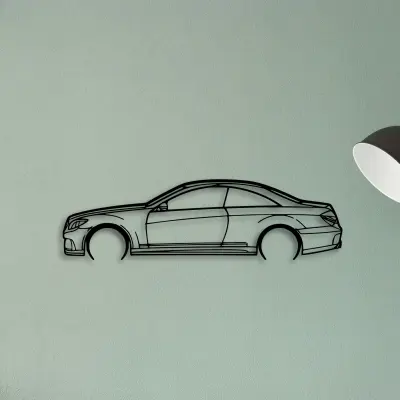
Pocket-sized and perfectly proportioned: a bubble-like cabin, rounded haunches and a friendly, upright face. The original's silhouette is one of the most charming in car history. Because we cut every Tinvibe piece from 2 mm steel to the car's true outline, the traits that make the Fiat 500 recognizable — its roofline, stance and key details — are exactly what the metal keeps, in matte black powder coat across five sizes from 50 cm to 140 cm.
Production, sales and availability
Fiat built the original 500 in the millions, making it one of Europe's best-loved small cars; the 1957–75 cars are now cherished classics.
The 500 in the Tinvibe collection
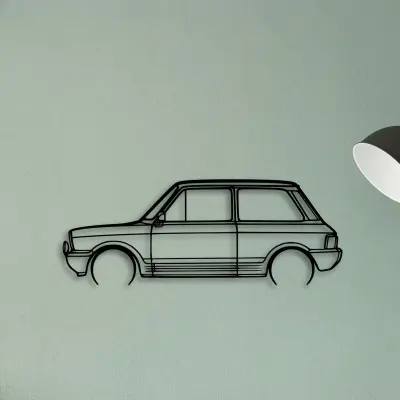
We cut the Fiat 500 as a laser-cut steel silhouette in five sizes from 50 cm to 140 cm, finished in matte black powder coat. The designs below are drawn from our catalogue for this nameplate.