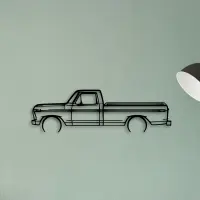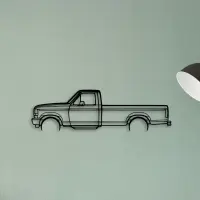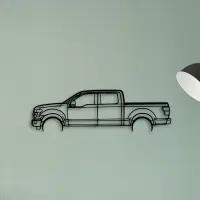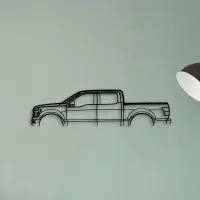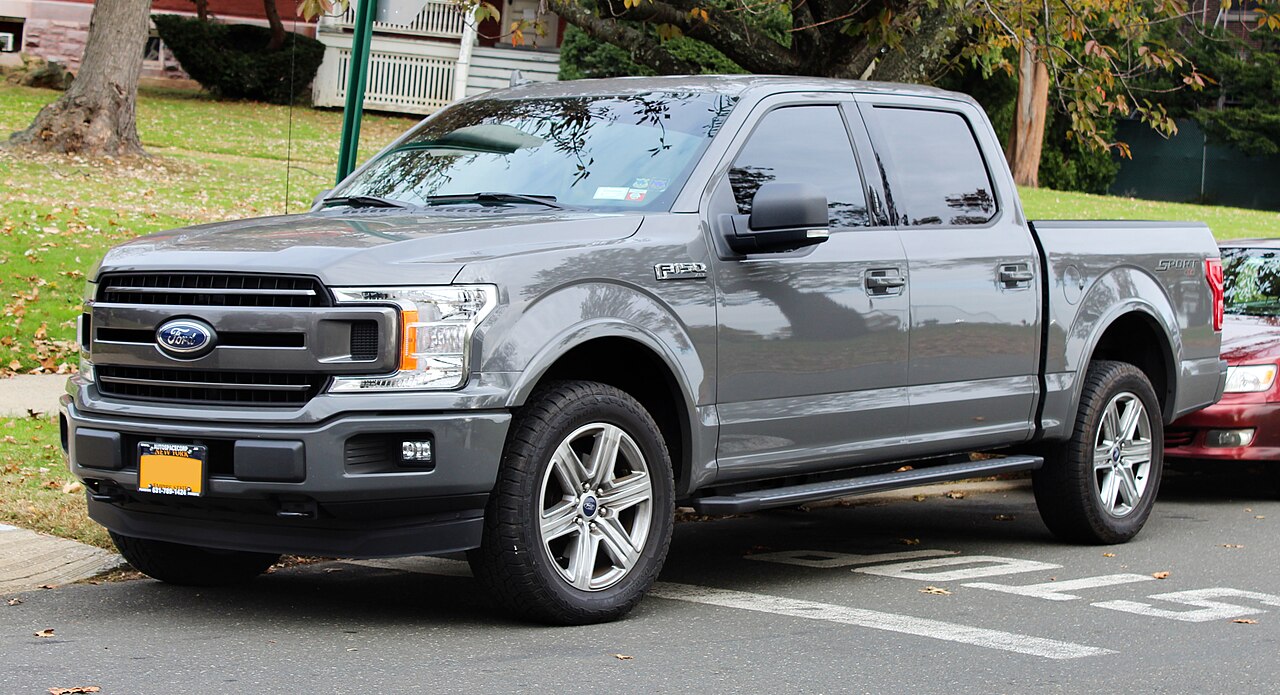
The Ford F-150 nameplate arrived in 1975 as part of Ford's long-running F-Series, which dates back to 1948. Positioned between the lighter F-100 and the heavier trucks, it quickly became the sweet spot of the range — and went on to be the best-selling vehicle in the United States for decade after decade, a position it still holds.
Generations and evolution
Early F-Series and the F-150 (1948–1979)
The original workhorse trucks, with the F-150 name introduced in 1975 to bridge the half-ton and three-quarter-ton gap.
Eighth generation 'Bullnose' (1980–1986)
A cleaner, more aerodynamic redesign that modernised the F-Series for the 1980s.
Ninth to eleventh generations (1987–2003)
Softer, more car-like trucks that broadened the F-150's appeal from pure work vehicle to everyday family transport.
Twelfth generation onward (2004–present)
The F-150 became a genuinely high-tech machine, with aluminium bodies, turbo and hybrid options and the F-150 Lightning electric pickup.
Design language and the silhouette
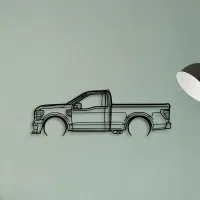
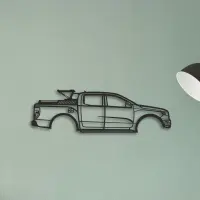
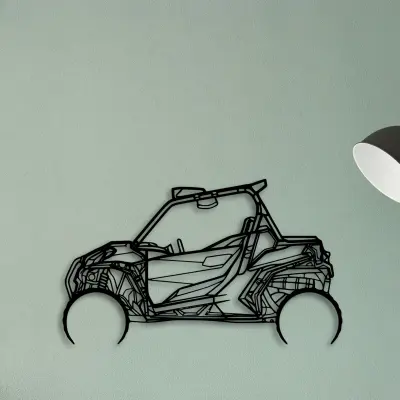
Big, square and confident: a tall grille, flared arches and a brawny shoulder line. Each generation has grown and softened, but the upright, capable stance has never really changed. Because we cut every Tinvibe piece from 2 mm steel to the car's true outline, the traits that make the Ford F-150 recognizable — its roofline, stance and key details — are exactly what the metal keeps, in matte black powder coat across five sizes from 50 cm to 140 cm.
Production, sales and availability
The F-Series is consistently among the best-selling vehicle lines in North America, and Ford has often sold well over half a million F-Series trucks in a single year; we don't quote a single lifetime figure because Ford reports sales annually.
The F-150 in the Tinvibe collection
We cut the Ford F-150 as a laser-cut steel silhouette in five sizes from 50 cm to 140 cm, finished in matte black powder coat. The designs below are drawn from our catalogue for this nameplate.