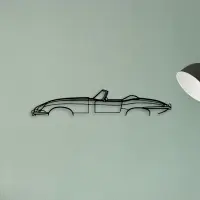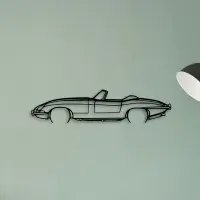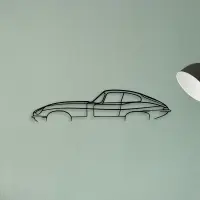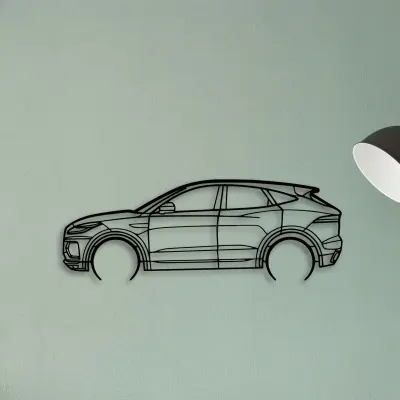
The Jaguar E-Type — sold in America as the XK-E — arrived in 1961 and was so striking that Enzo Ferrari reportedly called it the most beautiful car in the world. Combining racing-bred engineering, a 150 mph top speed and a sensuous shape, it offered supercar performance at sports-car prices and remains one of the most admired car designs ever made.
Generations and evolution
Series 1 (1961–1968)
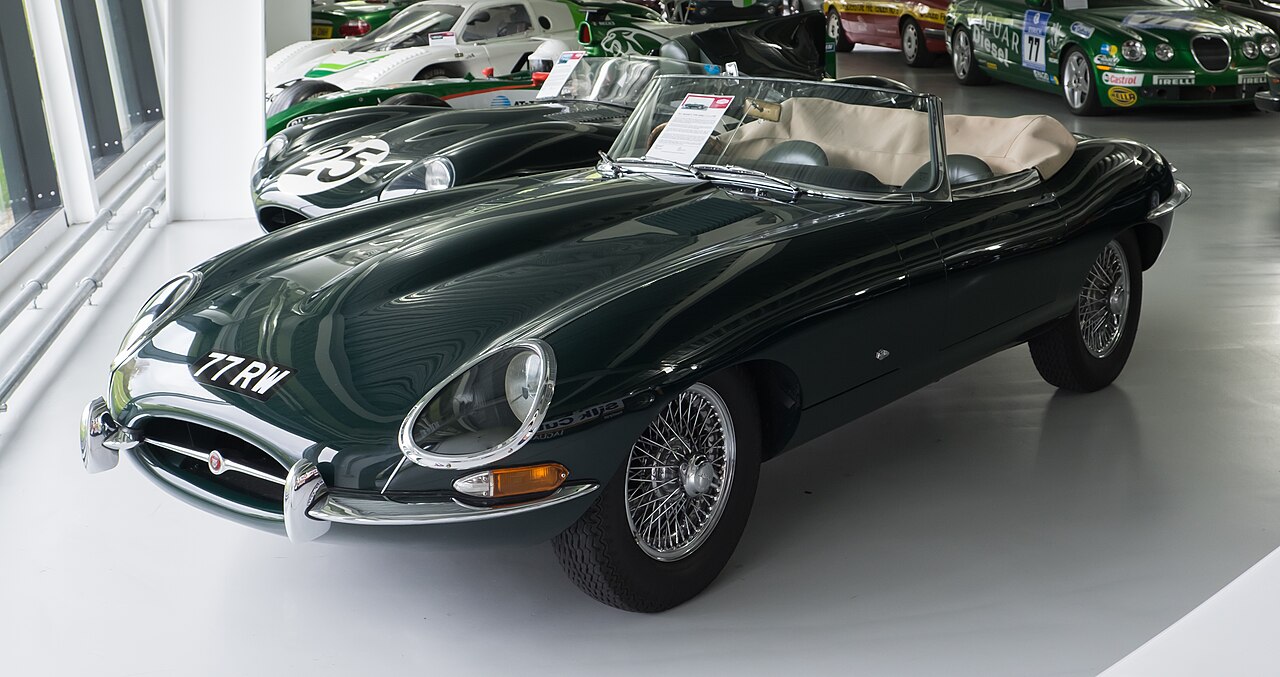
The original, covered-headlight E-Type — the purest expression of Malcolm Sayer's design, with the sleekest proportions.
Series 1.5 (1967–1968)
A transition model with open headlights and some Series 2 running gear.
Series 2 (1968–1971)
A revised car with open headlights, a bigger grille and improvements to cooling and usability.
Series 3 (1971–1974)
The final version with a bigger V12 engine, a wider track and a more muscular look.
Design language and the silhouette
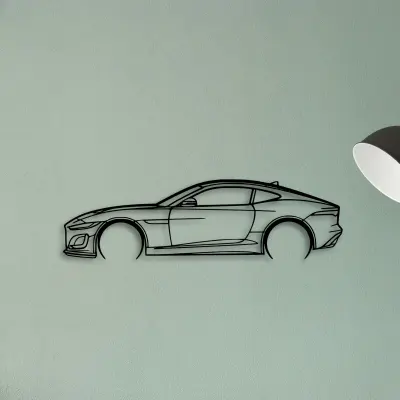
A long, low hood flowing into a fastback roof, covered headlamps (on Series 1) and a curvaceous, aerodynamic shape decades ahead of its time — the E-Type's silhouette is pure 1960s jet-age romance. Because we cut every Tinvibe piece from 2 mm steel to the car's true outline, the traits that make the Jaguar E Type recognizable — its roofline, stance and key details — are exactly what the metal keeps, in matte black powder coat across five sizes from 50 cm to 140 cm.
Production, sales and availability
Jaguar built the E-Type across three main series through to 1974; the covered-headlight Series 1 roadster and coupe are the most valuable and desirable today.
The E Type in the Tinvibe collection
We cut the Jaguar E Type as a laser-cut steel silhouette in five sizes from 50 cm to 140 cm, finished in matte black powder coat. The designs below are drawn from our catalogue for this nameplate.