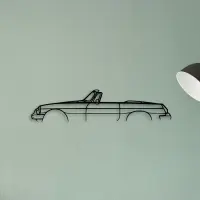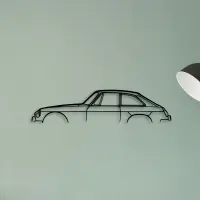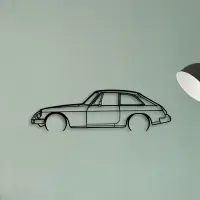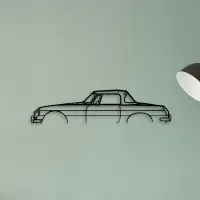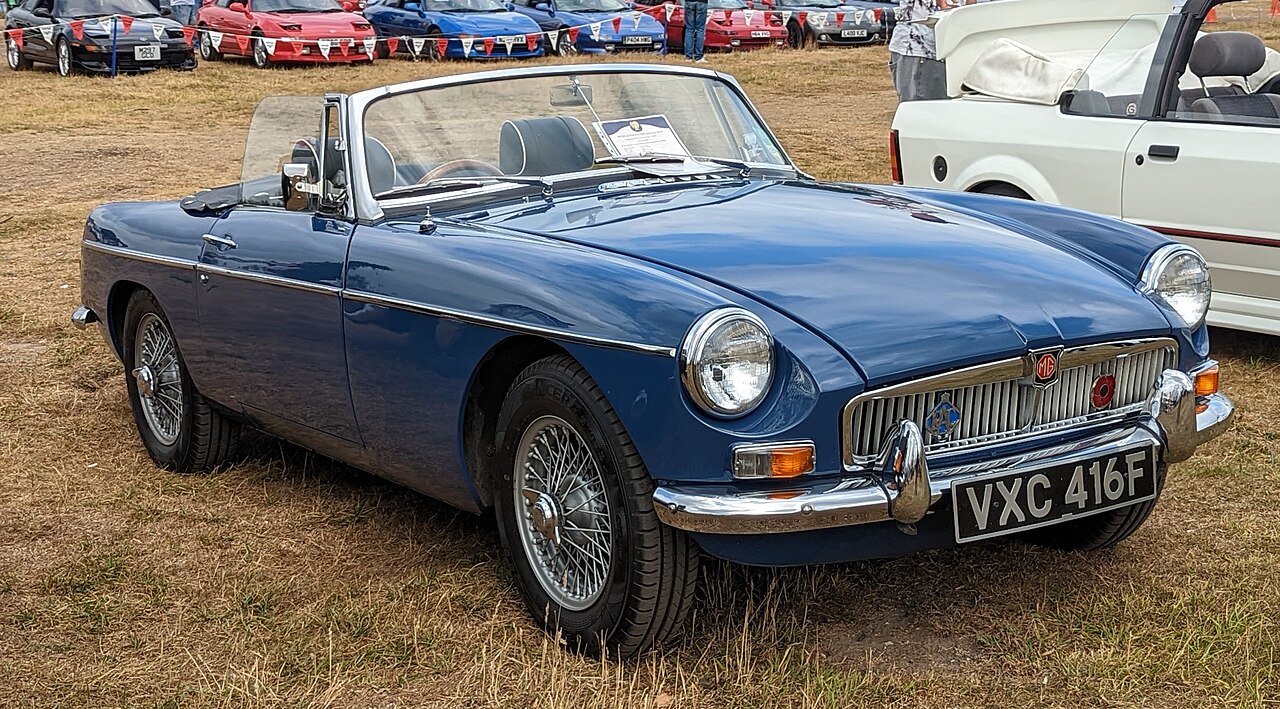
The MG B — the MGB — arrived in 1962 as a replacement for the MG A, and it stayed in production until 1980, making it one of the longest-running and best-selling sports cars of its era. Where earlier British roadsters were finicky, the B was deliberately simple, cheap and reliable: a real sports car ordinary people could actually own and use every day.
Generations and evolution
MGB roadster (1962–1980)
The core model: a 1.8-litre four-cylinder in a light, unibody roadster with comfortable seating and usable luggage space.
MGC (1967–1969)
A short-lived six-cylinder variant with a bigger engine and a distinctive bonnet bulge.
MGB GT (1965–1980)
The fastback, hatchback-roofed 'coupe' version by Pininfarina, which added practicality and became a big share of production.
Rubber-bumper MGB (1974–1980)
The later cars with impact-absorbing bumpers to meet US safety rules, slightly heavier but still hugely popular.
Design language and the silhouette
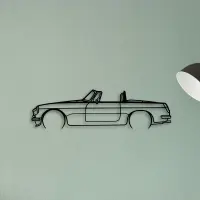
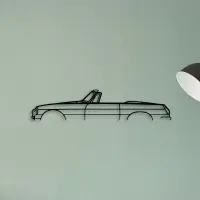
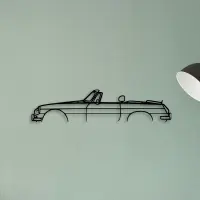
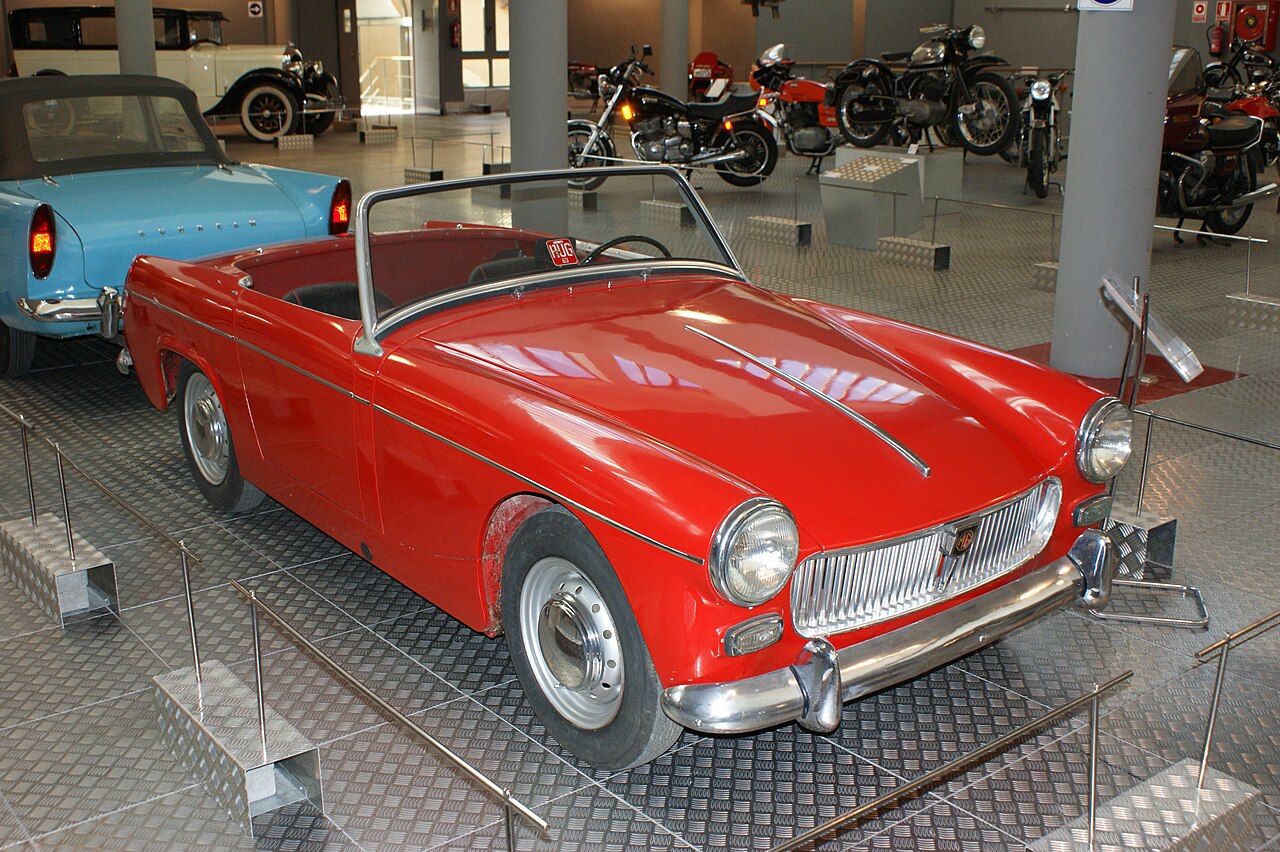
Low, long and simple: a wide chrome grille, rounded wings and a cabin you sit low in. The MGB's charm is exactly that lack of pretension — an honest, unfussy open-air shape. Because we cut every Tinvibe piece from 2 mm steel to the car's true outline, the traits that make the MG B recognizable — its roofline, stance and key details — are exactly what the metal keeps, in matte black powder coat across five sizes from 50 cm to 140 cm.
Production, sales and availability
More than half a million MGBs were built between 1962 and 1980, making it the best-selling single-model sports car of its time and a cornerstone of the classic-car world.
The B in the Tinvibe collection
We cut the MG B as a laser-cut steel silhouette in five sizes from 50 cm to 140 cm, finished in matte black powder coat. The designs below are drawn from our catalogue for this nameplate.