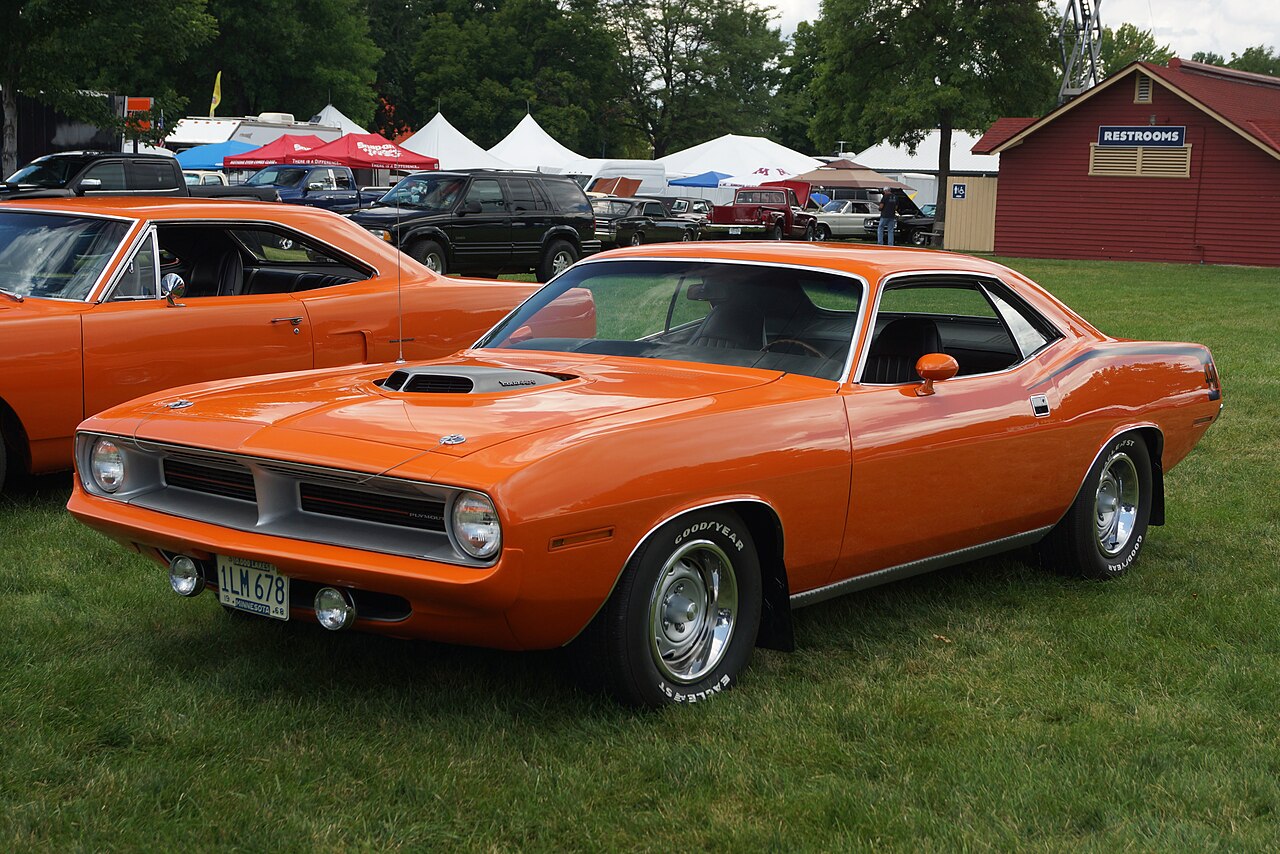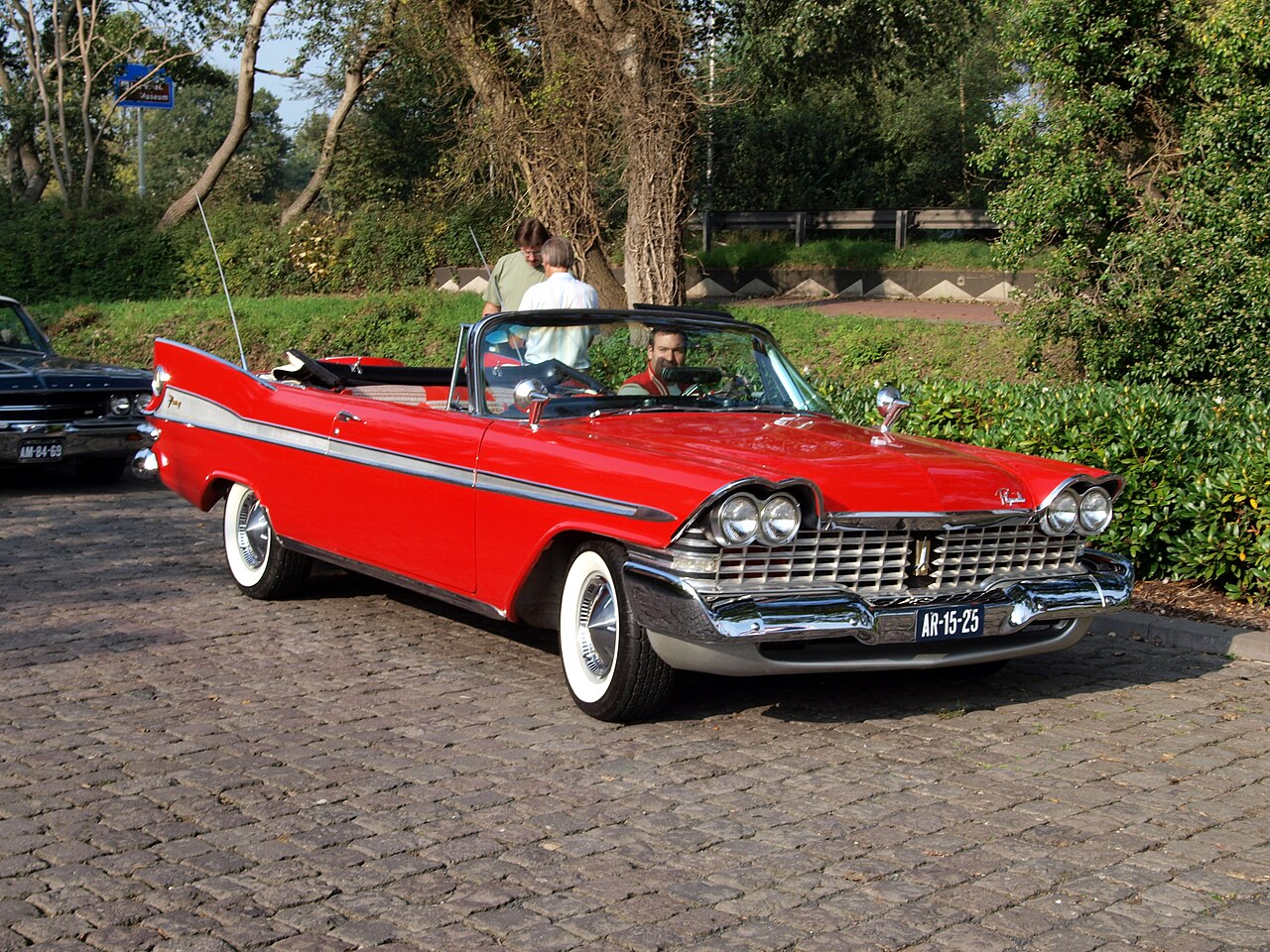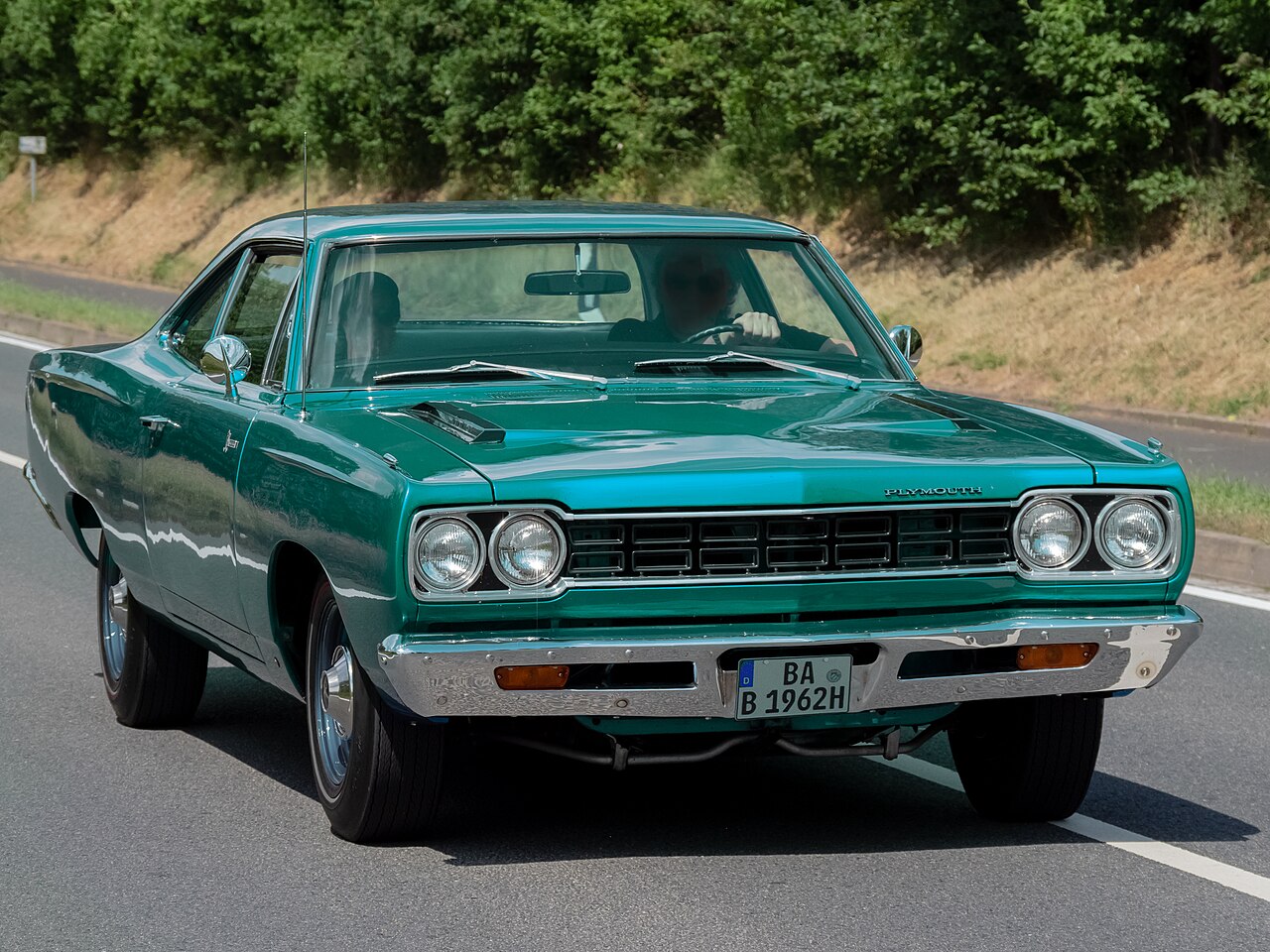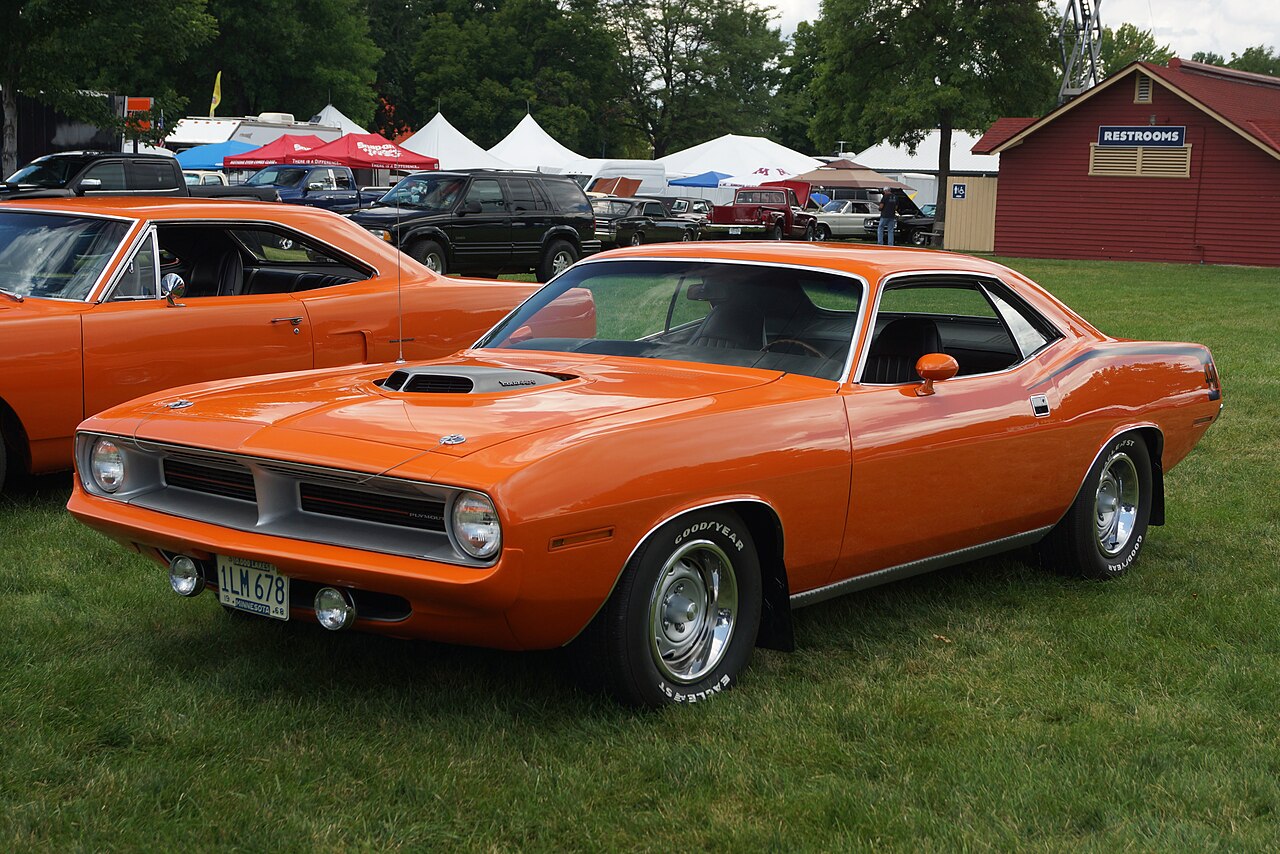
The Plymouth Barracuda launched in 1964, actually beating the Ford Mustang to market by a matter of days, though it was initially based on the humble Valiant. It grew through two generations into a genuine muscle car, and the 1970–74 third-generation 'Cuda — especially with the 426 Hemi — became one of the most collectible American performance cars ever built.
Generations and evolution
First generation (1964–1966)
A Valiant-based fastback coupe that gave Plymouth an early entry in the new pony-car class.
Second generation (1967–1969)
A proper Barracuda platform with a wider range of engines, including the big-block 383.
Third generation 'Cuda (1970–1974)
The legendary E-body, with a dramatic curved-glass fastback and the mighty 426 Hemi and 440 options that define the muscle era.
Design language and the silhouette
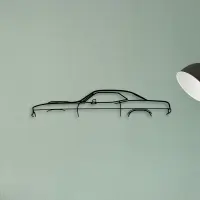
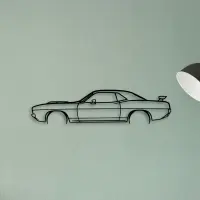
The third-generation 'Cuda is one of the most dramatic muscle-car shapes ever: a huge, curving fastback rear window, a wide grille and aggressive graphics — pure 1970s American excess. Because we cut every Tinvibe piece from 2 mm steel to the car's true outline, the traits that make the Plymouth Barracuda recognizable — its roofline, stance and key details — are exactly what the metal keeps, in matte black powder coat across five sizes from 50 cm to 140 cm.
Production, sales and availability
Plymouth has not published a single combined Barracuda total across its generations, so we avoid quoting one; the Hemi 'Cudas in particular are extremely rare and highly prized.
The Barracuda in the Tinvibe collection
We cut the Plymouth Barracuda as a laser-cut steel silhouette in five sizes from 50 cm to 140 cm, finished in matte black powder coat. The designs below are drawn from our catalogue for this nameplate.