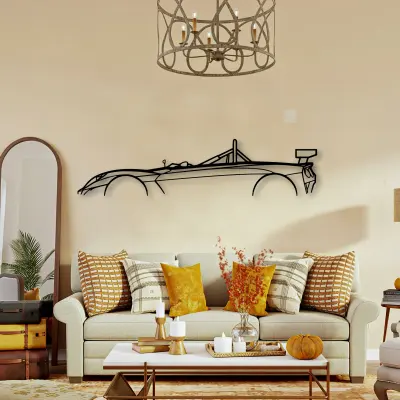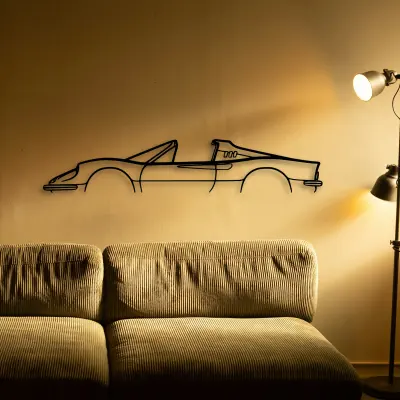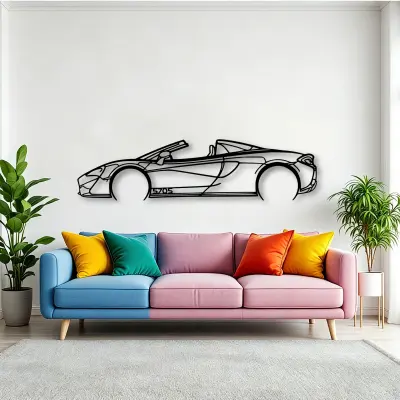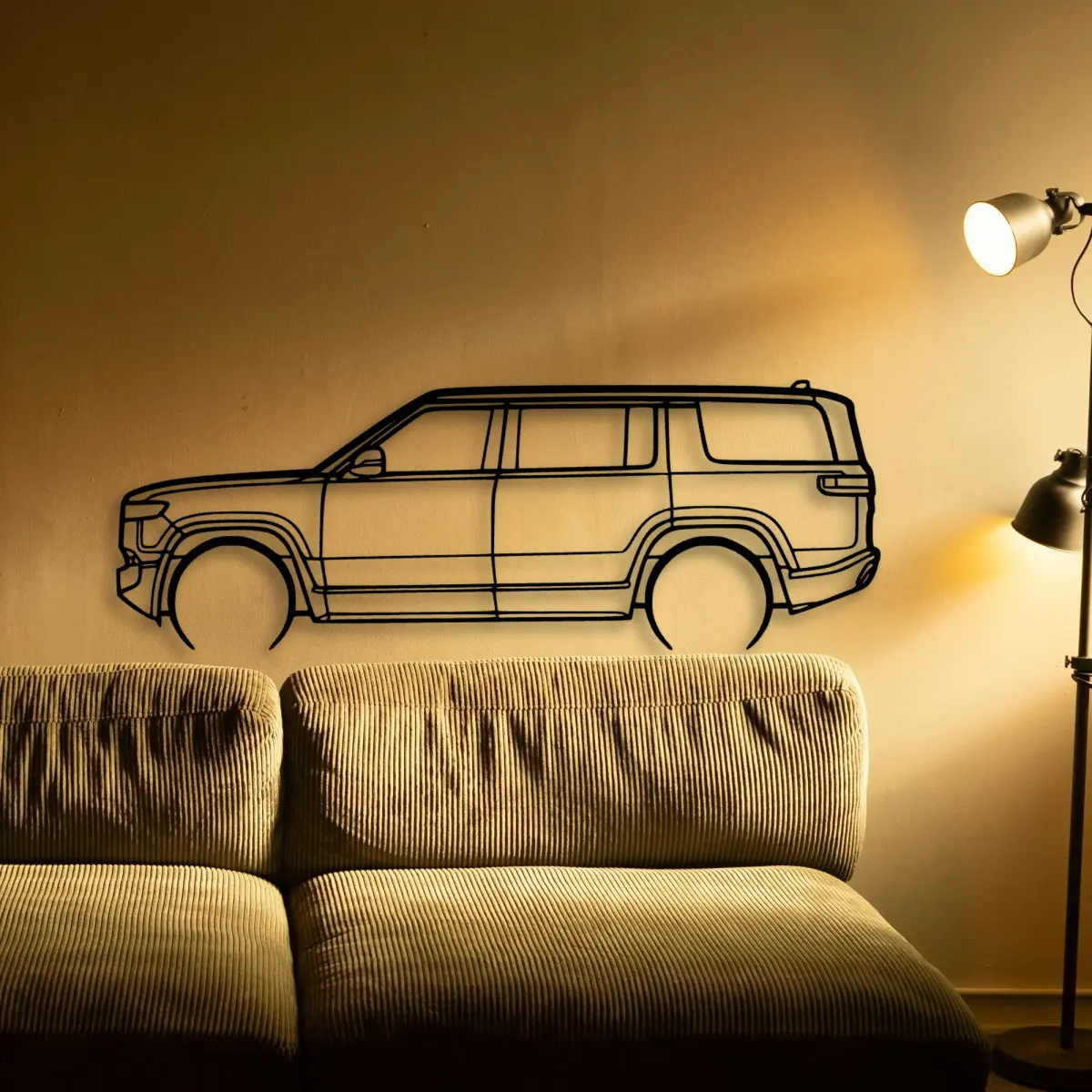
When you reduce a Rivian R1s 2 to one line, every proportion has to earn its place. That is what makes shape wall decor a different kind of collectible, and why the Rivian R1s 2 rewards a second look.
The Rivian R1s 2 pieces in our range are formed from sheet metal and delivered ready to fix to the wall, with the price stepping from $69.95 at 50 cm to $209.95 at 140 cm, a range that lets the same outline work above a worktop or across a full wall.
What actually looks right
One confident shape beats three hesitant ones. Size is the difference between a wall that is decorated and a wall that is composed.
One confident shape beats three hesitant ones. Size is the difference between a wall that is decorated and a wall that is composed.
Start with one piece done well
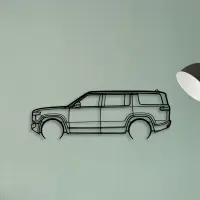
The size trap
The most common mistake with Rivian R1s 2 wall decor is buying too small. A 50 cm shape looks deliberate above a worktop but gets lost on a two-metre shed wall. Match the size to the wall, not to the budget.
- Choosing the smallest size to save money, then finding it disappears on the wall.
- Hanging a detailed profile too high, so the beltline sits above natural sightline.
- Clustering several small pieces without a common size step between them.
Spacing and height
A shape wants to be read at natural sightline. The visual centre, usually the wheel line, should sit around 145-160 cm from the floor in a living space, a little higher in a shed where you stand further back.
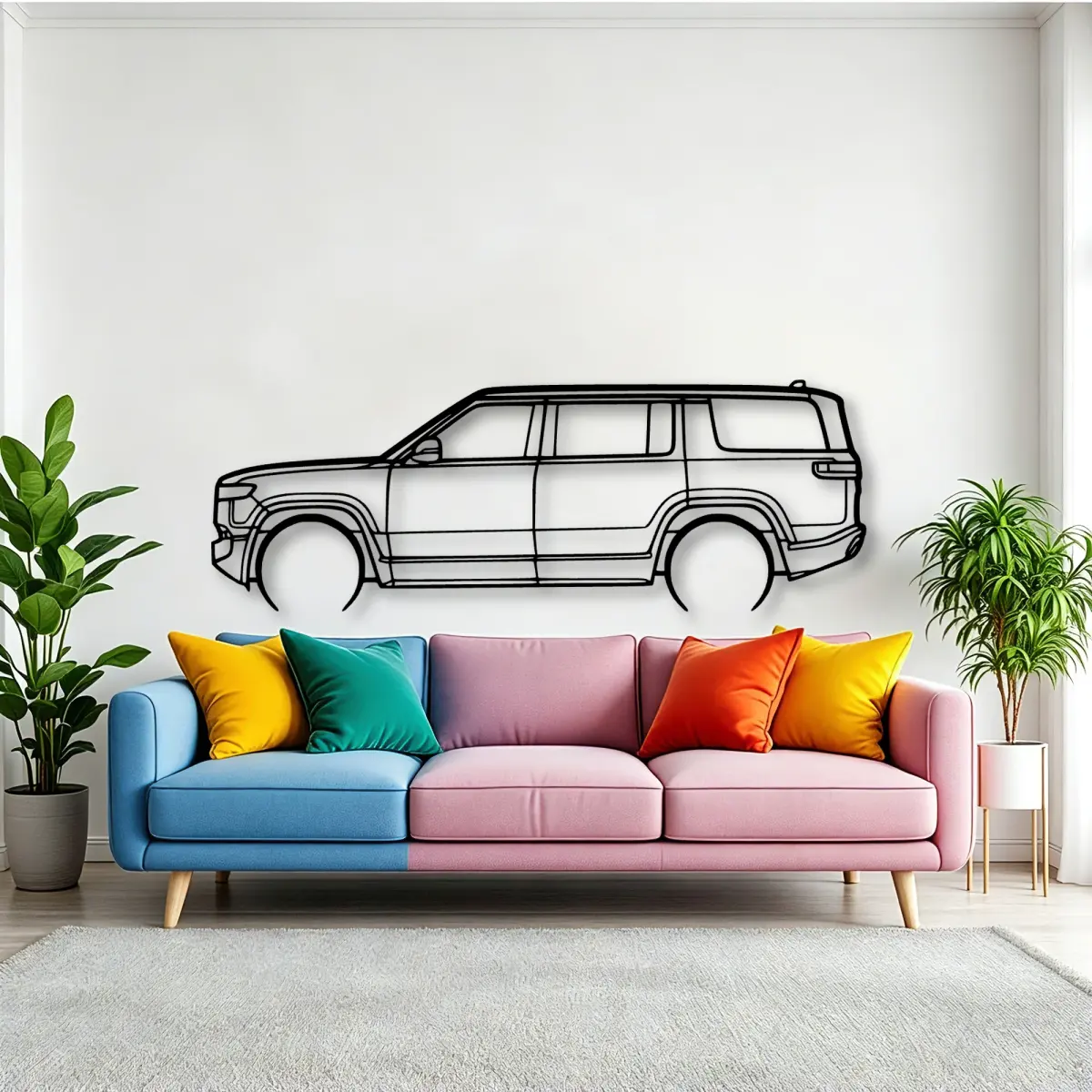
Why this outline holds up
As a Rivian shape, the Rivian R1s 2 carries a brand outline you recognise before you read a badge, which is why the shape works as wall decor.
Once the size is right, the rest is easy. A single Rivian R1s 2 outline in 100-140 cm works as intentional; three mismatched small pieces often read as unfinished.
People often start at the smallest size to save money, then find the piece disappears. A Rivian R1s 2 wants room, and the right size is the single biggest factor in whether it looks composed.
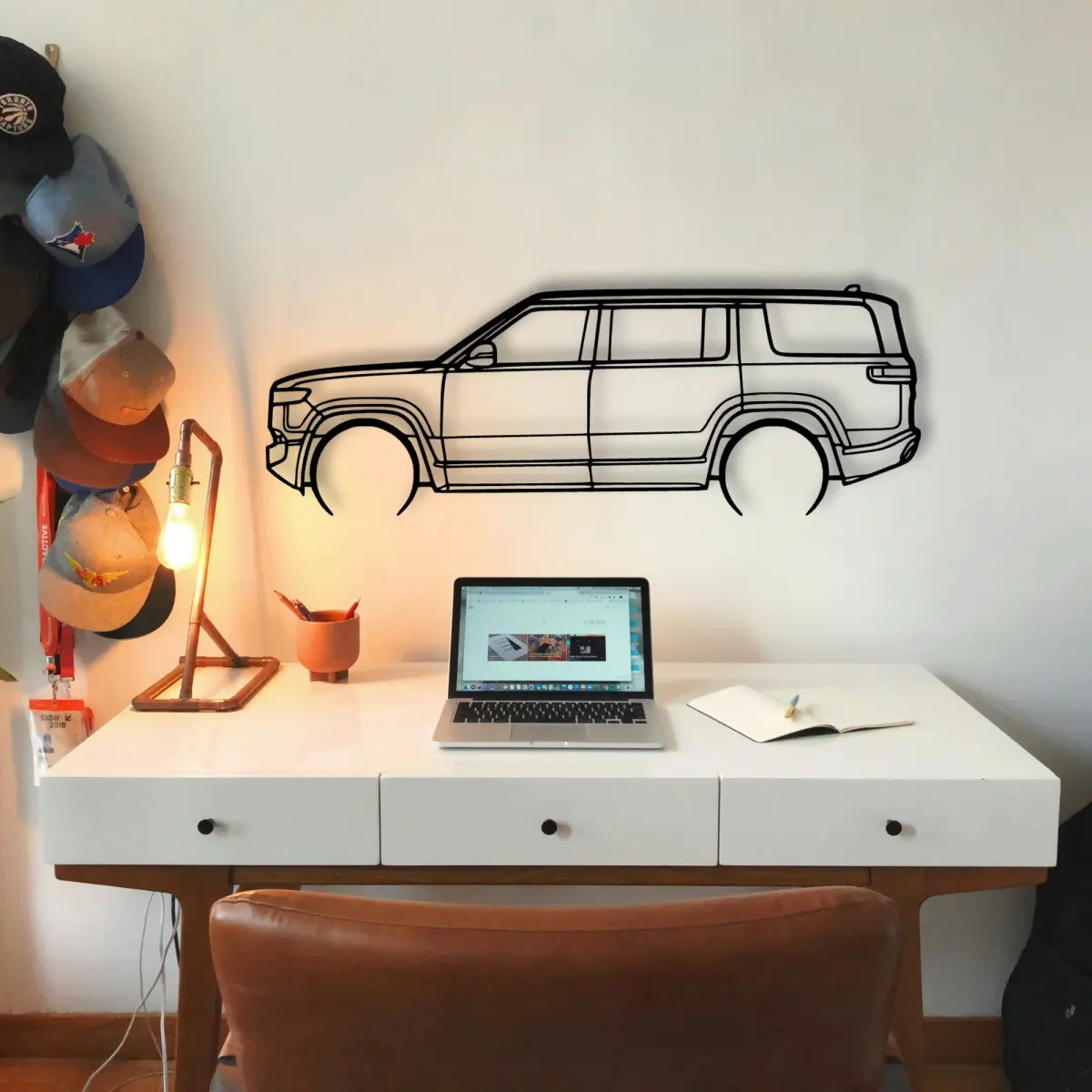
Keep the bottom edge consistent when you group pieces. Nothing makes a wall look unfinished faster than three outlines hanging at three different heights.
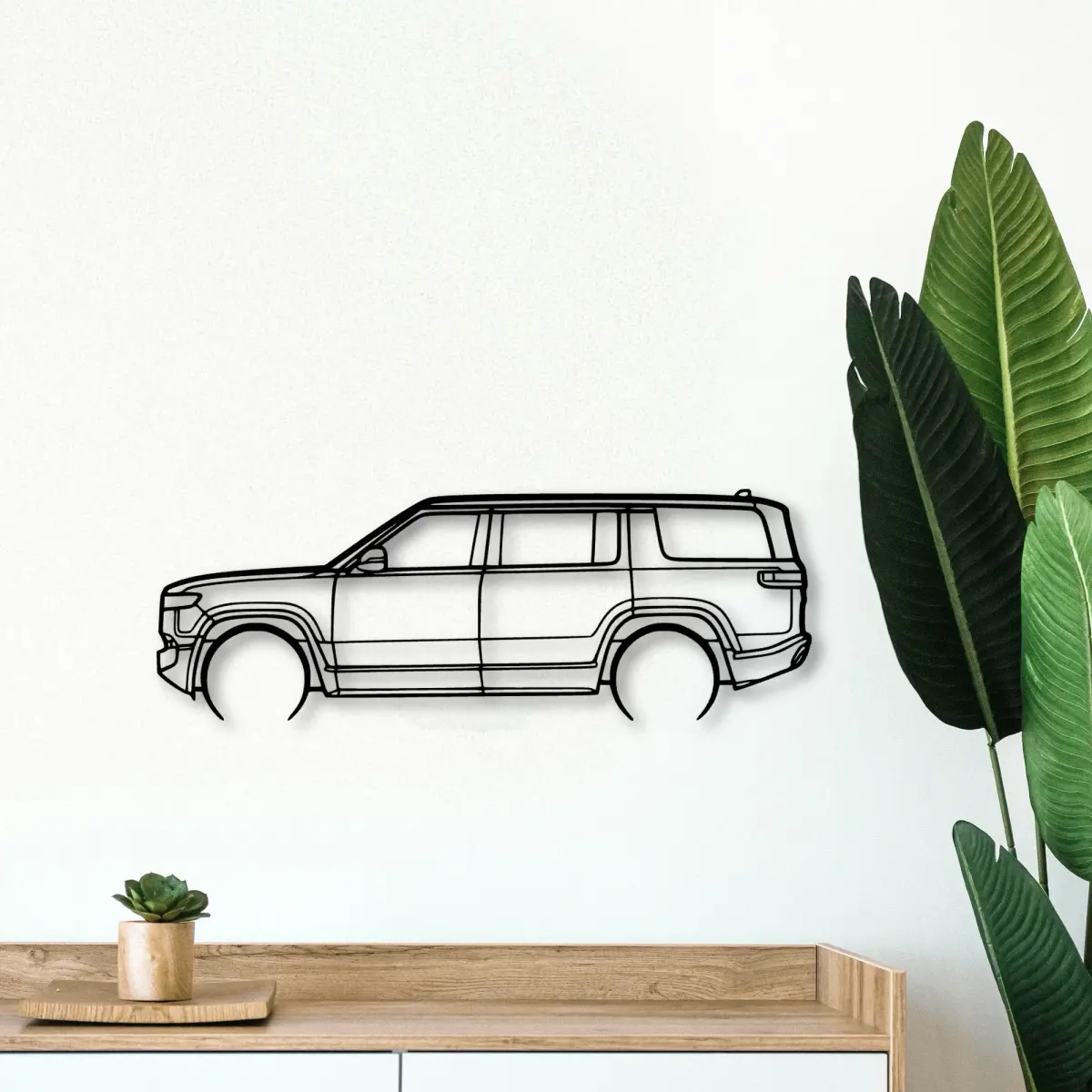
Treat the wall like a frame, not a shelf. One piece, placed with intent, is enough.
The car is the content; the cut is the grammar. Get the grammar right and the rest follows.
Light from the side reveals the cut; light from the front flattens it. Aim for the reveal.
Lighting decides the mood. An even wash from above flatters the edge; a single hard spotlight only hardens one corner.
Cut metal has a weight that printed art lacks. The shadow it casts is part of the piece, not an accident of the light.
A profile on the wall is a quiet kind of confidence. It does not shout the spec sheet; it simply states the shape.
The shape is the cheapest way to own the shape without owning the car.