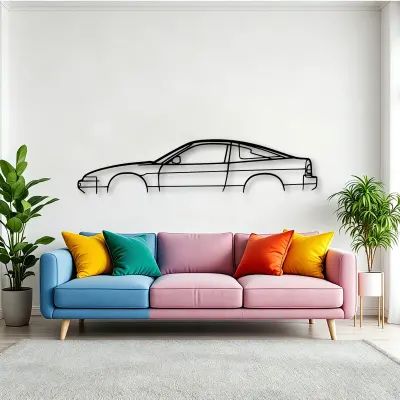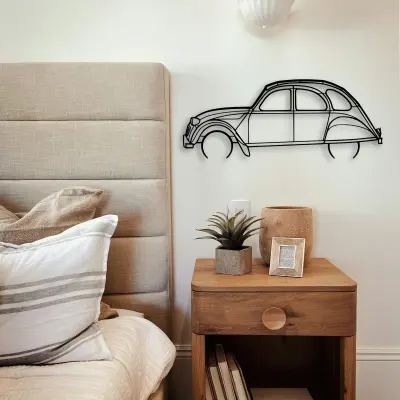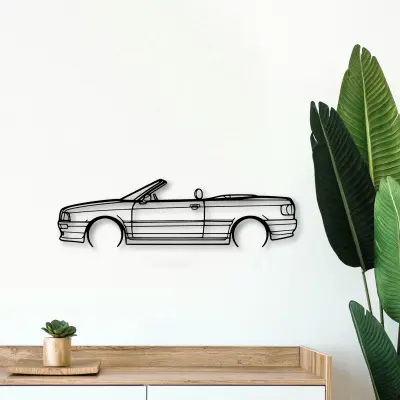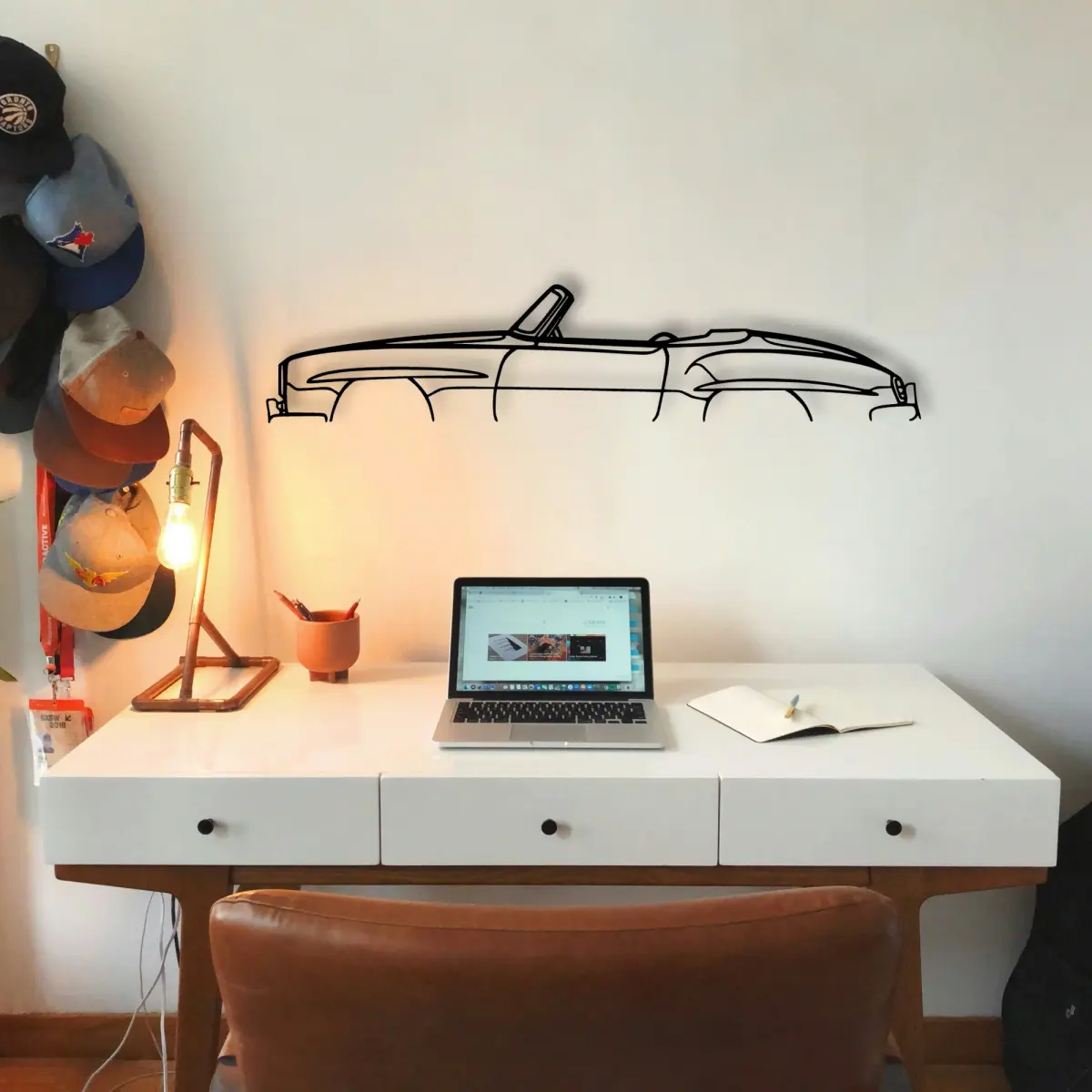
The Mercedes-Benz is the kind of shape people recognise instantly, which is why it works as both a road companion and a memory on the plane.
The Mercedes-Benz 190sl 1958 dates to 1958, and that year's proportions are exactly what the cut outline keeps — the roofline and the stance are period-correct, not stylised.
At Tinvibe the Mercedes-Benz is offered as a metal profile in five sizes, from 50 cm to 140 cm, finished for indoor wall display. The smaller sizes suit a shelf or a study; the larger sizes take a full studio.
Five sizes for the memory
Every Mercedes-Benz form comes in the same five sizes: 50 cm, 80 cm, 100 cm, 120 cm and 140 cm. The price steps with the size, from $69.95 to $209.95.
- 50 cm — a shelf or a study; an accent, not a feature.
- 80 cm — still modest, but reads across a doorway.
- 100 cm — the safe feature-wall default.
- 120 cm — for rooms where the car is the subject.
- 140 cm — the full statement piece.
Trips with everyone
A Mercedes-Benz form is rare family-friendly piece: it names a shared trip without lecturing anyone. The drive becomes a group memory.
Why it suits a studio wall
A Mercedes-Benz in cut metal belongs in the spaces cars actually live in. Over a workbench or a parked car it reads instantly.
Reading it from across the room
Up close you admire the cut; from across the room you recognise the Mercedes-Benz. The piece is designed so both readings land.
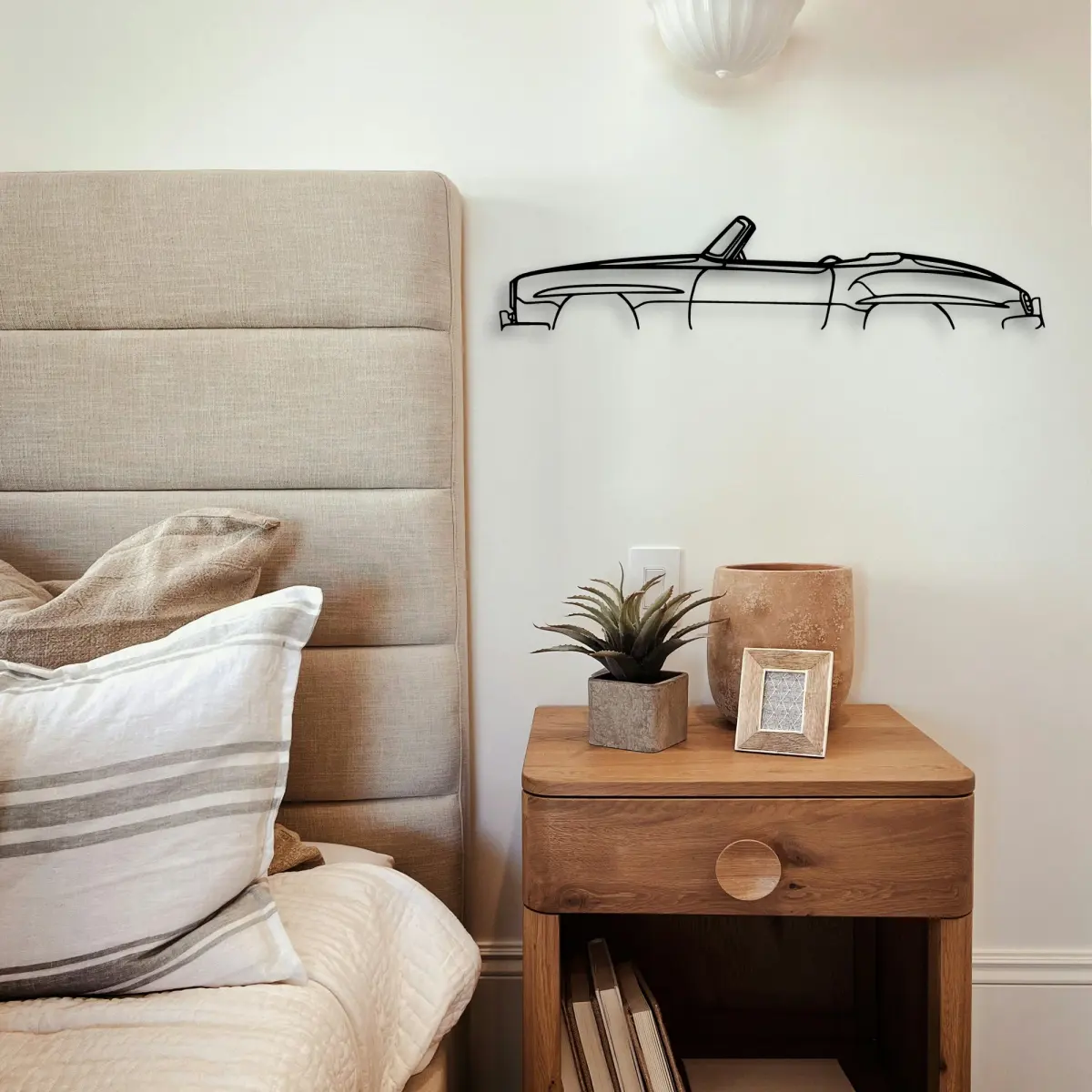
More than one on the plane
If you collect drives, let the Mercedes-Benz be one of a set with a rule. Next to its rivals, the differences are obvious.
Build the set
Quiet rooms suit a smaller form; loud rooms need one that can hold its own from across the space.
The best wall pieces are the ones you stop seeing as decor and start reading as a subject.
A row of identical small frames fights itself. One larger outline settles the plane instead.
The plane behind should be the quietest thing in the room. Let the outline be the loud part.
Grouping works when the shapes contrast. A long low outline next to a tall upright one reads as a conversation, not a pile.
Metal keeps its line. Unlike paper, it will not curl, fade, or bow under a warm lamp.
Cut metal has a weight that printed art lacks. The shadow it casts is part of the piece, not an accident of the light.
Hang it where the light lands first. The edge you notice on the way in is the edge worth cutting.
Give it room to mean something. A form left alone on a clear wall says more than the same shape lost in a crowd.
A profile on the plane is a quiet kind of confidence. It does not shout the spec sheet; it simply states the shape.
The right size is the one you forget to notice because it fits the plane so well.
Resist the urge to fill. An empty margin around the outline is what makes it feel considered.