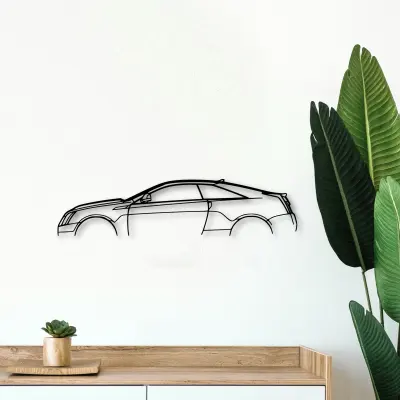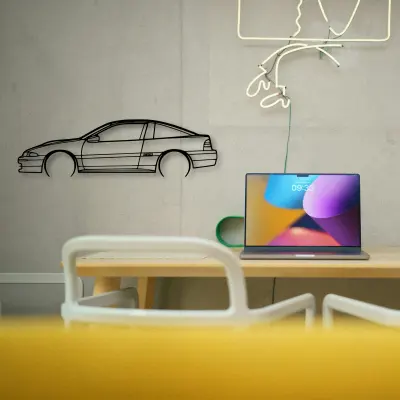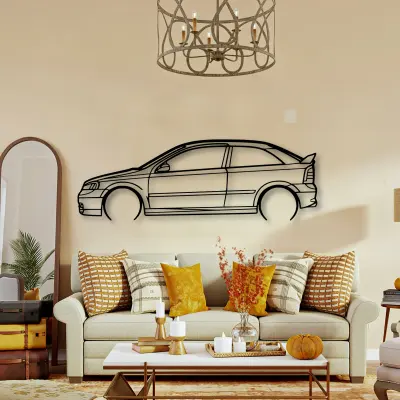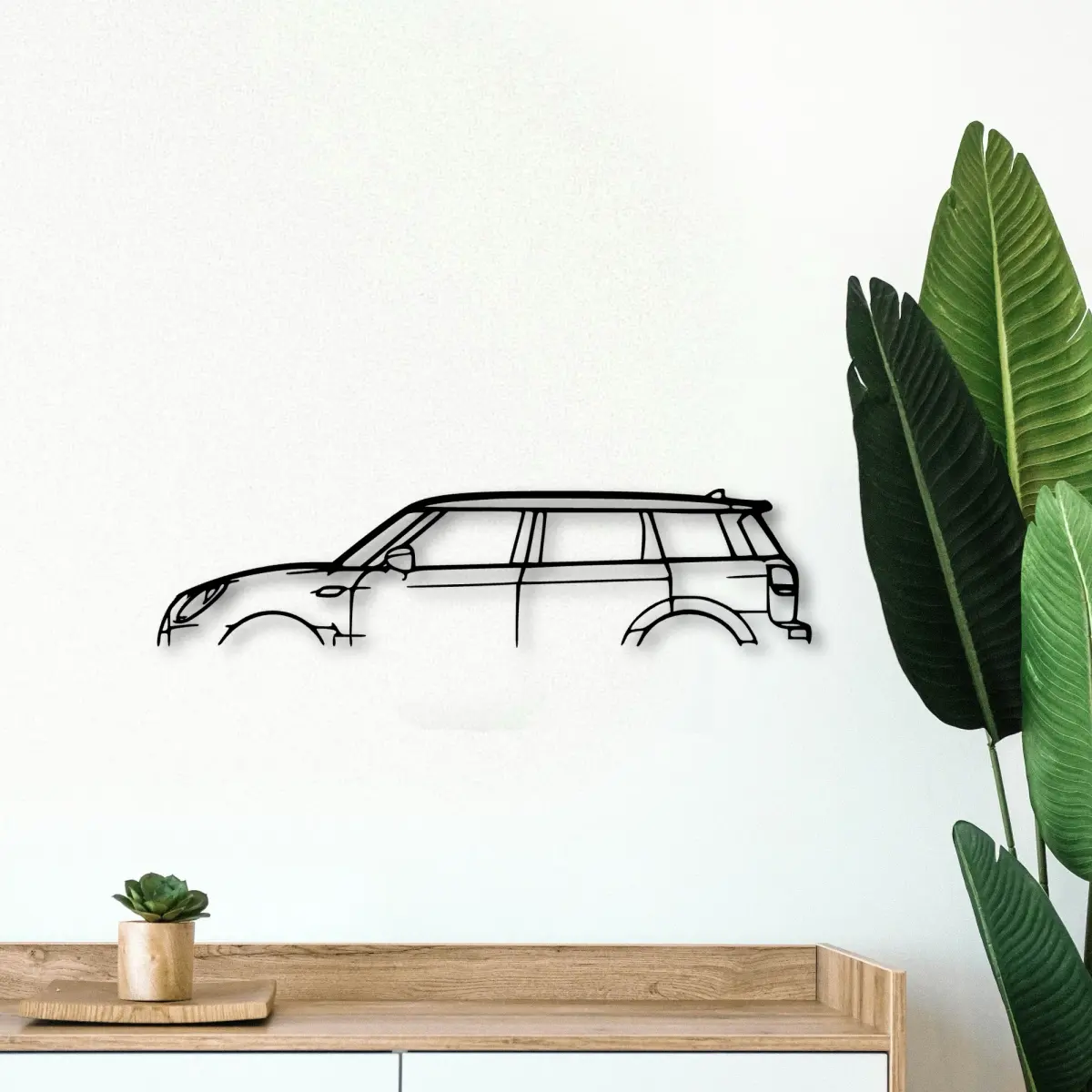
A Mini enthusiast does not leave the passion at the door. The drive, the stop, and the backing at home are one hobby, and a profile is the thread between them.
The Mini Clubman Jcw 2019 dates to 2019, and that year's proportions are exactly what the cut outline keeps — the roofline and the stance are period-correct, not stylised.
The Mini pieces in our range are cut from sheet metal and delivered ready to mount, with the price stepping from $69.95 at 50 cm to $209.95 at 140 cm — a range that lets the same outline work over a desk or across a full wall.
A shape the whole car agrees on
Hang a Mini cutout that everyone in the car recognised on the road. Consensus is its own kind of souvenir.
Era written into the line
Period is baked into proportion. A Mini from one decade sits differently from another, and a profile is the fastest way to see that gap.
Honest material, no colour
A Mini profile in steel asks the line to do all the work — there is no livery, no badge colour, no gradient to lean on.
Reading it from across the room
A Mini profile has to work at distance, not just up close. At 120 cm it keeps its identifying line legible from the other end of the room.
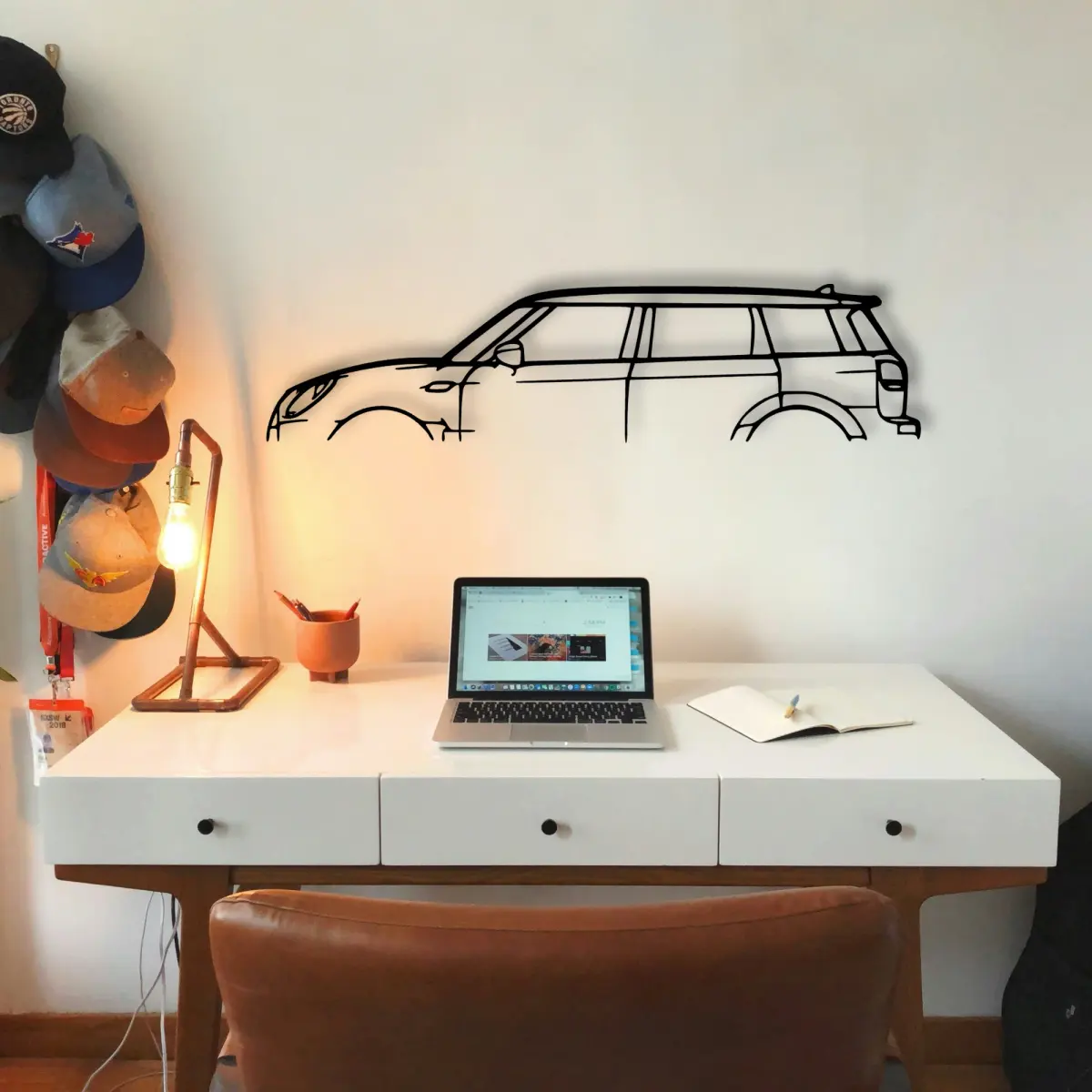
Why it suits a den wall
A Mini in cut metal belongs in the spaces cars actually live in. Over a workbench or a parked car it reads instantly.
Size ladder for the memory
Size ladder, one outline. The Mini is offered from a 50 cm shelf piece up to a 140 cm statement, all cut to the same profile.
- 50 cm — a shelf or a study; an accent, not a feature.
- 80 cm — still modest, but reads across a doorway.
- 100 cm — the safe feature-wall default.
- 120 cm — for rooms where the car is the subject.
- 140 cm — the full statement piece.
More than one on the backing
If you collect drives, let the Mini be one of a set with a rule. Next to its rivals, the differences are obvious.
Build the set
Cut metal has a weight that printed art lacks. The shadow it casts is part of the piece, not an accident of the light.
Pick the outline that matches the room's energy: calm spaces want restraint, busy ones want a statement.
Colour is optional here. The outline carries the identity, so the backing behind it can stay exactly as it is.
The backing behind should be the quietest thing in the room. Let the outline be the loud part.
A profile travels. Move it between rooms and it still makes sense, because the shape is the message.
Depth comes from the shadow. The gap between metal and wall is part of the composition, not a flaw.
Maintenance is close to nothing. A quick dust is enough; there are no frames to chip and no glass to clean.
The shadow line is the second drawing. Where it falls tells you as much as the metal itself.
A row of identical small frames fights itself. One larger outline settles the backing instead.
The room sets the size. A busy wall wants a bigger outline to hold its own; a calm wall lets a smaller piece breathe.