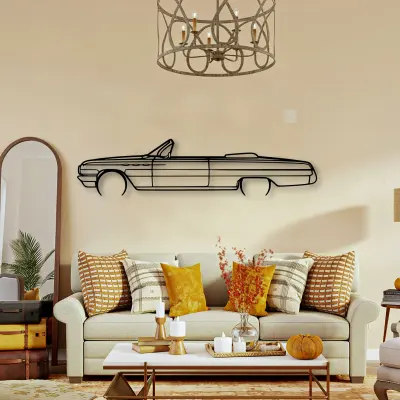
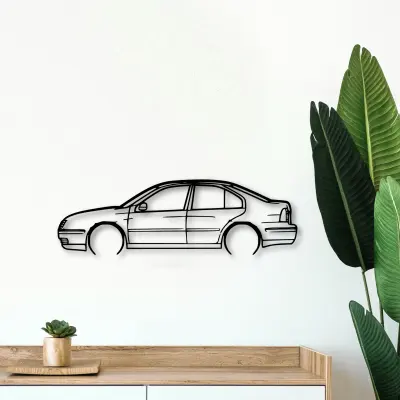
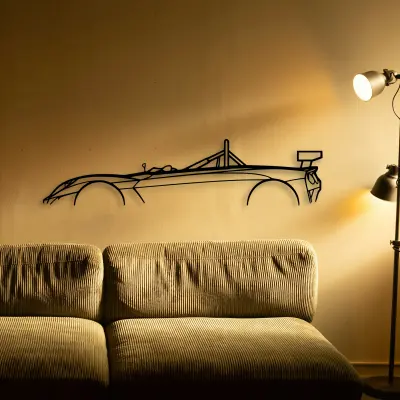
Driving culture is mostly small rituals: the prep, the playlist, the stop for coffee. A Rivian outline is the part you keep.
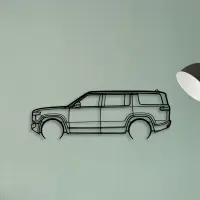
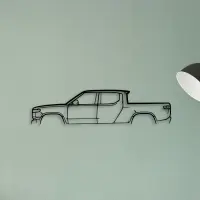
The Rivian pieces in our range are cut from sheet metal and delivered ready to mount, with the price stepping from $69.95 at 50 cm to $209.95 at 140 cm — a range that lets the same outline work over a desk or across a full wall.
Reading it from across the room
A Rivian profile has to work at distance, not just up close. At 120 cm it keeps its identifying line legible from the other end of the room.
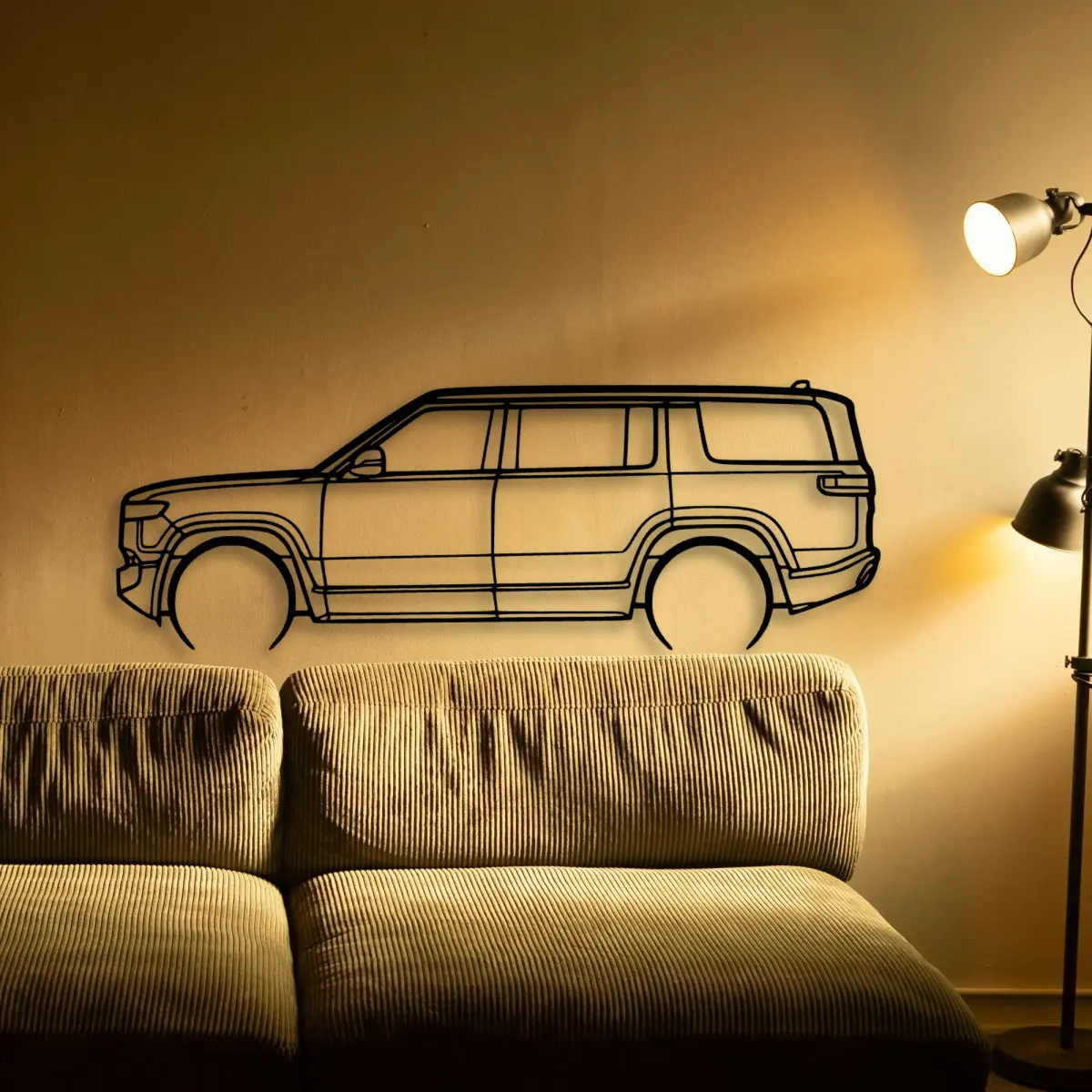
Honest material, no colour
Because the Rivian comes in bare cut metal, every proportion is exposed. That is harder than a photograph, and it is why a good outline feels earned.
Altitude and the long line
At altitude the Rivian outline reads like the ridge behind it — long, low, deliberate. The two lines belong together.
More than one on the backing
A row of Rivian outlines, each a different trip, turns a wall into a timeline you can read at a glance.
Build the set
Size ladder for the memory
Size ladder, one outline. The Rivian is offered from a 50 cm shelf piece up to a 140 cm statement, all cut to the same profile.
- 50 cm — a shelf or a study; an accent, not a feature.
- 80 cm — still modest, but reads across a doorway.
- 100 cm — the safe feature-wall default.
- 120 cm — for rooms where the car is the subject.
- 140 cm — the full statement piece.
Metal art works best when it earns its place rather than filling a gap. A single well-chosen outline does more than a row of hesitant decoration.
A single strong subject is easier to live with than a wall that argues with itself.
Lighting decides the mood. An even wash from above flatters the edge; a single hard spotlight only hardens one corner.
A row of identical small frames fights itself. One larger outline settles the backing instead.
The backing behind should be the quietest thing in the room. Let the outline be the loud part.
The best wall pieces are the ones you stop seeing as decor and start reading as a subject.
Scale matters more than people expect. A piece that is too small disappears; one that is sized to the backing reads as intentional from the doorway.
Hang two that differ in length, not in mood, and they read as a pair rather than a repeat.
Depth comes from the shadow. The gap between metal and wall is part of the composition, not a flaw.
Start with one. A single correct piece teaches the eye what the rest of the backing should do.
A piece does not need a frame to feel finished. The cut edge is the frame.
A neutral wall is a gift. It lets the cut do the talking without competing colour.
A profile ages better than a photograph. There is no moment to date it and no colour to fall out of fashion.
Hang it where the light lands first. The edge you notice on the way in is the edge worth cutting.