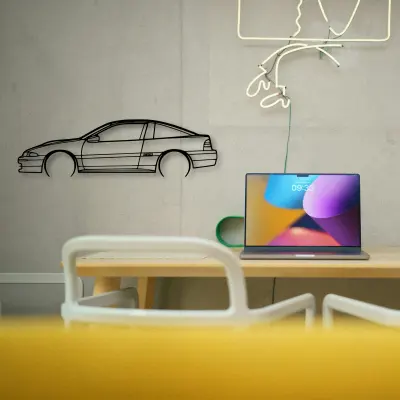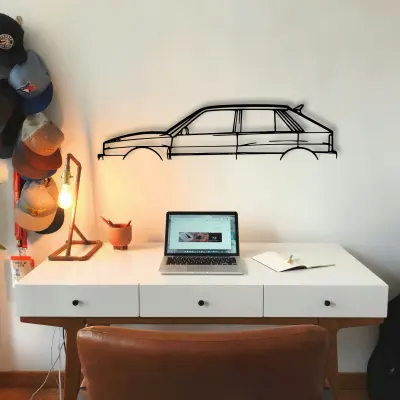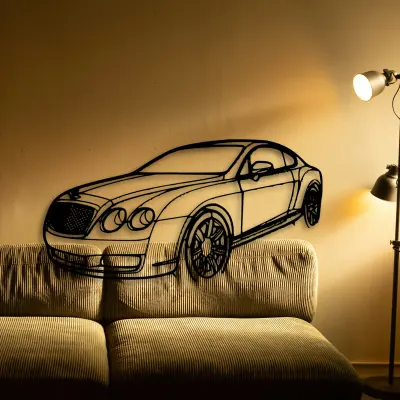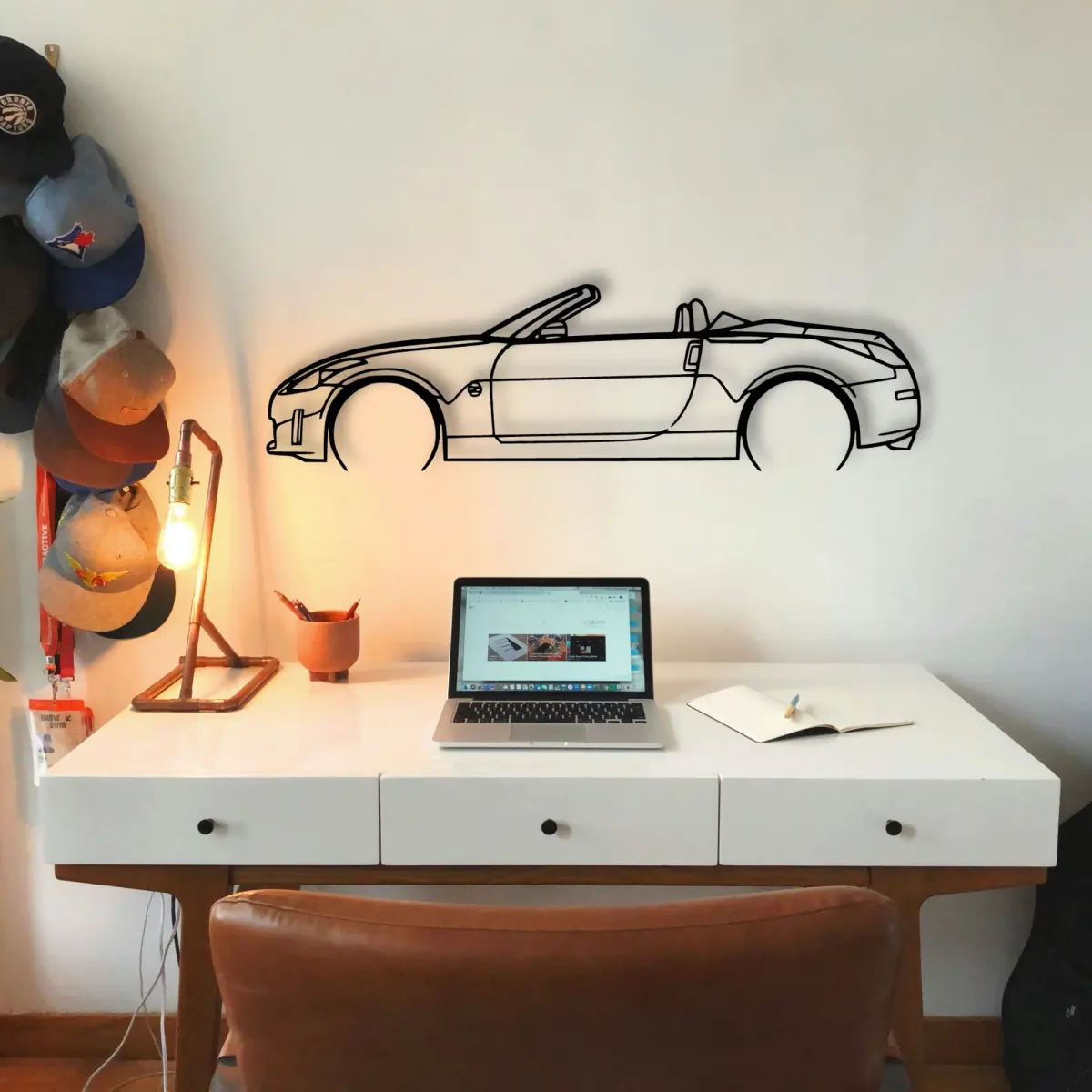
Driving culture is mostly small rituals: the prep, the playlist, the stop for coffee. A roadster outline is the part you keep.
What makes the roadster work as a souvenir is that it carries no colour of its own. Cut from sheet metal and finished for indoor display, it fits any room you come home to.
A small kit, a clear boot
A roadster enthusiast's boot is a study in less. The fewer the extras, the more the drive itself shows.
Era written into the line
You can often date a roadster by its roof alone. The cut keeps those period cues so the shape reads as a moment without a caption.
Why it suits a studio wall
A roadster in cut metal belongs in the spaces cars actually live in. Over a workbench or a parked car it reads instantly.
Essentials for the drive
A roadster weekend is better with less: a clean cloth, a camera, and a plan for the one photo worth printing. Leave the clutter at home.
Five sizes for the memory
Every roadster form comes in the same five sizes: 50 cm, 80 cm, 100 cm, 120 cm and 140 cm. The price steps with the size, from $69.95 to $209.95.
- 50 cm — a shelf or a study; an accent, not a feature.
- 80 cm — still modest, but reads across a doorway.
- 100 cm — the safe feature-wall default.
- 120 cm — for rooms where the car is the subject.
- 140 cm — the full statement piece.
More than one on the plane
A row of roadster outlines, each a different trip, turns a wall into a timeline you can read at a glance.
Build the set
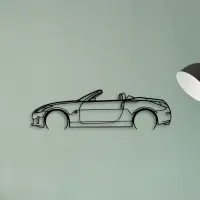
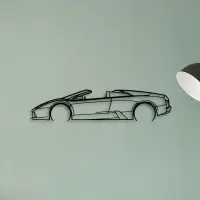
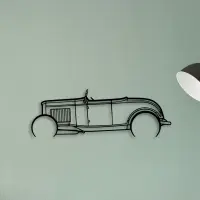
Placement is a quiet decision. Eye level for a feature wall, slightly above a desk, and well clear of a door swing that would clip it.
Recognition is the whole point. The outline is built so the car reads before the words do.
Scale matters more than people expect. A piece that is too small disappears; one that is sized to the plane reads as intentional from the doorway.
The shadow line is the second drawing. Where it falls tells you as much as the metal itself.
The room sets the size. A busy wall wants a bigger outline to hold its own; a calm wall lets a smaller piece breathe.
A dedicated wall beats a crowded one. Give the car room and it repays the attention.
A piece does not need a frame to feel finished. The cut edge is the frame.
Light from the side reveals the cut; light from the front flattens it. Aim for the reveal.
Think in edges, not pictures. The cut defines the object, and the shape defines the cut.
Resist the urge to fill. An empty margin around the outline is what makes it feel considered.
Piece works best when it earns its place rather than filling a gap. A single well-chosen outline does more than a row of hesitant decoration.
Read it from the doorway, not up close. The whole point is the gesture the line makes at a distance.
The plane behind should be the quietest thing in the room. Let the outline be the loud part.