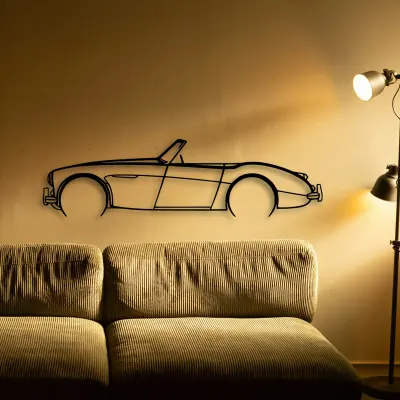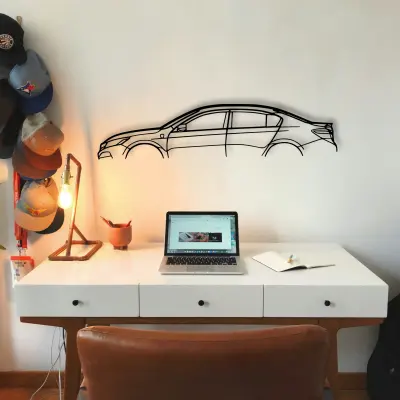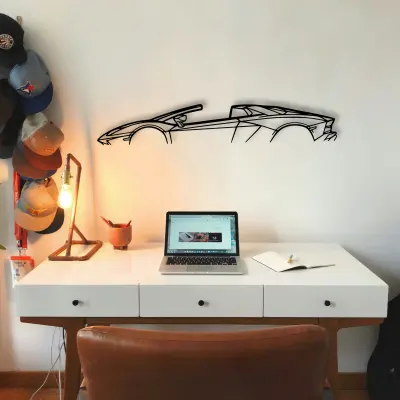
A Ferrari enthusiast does not leave the passion at the door. The drive, the stop, and the surface at home are one hobby, and an outline is the thread between them.
What makes the Ferrari work as a souvenir is that it carries no colour of its own. Cut from sheet metal and finished for indoor hanging, it fits any room you come home to.
Honest material, no colour
A Ferrari outline in steel asks the line to do all the work — there is no livery, no badge colour, no gradient to lean on.
Era written into the line
You can often date a Ferrari by its roof alone. The cut keeps those period cues so the shape reads as a moment without a caption.
Reading it from across the room
Up close you admire the cut; from across the room you recognise the Ferrari. The piece is designed so both readings land.
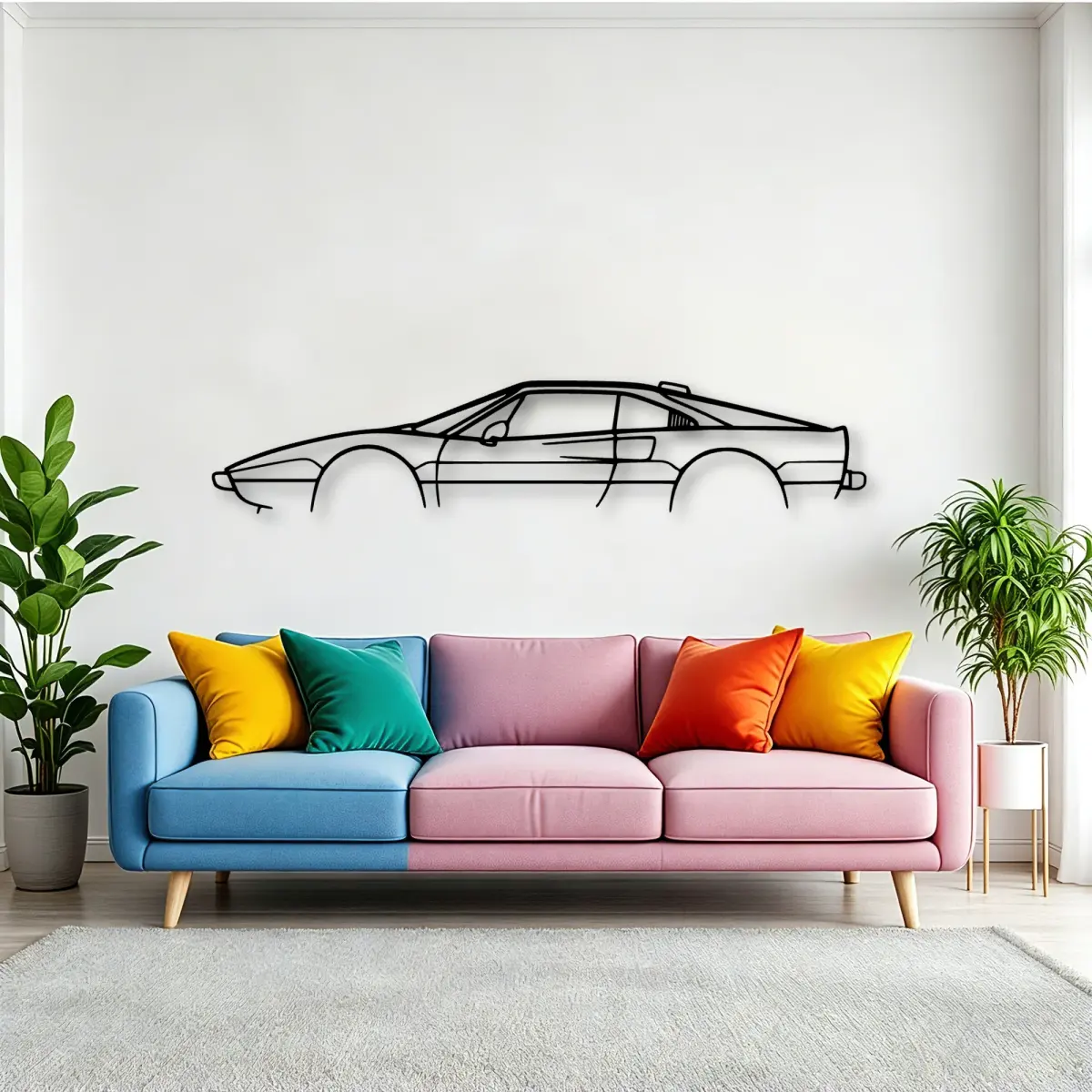
Five size steps for the memory
Every Ferrari outline comes in the same five size steps: 50 cm, 80 cm, 100 cm, 120 cm and 140 cm. The price steps with the size, from $69.95 to $209.95.
- 50 cm — a shelf or a study; an accent, not a feature.
- 80 cm — still modest, but reads across a doorway.
- 100 cm — the safe feature-wall default.
- 120 cm — for rooms where the car is the subject.
- 140 cm — the full statement piece.
The solo drive
A Ferrari enthusiast often drives alone on purpose. The quiet is the point, and the outline at home is the proof it happened.
More than one on the surface
If you collect drives, let the Ferrari be one of a set with a rule. Next to its rivals, the differences are obvious.
Build the set
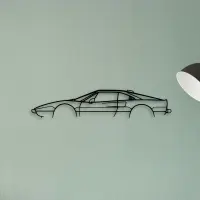
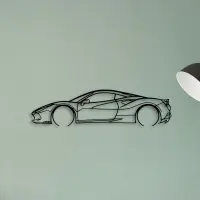
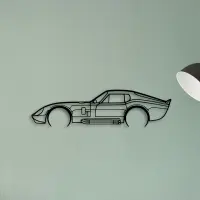
Lighting decides the mood. An even wash from above flatters the edge; a single hard spotlight only hardens one corner.
Resist the urge to fill. An empty margin around the outline is what makes it feel considered.
Light from the side reveals the cut; light from the front flattens it. Aim for the reveal.
Quiet rooms suit a smaller outline; loud rooms need one that can hold its own from across the space.
The outline is the cheapest way to own the shape without owning the car.
Read it from the doorway, not up close. The whole point is the gesture the line makes at a distance.
Small changes in height read as care. Keep the horizon line steady when you group more than one.
Give it room to mean something. An outline left alone on a clear wall says more than the same shape lost in a crowd.
Start with one. A single correct piece teaches the eye what the rest of the surface should do.
Recognition is the whole point. The outline is built so the car reads before the words do.
A piece does not need a frame to feel finished. The cut edge is the frame.
Grouping works when the shapes contrast. A long low outline next to a tall upright one reads as a conversation, not a pile.
Colour is optional here. The outline carries the identity, so the surface behind it can stay exactly as it is.
Maintenance is close to nothing. A quick dust is enough; there are no frames to chip and no glass to clean.