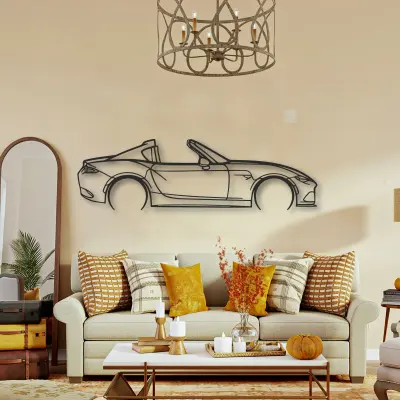
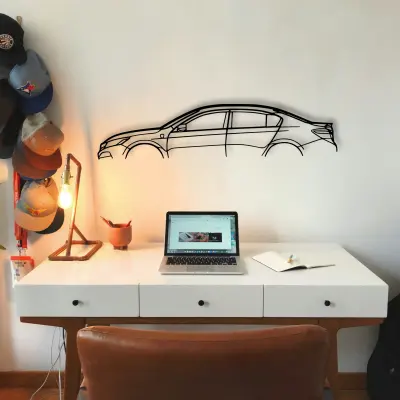
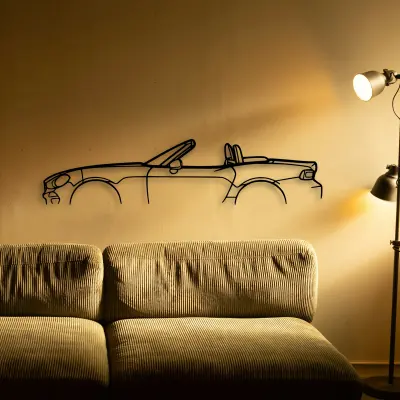
Driving culture is mostly small rituals: the prep, the playlist, the stop for coffee. A Renault outline is the part you keep.
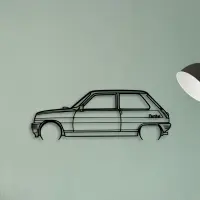
The Renault 5 Alpine Turbo 1983 dates to 1983, and that year's proportions are exactly what the cut outline keeps — the roofline and the stance are period-correct, not stylised.
What makes the Renault work as a souvenir is that it carries no colour of its own. Cut from sheet metal and finished for indoor display, it fits any room you come home to.
Honest material, no colour
Because the Renault comes in bare cut metal, every proportion is exposed. That is harder than a photograph, and it is why a good outline feels earned.
More than one on the plane
A row of Renault outlines, each a different trip, turns a wall into a timeline you can read at a glance.
Build the set
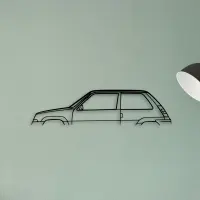
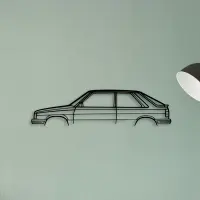
Five sizes for the memory
Every Renault form comes in the same five sizes: 50 cm, 80 cm, 100 cm, 120 cm and 140 cm. The price steps with the size, from $69.95 to $209.95.
- 50 cm — a shelf or a study; an accent, not a feature.
- 80 cm — still modest, but reads across a doorway.
- 100 cm — the safe feature-wall default.
- 120 cm — for rooms where the car is the subject.
- 140 cm — the full statement piece.
Reading it from across the room
Up close you admire the cut; from across the room you recognise the Renault. The piece is designed so both readings land.
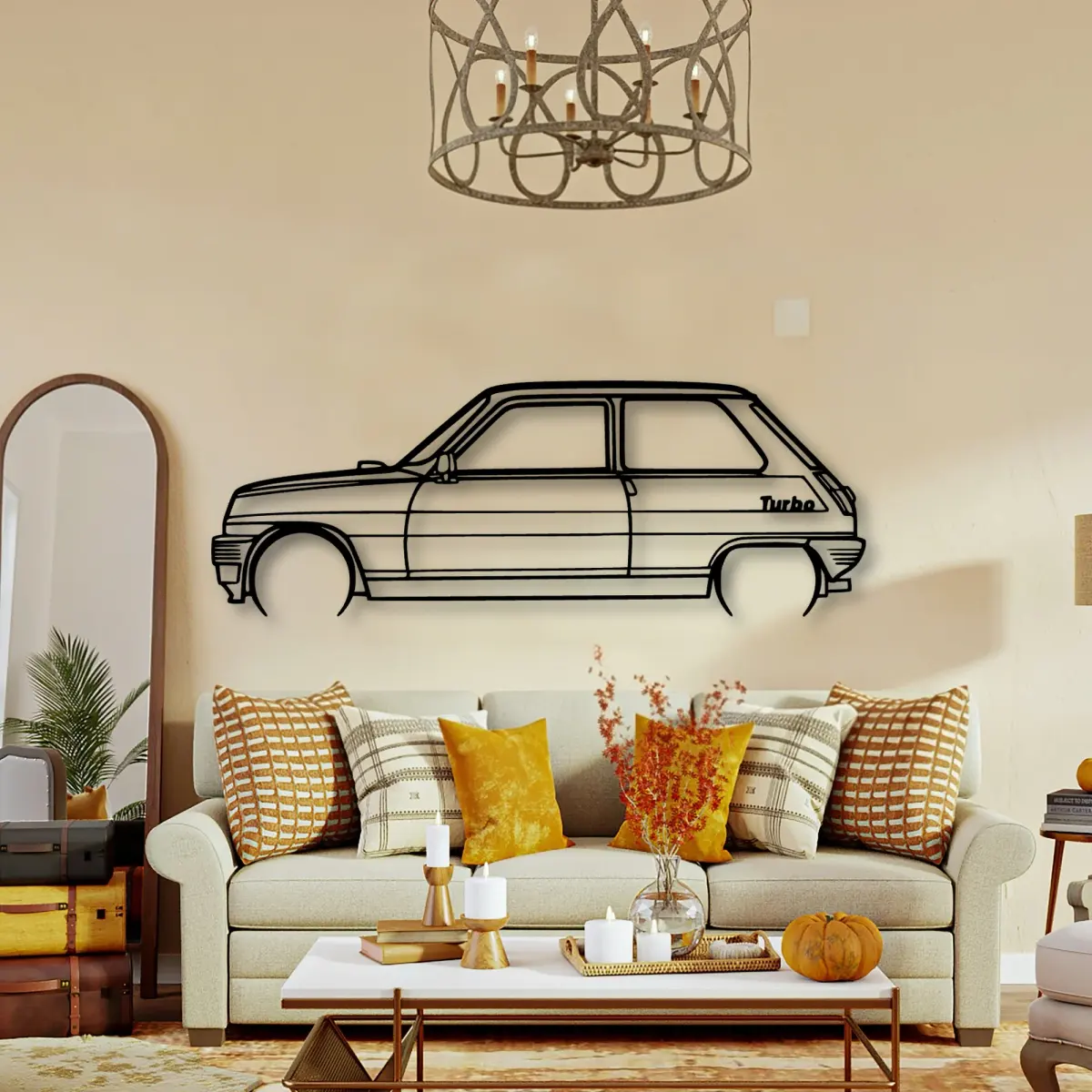
Give it room to mean something. A form left alone on a clear wall says more than the same shape lost in a crowd.
A profile on the plane is a quiet kind of confidence. It does not shout the spec sheet; it simply states the shape.
The right size is the one you forget to notice because it fits the plane so well.
A neutral wall is a gift. It lets the cut do the talking without competing colour.
The plane behind should be the quietest thing in the room. Let the outline be the loud part.
Metal keeps its line. Unlike paper, it will not curl, fade, or bow under a warm lamp.
A piece does not need a frame to feel finished. The cut edge is the frame.
Colour is optional here. The outline carries the identity, so the plane behind it can stay exactly as it is.
Small changes in height read as care. Keep the horizon line steady when you group more than one.
A form ages better than a photograph. There is no moment to date it and no colour to fall out of fashion.
Think in edges, not pictures. The cut defines the object, and the shape defines the cut.
Lighting decides the mood. An even wash from above flatters the edge; a single hard spotlight only hardens one corner.
Grouping works when the shapes contrast. A long low outline next to a tall upright one reads as a conversation, not a pile.
A dedicated wall beats a crowded one. Give the car room and it repays the attention.
The best wall pieces are the ones you stop seeing as decor and start reading as a subject.