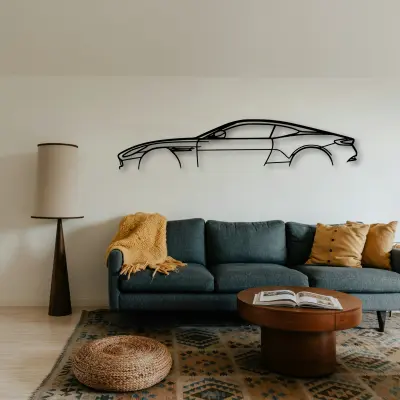
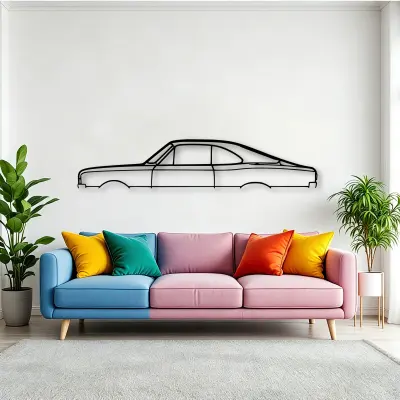
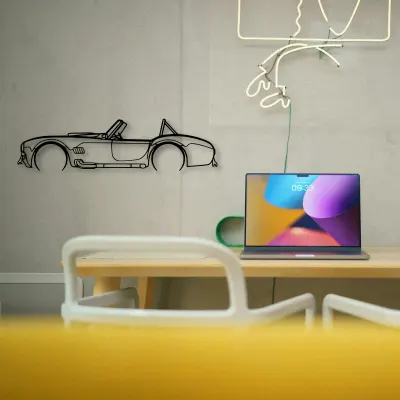
Driving culture is mostly small rituals: the prep, the playlist, the stop for coffee. A Volkswagen outline is the part you keep.
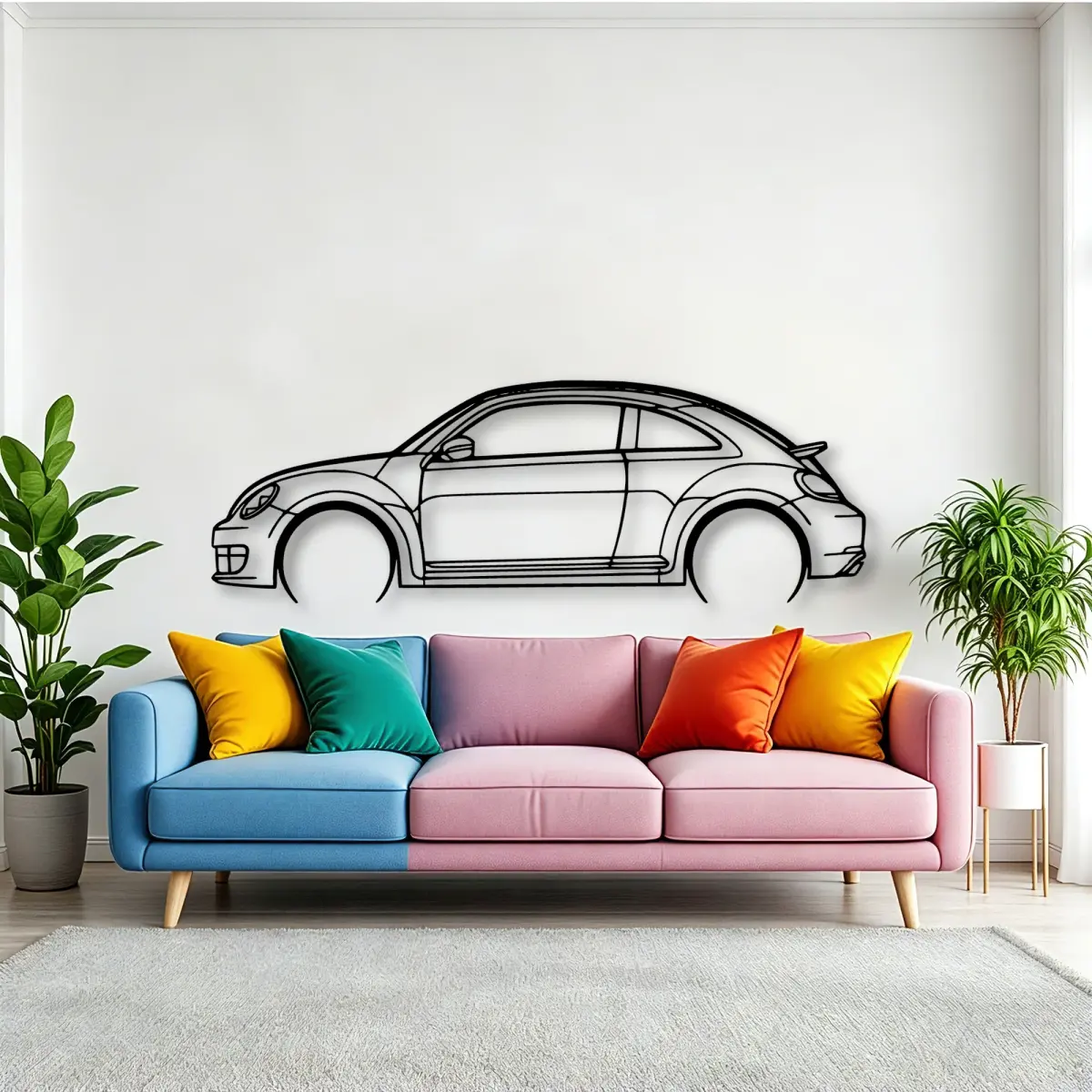
The Volkswagen Beetle 2013 dates to 2013, and that year's proportions are exactly what the cut outline keeps — the roofline and the stance are period-correct, not stylised.
What makes the Volkswagen work as a souvenir is that it carries no colour of its own. Cut from sheet metal and finished for wall display, it fits any room you come home to.
Era written into the line
Period is baked into proportion. A Volkswagen from one decade sits differently from another, and a shape is the fastest way to see that gap.
Five options for the memory
Every Volkswagen shape comes in the same five options: 50 cm, 80 cm, 100 cm, 120 cm and 140 cm. The price steps with the size, from $69.95 to $209.95.
- 50 cm — a shelf or a study; an accent, not a feature.
- 80 cm — still modest, but reads across a doorway.
- 100 cm — the safe feature-wall default.
- 120 cm — for rooms where the car is the subject.
- 140 cm — the full statement piece.
Honest material, no colour
A Volkswagen shape in steel asks the line to do all the work — there is no livery, no badge colour, no gradient to lean on.
Reading it from across the room
A Volkswagen shape has to work at distance, not just up close. At 120 cm it keeps its identifying line legible from the other end of the room.
One piece, one trip
A single Volkswagen shape per journey reads as a chapter. A wall of them becomes an autobiography.
More than one on the panel
If you collect drives, let the Volkswagen be one of a set with a rule. Next to its rivals, the differences are obvious.
Build the set
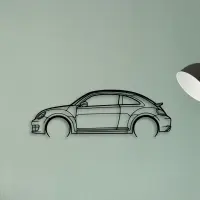
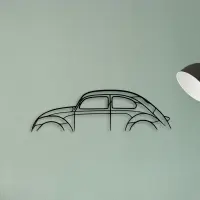
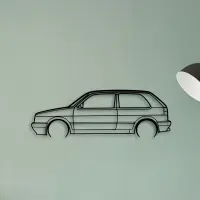
Wall decor works best when it earns its place rather than filling a gap. A single well-chosen outline does more than a row of hesitant decoration.
A shape ages better than a photograph. There is no moment to date it and no colour to fall out of fashion.
The panel behind should be the quietest thing in the room. Let the outline be the loud part.
Placement is a quiet decision. Natural sightline for a hero wall, slightly above a worktop, and well clear of a door swing that would clip it.
Maintenance is close to nothing. A quick dust is enough; there are no frames to chip and no glass to clean.
Start with one. A single correct piece teaches the eye what the rest of the panel should do.
A shape travels. Move it between rooms and it still makes sense, because the shape is the message.
Read it from the doorway, not up close. The whole point is the gesture the line makes at a distance.
Lighting decides the mood. An even wash from above flatters the edge; a single hard spotlight only hardens one corner.
Hang it where the light lands first. The edge you notice on the way in is the edge worth cutting.
A neutral wall is a gift. It lets the cut do the talking without competing colour.