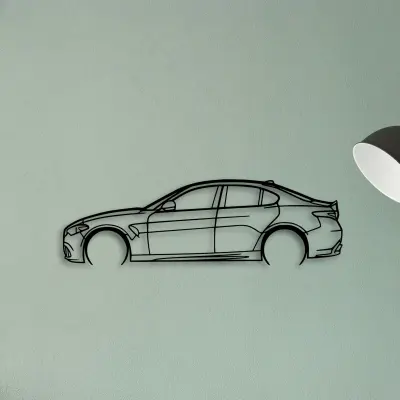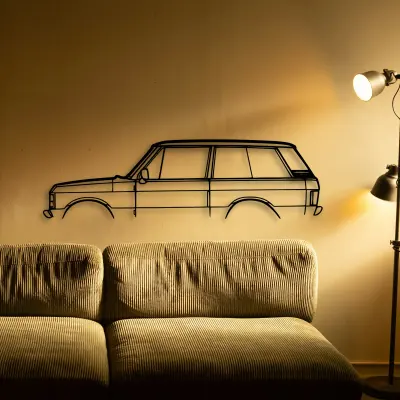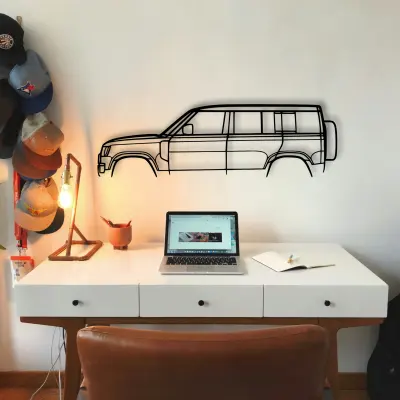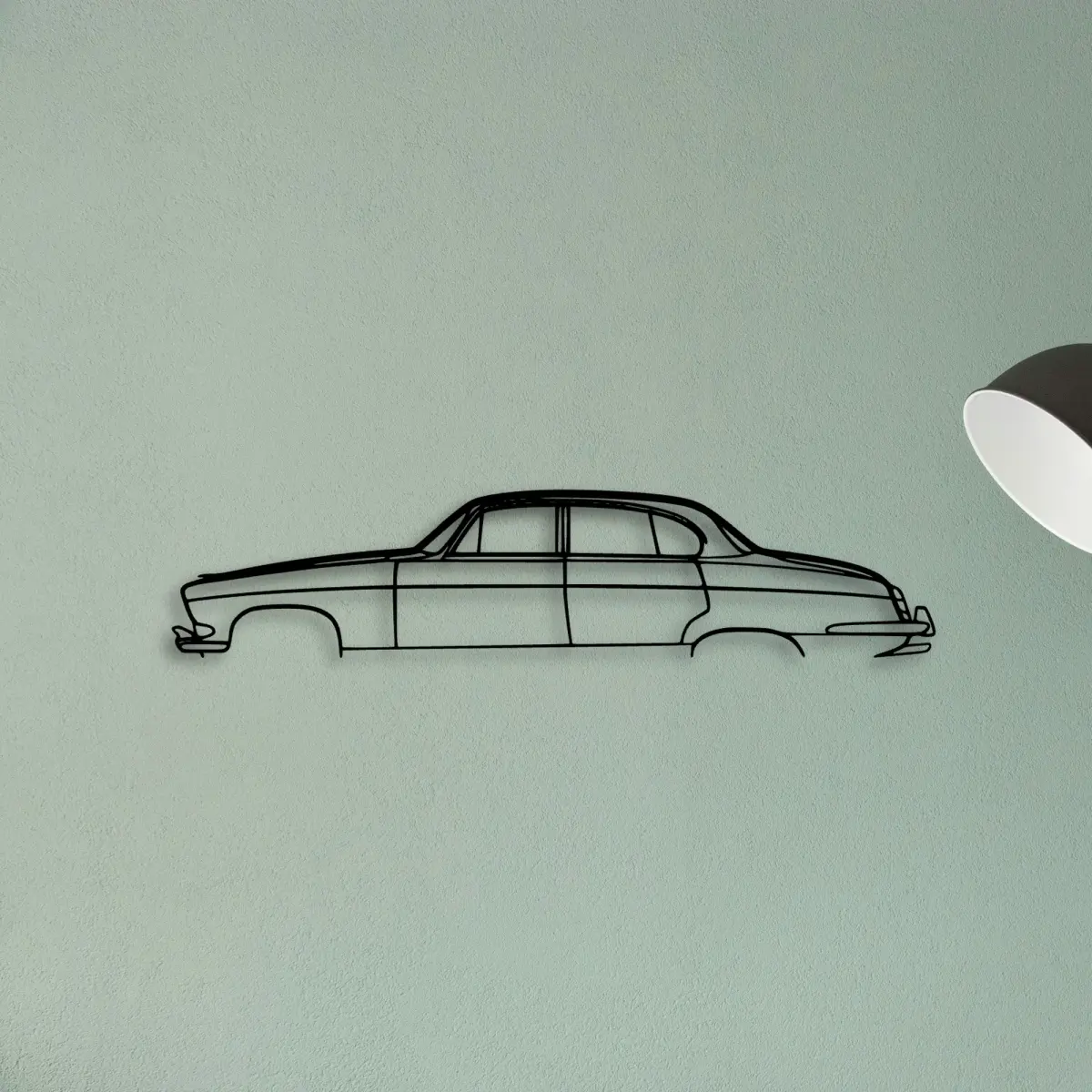
Of the five sizes we cut, 120 cm is the one that suits the most rooms. It is large enough to hold a wall on its own, small enough to sit above a sofa or a workbench, and detailed enough that the internal lines of a complex profile stay legible.
That does not make it universal. Here is where 120 cm works, where it loses, and what to measure before you order.
How 120 cm compares to the sizes either side
The step up from 100 cm is smaller than it sounds. Both sizes work above a sofa; the difference shows up on a large wall, where 100 cm can look slightly under-scaled and 120 cm looks deliberate. The step down to 100 cm is also the cheaper option, so if your wall is between 180 and 220 cm wide, 100 cm is worth considering before you commit.
The step up to 140 cm is a bigger jump. 140 cm needs roughly 240 cm of clear wall to breathe, and it will dominate a room rather than sit in it. If you are unsure between the two, measure the wall and subtract the furniture clearances — the remaining width is your ceiling, and 120 cm fits under a 200 cm ceiling comfortably while 140 cm does not.
What the piece weighs at this size
Weight matters more at 120 cm than at the smaller sizes, because the piece has real mass and the fixings are doing more work. Fix into a stud where you can. On plasterboard, use fixings rated for the weight rather than general-purpose plugs, and check that the wall is sound before you hang anything this size.
Where a 120 cm piece works
- Living rooms, above a sofa. A 120 cm piece is roughly two-thirds the width of a standard two-seater, which is the proportion that looks intentional.
- Garages and workshops, on any wall with 200 cm of clear width. It anchors the space without needing a second piece.
- Home offices, centred on the wall behind the desk. At 120 cm the piece stays readable from a seated position.
- Hallways, provided the hallway is at least 160 cm wide. Below that, 120 cm starts to feel like it is bulging out of the wall.
Rooms where it disappears
120 cm is not a small piece, but it can still be lost:
- Very large open-plan spaces. On a 6-metre wall, a 120 cm piece becomes a detail. Go to 140 cm, or add pieces.
- Rooms with tall ceilings and no furniture to give scale. Without a sofa or a bench, 120 cm has nothing to be measured against.
- Walls dominated by a large window or a door. The piece reads as an accessory rather than a feature.
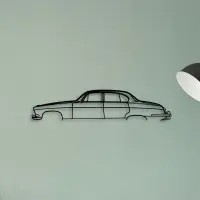
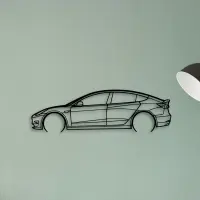
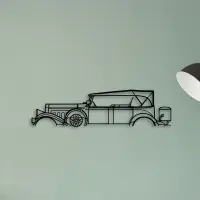
Three 120 cm pieces, three different characters
Furniture clearances
The most common reason a 120 cm piece looks wrong is that it is hanging over furniture it does not fit.
- Above a sofa: leave 20–25 cm between the top of the sofa back and the bottom of the piece.
- Above a sideboard or bench: the piece should be no wider than the furniture, or at least 10 cm narrower.
- Above a bed: centre it on the headboard, not on the wall, and keep 25–30 cm of clearance.
- In a hallway: keep at least 80 cm of clear walking width beside the piece.
Grouping two of them
Two 120 cm pieces side by side need about 290 cm of wall including a 25 cm gap. That is a lot of wall, and on most domestic walls it is better to drop to one 120 cm piece plus two smaller ones than to force two large pieces into a space that cannot hold them.
If you do have the wall, hang them on a shared centre line and keep the gap consistent. Two large pieces at slightly different heights is the single most common error in paired layouts.