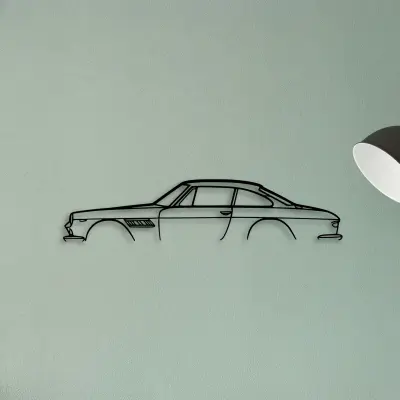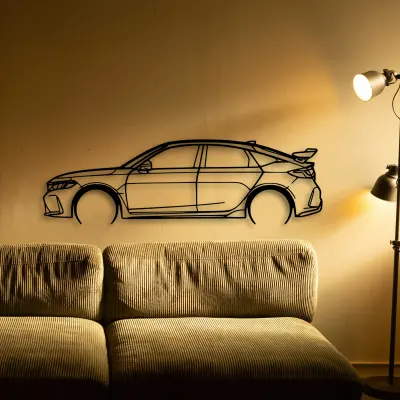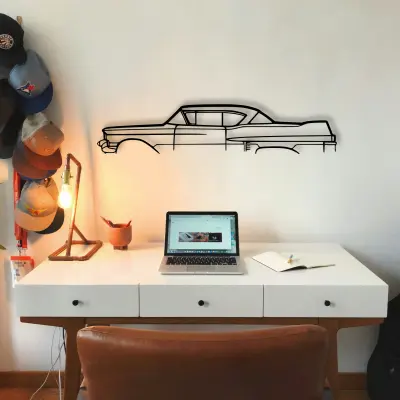
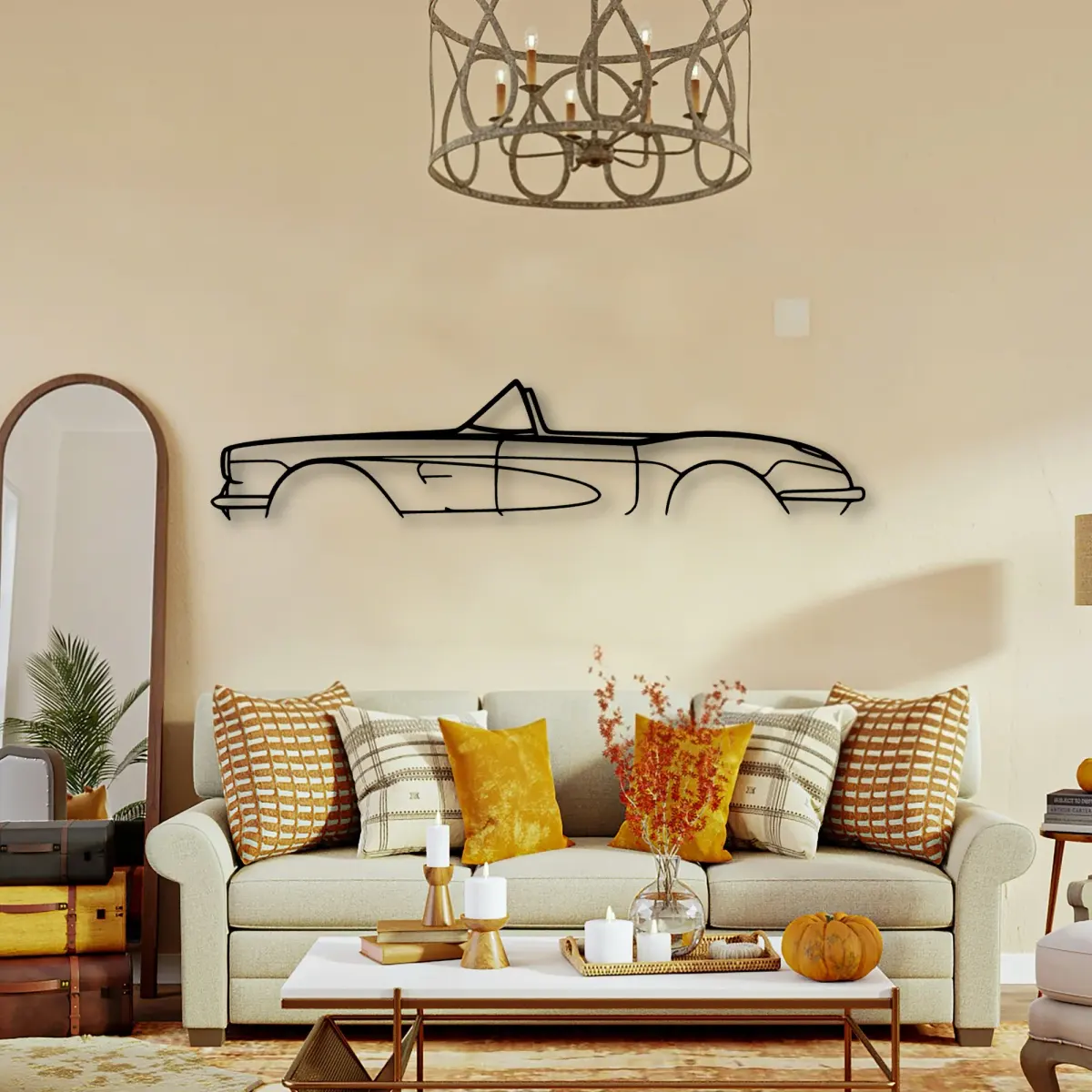
A shape is the shortest argument for why a Chevrolet C1 1959 Cabrio is worth remembering. It drops the colour and the livery and keeps the shape, which is the part people actually recall.
The Chevrolet C1 1959 Cabrio dates to 1959, and that year's proportions are exactly what the cut outline keeps — the roofline and the stance are period-correct, not stylised.
The Chevrolet C1 1959 Cabrio pieces in our range are formed from sheet metal and delivered ready to mount, with the price stepping from $69.95 at 50 cm to $209.95 at 140 cm — a range that lets the same outline work above a worktop or across a full wall.
A note on proportion
Proportion is the quiet problem with small sizes. A detailed Chevrolet C1 1959 Cabrio needs centimetres to keep its lines legible.
The five options, plainly
Every Chevrolet C1 1959 Cabrio shape comes in the same five options: 50 cm, 80 cm, 100 cm, 120 cm and 140 cm. The price steps with the size, from $69.95 to $209.95.
- 50 cm — a shelf or a study; an accent, not a feature.
- 80 cm — still modest, but reads across a doorway.
- 100 cm — the safe feature-wall default.
- 120 cm — for rooms where the car is the subject.
- 140 cm — the full statement piece.
Matching size to wall
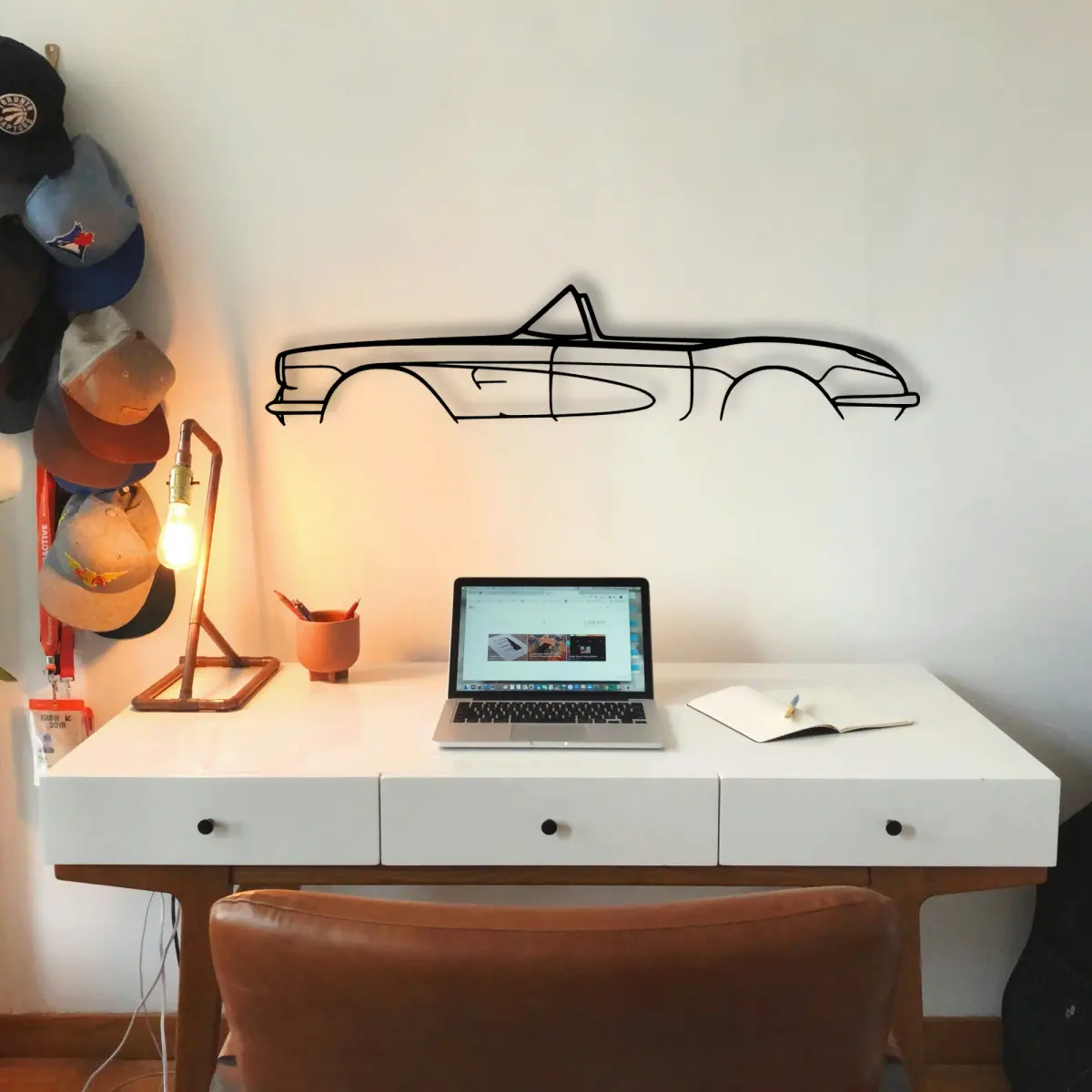
the right size is the one that fills the negative space without crowding it. For the Chevrolet C1 1959 Cabrio, a 100 cm piece suits most living-room walls; 120–140 cm suits a shed or open plan.
The Chevrolet C1 1959 Cabrio in every size
Why this outline holds up
As a Chevrolet shape, the Chevrolet C1 1959 Cabrio carries a brand outline you recognise before you read a badge, which is why the shape works as wall decor.
five options, one outline. The Chevrolet C1 1959 Cabrio is offered from a 50 cm shelf piece up to a 140 cm statement, all cut to the same profile.
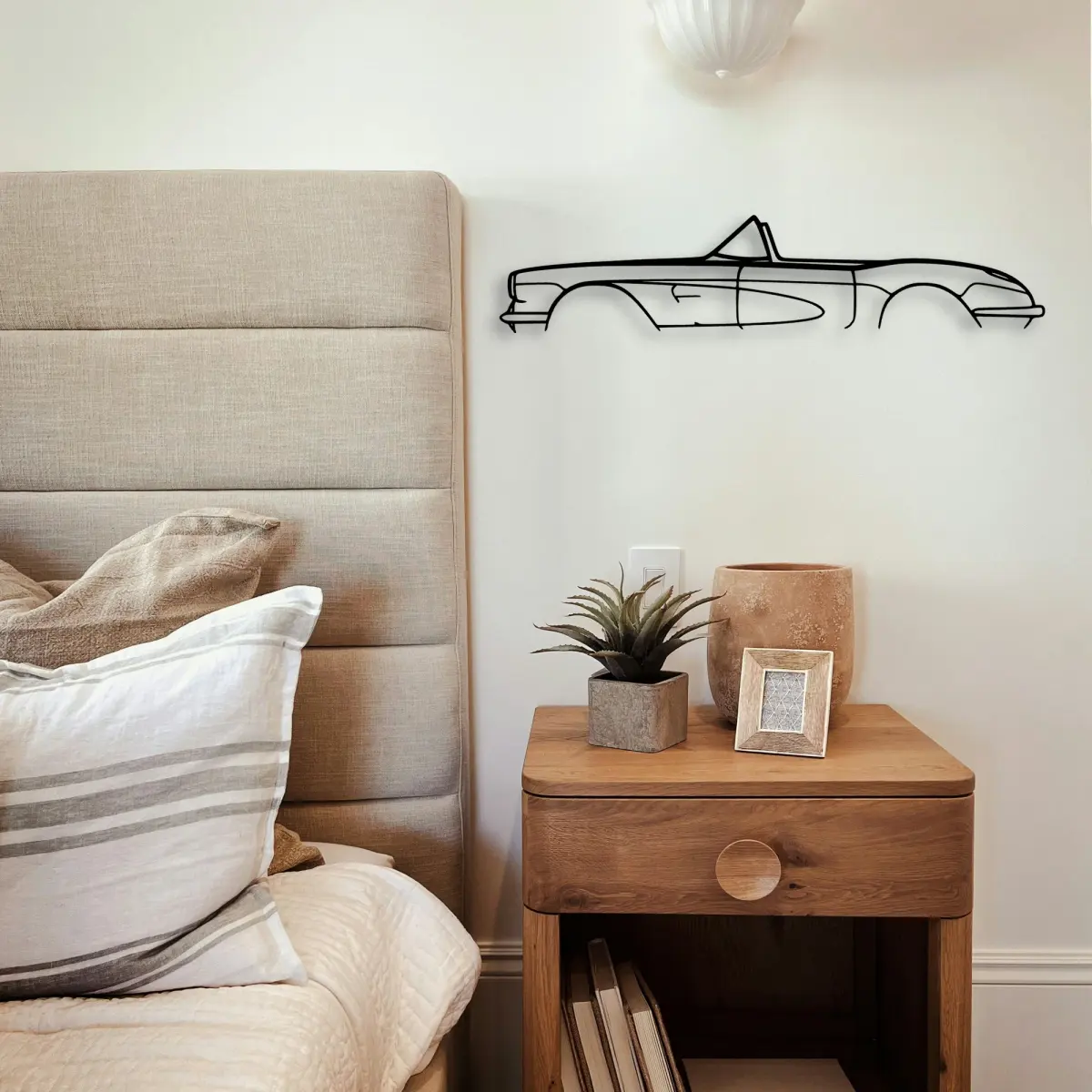
Size to the gap, not the budget. A Chevrolet C1 1959 Cabrio that fills the empty wall reads better than a larger one that crowds it.
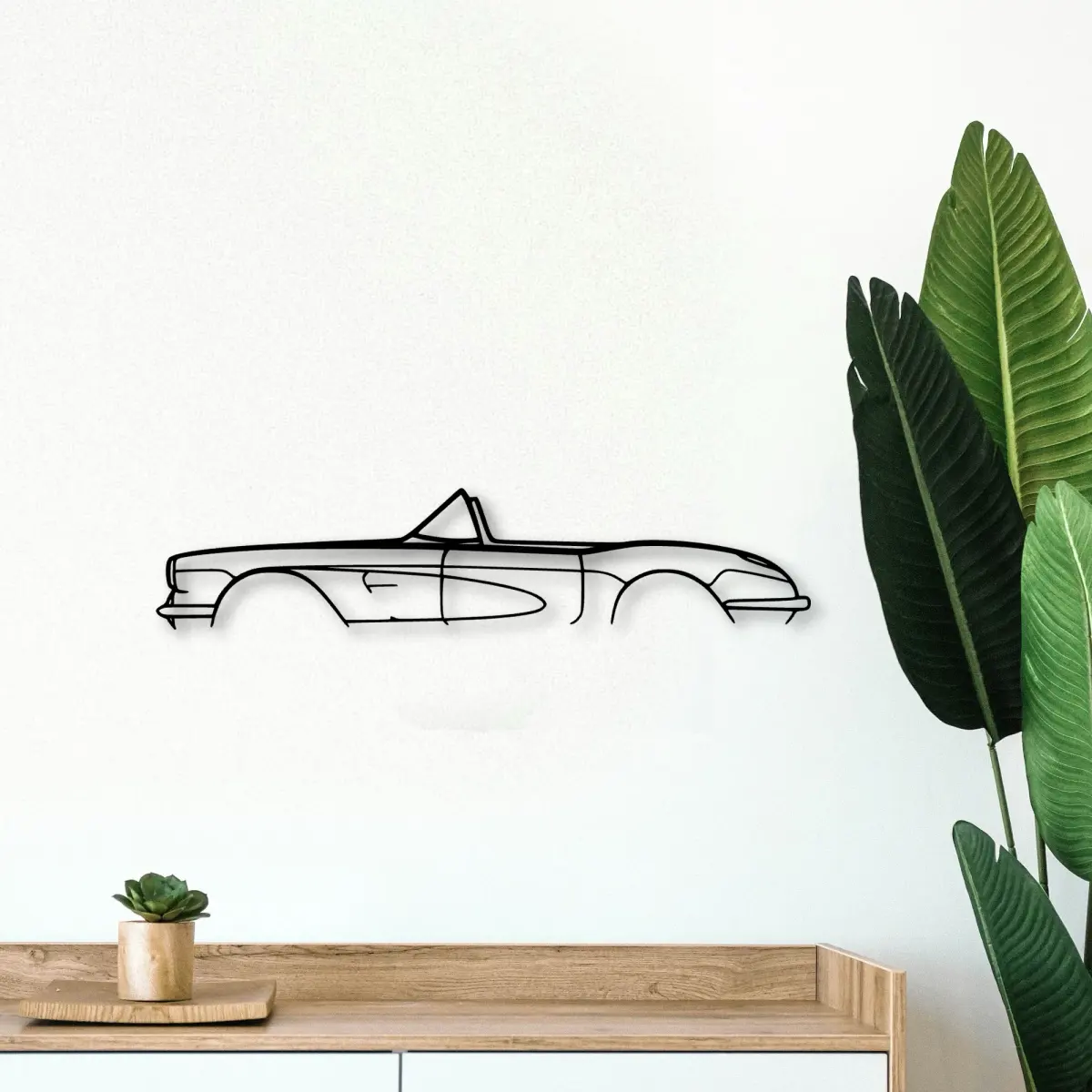
A longer car like the Chevrolet C1 1959 Cabrio benefits from the larger sizes, where its outline can stretch. On a 50 cm piece the same car can feel compressed; give it room and it reads correctly.
The convertible body style is the reason the Chevrolet C1 1959 Cabrio reads as it does from the side; the cut keeps those proportions rather than smoothing them away.
Drawn from the pre-1960, the Chevrolet C1 1959 Cabrio already had the roofline and stance that a laser-cut shape is built to preserve.
the right size is the one you forget to notice because it fits the wall so well.
Scale matters more than people expect. A piece that is too small disappears; one that is sized to the wall reads as intentional from the doorway.
Metal keeps its line. Unlike paper, it will not curl, fade, or bow under a warm lamp.
A profile on the wall is a quiet kind of confidence. It does not shout the spec sheet; it simply states the shape.