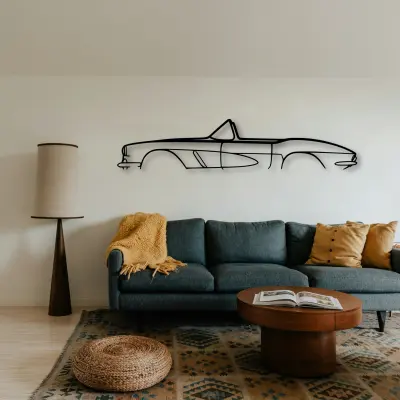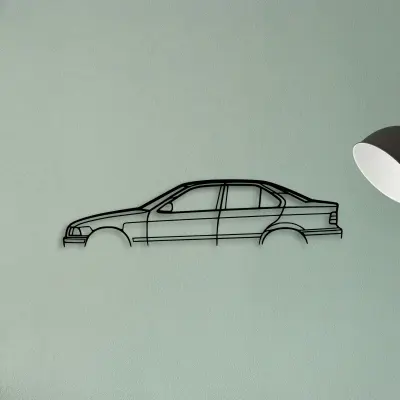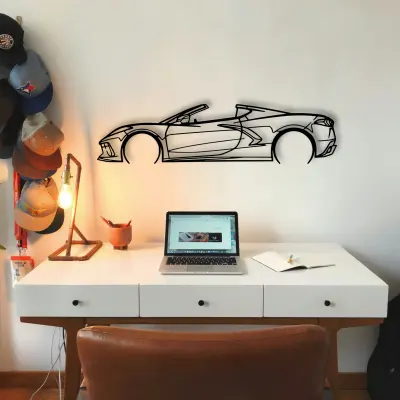
The 1960s is the decade most car-art collectors start with, and the decade where collections most often go wrong. The shapes are attractive, the range is wide, and there are enough near-identical designs that a wall can end up looking like a mistake rather than a choice.
This is a plan for avoiding that. It covers the order to buy in, how to keep track of what you own, how to rotate a display without wrecking the wall, and what actually counts as a duplicate.
Choosing a theme: marque, body style or decade
You have already chosen the decade. The next decision is what organises it. Three options, in increasing order of discipline:
- By marque. All Ferrari, all Volvo, all Oldsmobile. Easiest to keep coherent, and the hardest to keep varied, because marques often repeated one profile for years.
- By body style. Coupés only, convertibles only, or a deliberate mix. This gives the most visual variety on one wall.
- By silhouette type. Long-hood shapes, upright shapes, or a specific proportion. The most interesting and the most difficult to execute.
If this is your first collection, pick body style. It gives you a rule that is easy to apply when you are standing in front of a catalogue, and it produces walls that look composed rather than random.
The first three pieces
Start with one anchor and two supports. The anchor is the piece that sets the tone; the supports are there to make the anchor look deliberate.
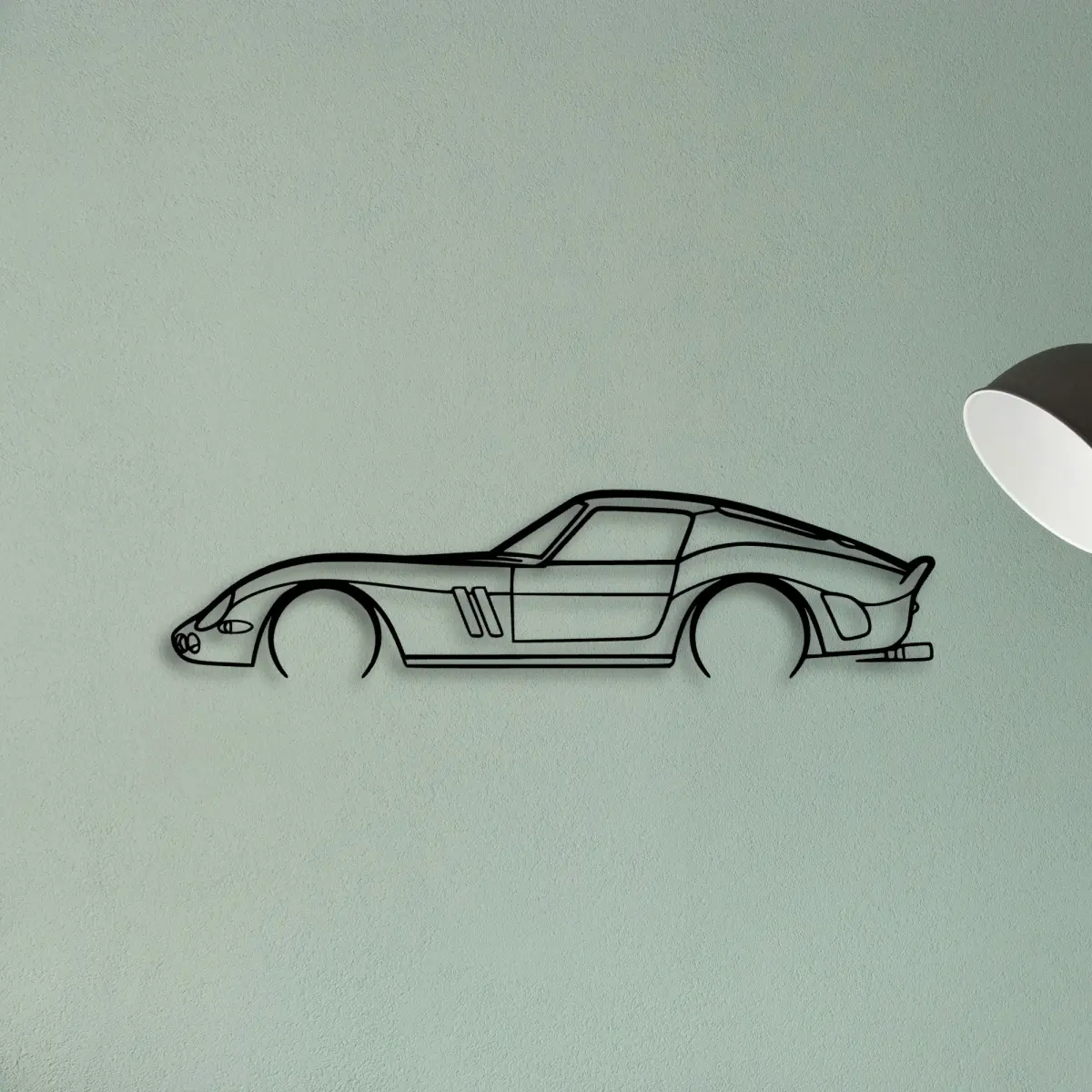
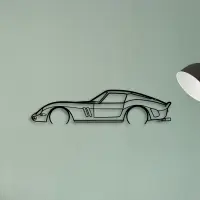
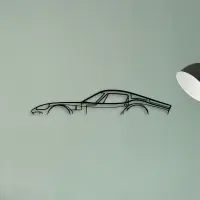
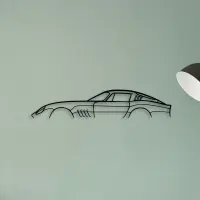
For a 1960s wall, a good anchor is a car with an unmistakable, low, long profile — the 250 GTO 1965 works because its shape is instantly readable even at a distance. For supports, pick two pieces that contrast with it rather than echo it: something taller and more upright, and something with a different silhouette logic altogether.
A 1960s anchor and two supports
Recording what you own
The single most useful thing you can do for a collection is write down what is on the wall. Not for insurance — for buying decisions. Most duplicate purchases happen because the buyer remembered the car, not the outline.
- One line per piece: model, size, date bought, where it hangs.
- A photo of the wall after every change. You will not remember the arrangement.
- A note of what you decided against, and why. This stops you reconsidering the same piece three times.
Rotating a 1960s display
Rotation is how a collection stays interesting without growing. The practical constraint is that you should not drill a new hole every time you swap a piece.
The workable approach is to fix two small hooks at a set spacing and build the display around them, so any piece in the same size class can move between positions. Pieces that come down get stored flat, wrapped, and labelled.
Avoiding near-duplicate outlines
The 1960s range contains several designs that differ in name but not in outline. Two coupés from the same marque, the same decade and the same length will look almost identical as cut metal. Before you buy, hold the new piece's outline against the ones you already own and ask whether a visitor could tell them apart from three metres away.
If the answer is no, you are buying a duplicate with a different badge. Better to spend on a different body style or a different decade and let the 1960s section of the wall stay sharp.