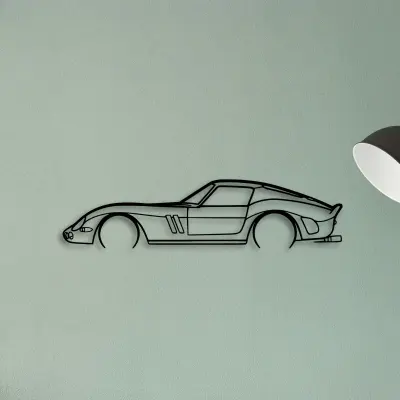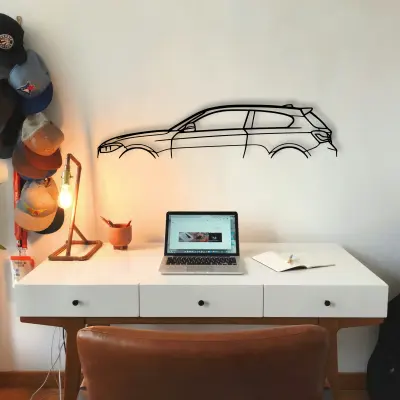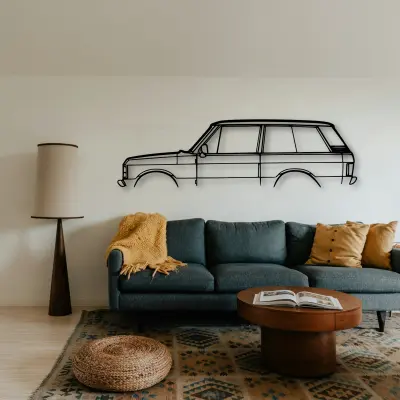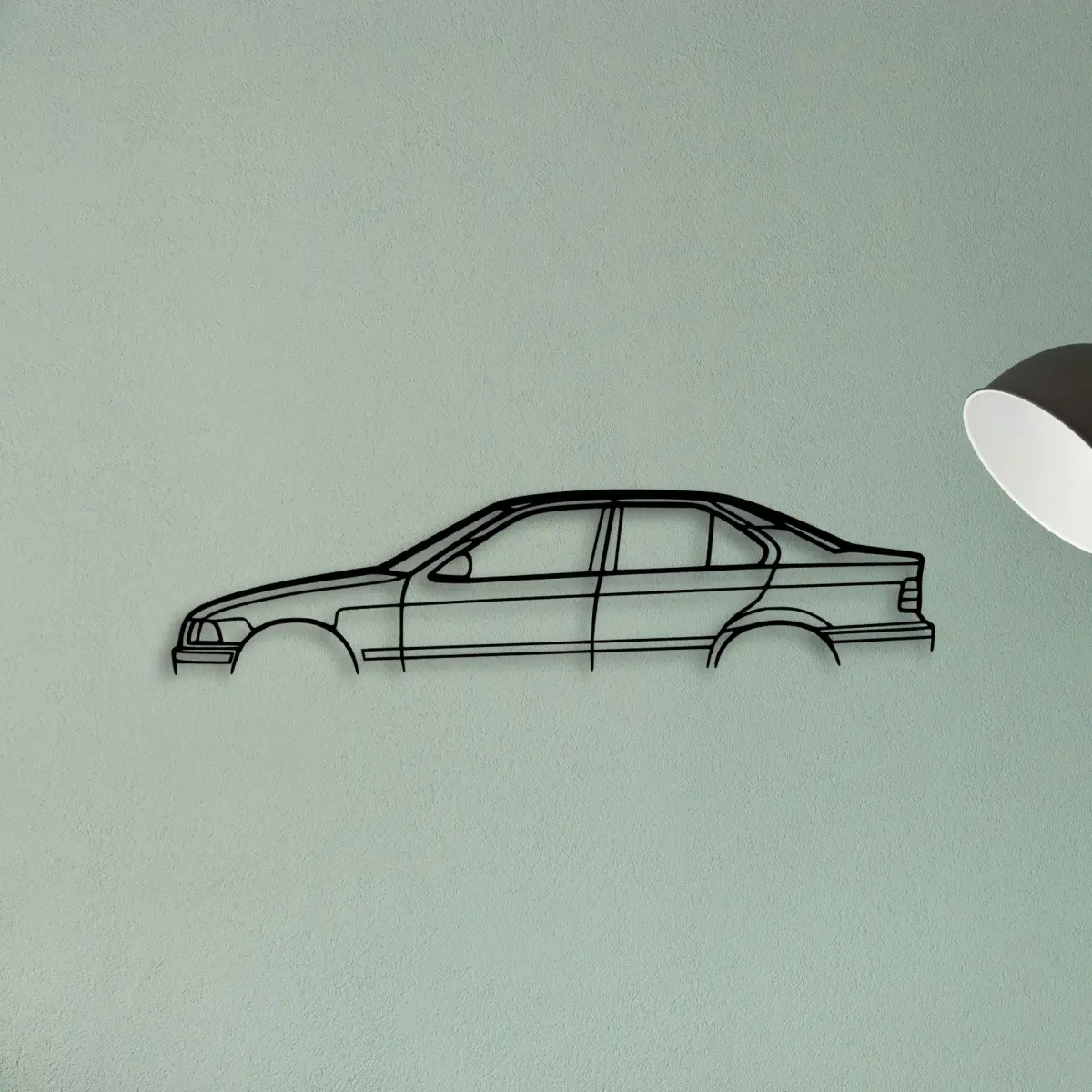
Almost every car-art collector ends up with at least one pair of pieces that look nearly identical on the wall. It happens for a simple reason: manufacturers spent decades building cars that looked similar, and a silhouette strips away exactly the details that would tell them apart.
This is the method for catching that before you buy, rather than after.
Why near-duplicates happen
Three causes, in order of frequency:
- Same model, different variant. A coupé and a convertible of the same car share almost everything except the roof. As cut-outs they are close but not identical.
- Same marque, same decade, different model. Marques reused platforms and proportions heavily, so two models from the same period can be nearly the same length and height.
- Different marques, similar concept. Two long-hood coupés from the same decade will often have almost identical outlines despite being unrelated cars.
Comparing outlines before buying
You do not need to own both pieces to compare them. Look at the two profile images side by side at the same size and check four things:
- Overall length-to-height ratio. If two pieces have the same proportions and the same length, they will read as the same shape at a distance.
- The greenhouse. The shape of the glass area is the single most identifying feature in a silhouette. If two pieces have the same greenhouse shape, they are effectively the same design.
- The rear third. The rear is where most silhouettes differ. If the rear is also the same, stop — you have found a duplicate.
- The wheel treatment. Wheel arch position and size are often the only remaining difference. If they match too, the pieces are interchangeable.
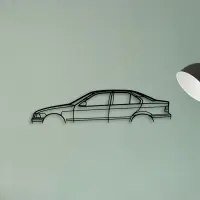
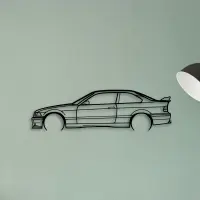
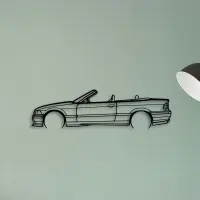
The clearest example of a legitimate pair is the E36 M3 set below. All three are the same car from the same marque and the same decade, but each is a genuinely different silhouette: the coupé has a closed roof, the convertible has an open cockpit, and the 1998 piece differs again in its rear treatment. Hung together they read as a set, not as a mistake.
Same car, three genuinely different silhouettes
Keeping a simple checklist
Before any purchase, run this list. It takes about a minute:
- Does this piece share a body style with something I already own?
- Is it from the same marque and decade as something I own?
- Does the greenhouse match anything on my wall?
- Could a visitor tell these two apart from three metres away?
- If I hung them side by side, would they look like a set or like an accident?
What counts as genuinely different
A piece is genuinely different from what you own if any one of these is true:
- Different body style. A coupé and a convertible of the same car are different silhouettes, even though they share a platform.
- Different decade. Design language changed enough between decades that a 1960s and a 1980s piece from the same marque rarely look alike.
- Different proportion class. A long, low car and an upright, tall one never read as duplicates, whatever the badge.
What does not count as different: a different year of the same model with the same body style, a different trim of the same generation, or a different colour — since all our pieces are matte black.