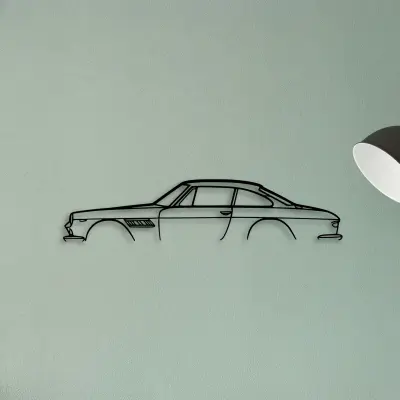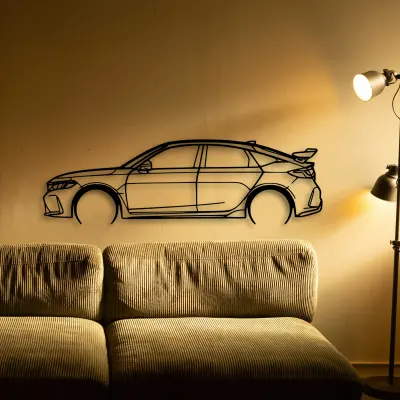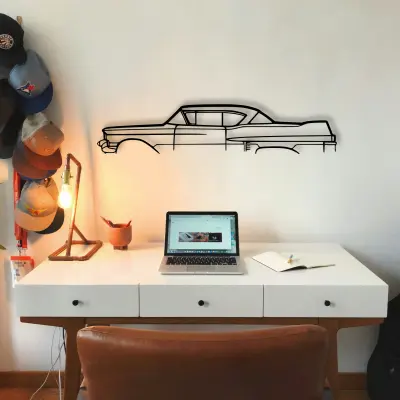
Most car art chases a colour, a badge or a moment. A laser-cut metal silhouette does something harder and more honest: it keeps only the side profile, and asks the Nissan 510 1970 to carry its whole character in a single edge.
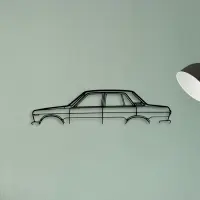
The Nissan 510 1970 dates to 1970, and that year's proportions are exactly what the cut outline keeps — the roofline and the stance are period-correct, not stylised.
At Tinvibe the Nissan 510 1970 is offered as a laser-cut metal silhouette in five sizes, from 50 cm to 140 cm, finished for indoor wall display. The smaller sizes suit a shelf or a study; the larger sizes take a full garage or living-room wall.
What actually looks right
Once the size is right, the rest is easy. A single Nissan 510 1970 outline in 100–140 cm reads as intentional; three mismatched small pieces often read as unfinished.
One confident silhouette beats three hesitant ones. Size is the difference between a wall that is decorated and a wall that is composed.
Start with one piece done well
Spacing and height
A silhouette wants to be read at eye level. The visual centre — usually the wheel line — should sit around 145–160 cm from the floor in a living space, a little higher in a garage where you stand further back.
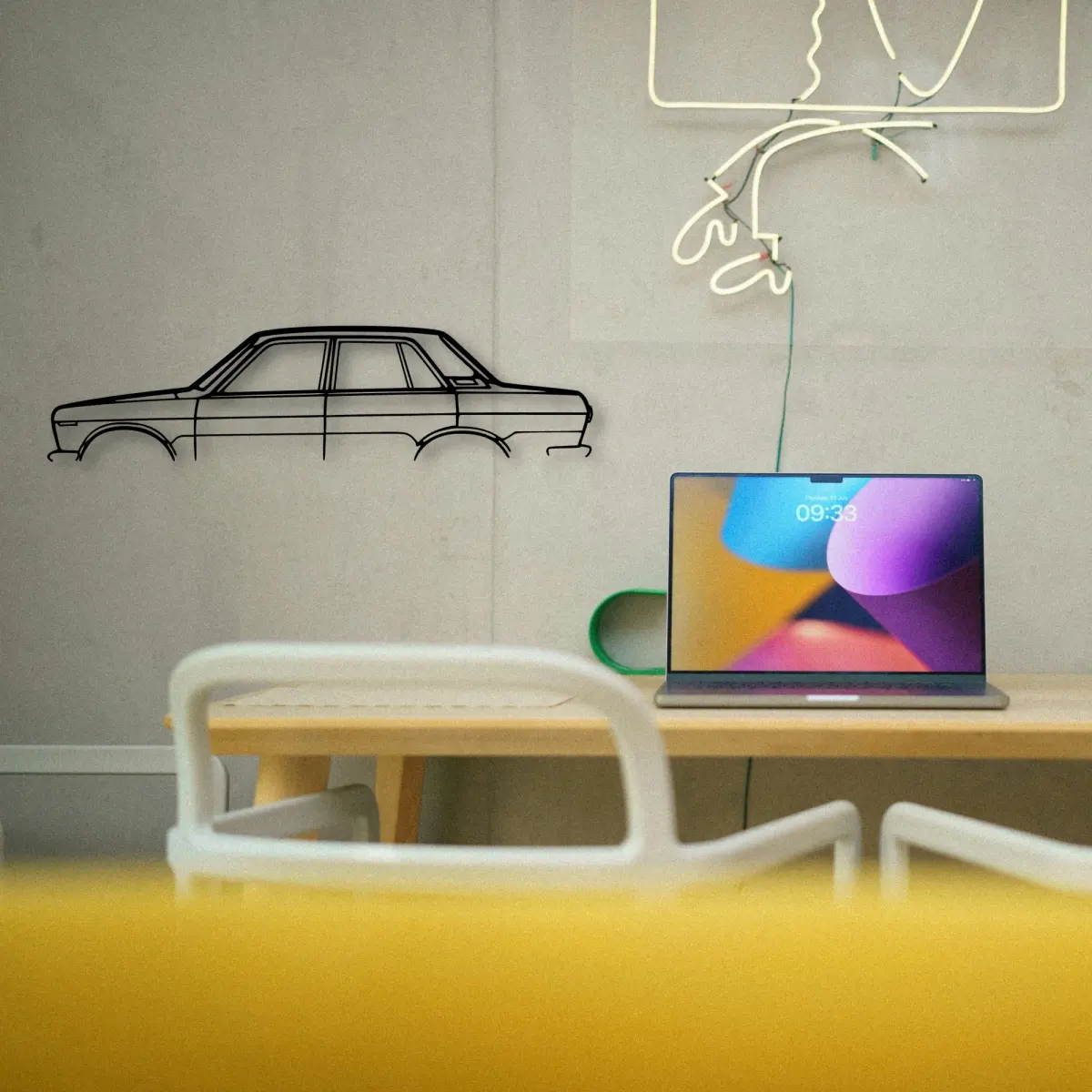
The size trap
The most common mistake with Nissan 510 1970 wall art is buying too small. A 50 cm silhouette looks deliberate above a desk but gets lost on a two-metre garage wall. Match the size to the wall, not to the budget.
- Choosing the smallest size to save money, then finding it disappears on the wall.
- Hanging a detailed profile too high, so the beltline sits above eye level.
- Clustering several small pieces without a common size step between them.
Why this outline holds up
As a Nissan shape, the Nissan 510 1970 carries a brand outline you recognise before you read a badge, which is why the silhouette works as wall art.
One confident silhouette beats three hesitant ones. Size is the difference between a wall that is decorated and a wall that is composed.
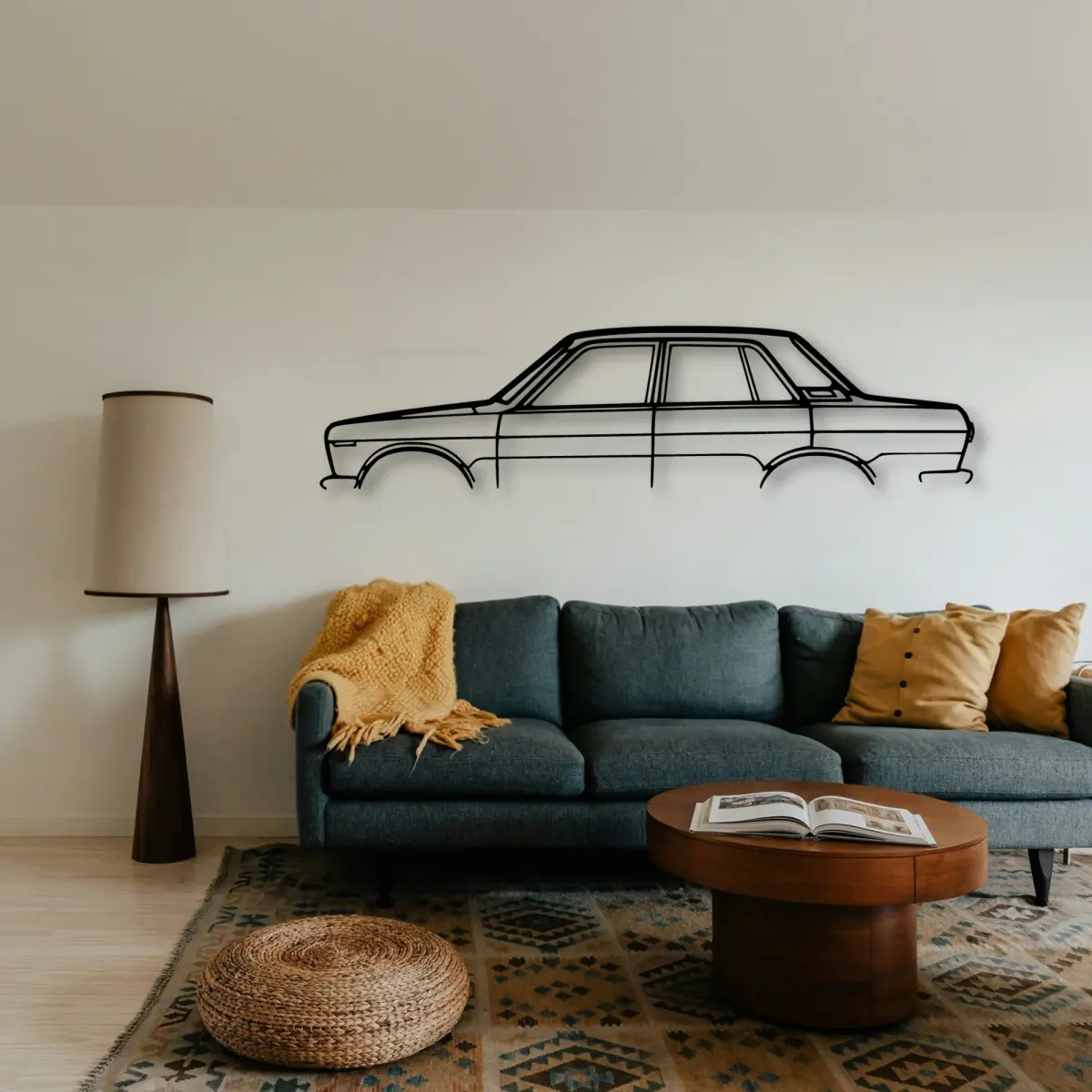
People often start at the smallest size to save money, then find the piece disappears. A Nissan 510 1970 wants room, and the right size is the single biggest factor in whether it looks composed.
Cut metal has a weight that printed art lacks. The shadow it casts is part of the piece, not an accident of the light.
Drawn from the 1970s, the Nissan 510 1970 already had the roofline and stance that a laser-cut silhouette is built to preserve.
Keep the bottom edge consistent when you group pieces. Nothing makes a wall look unfinished faster than three outlines hanging at three different heights.
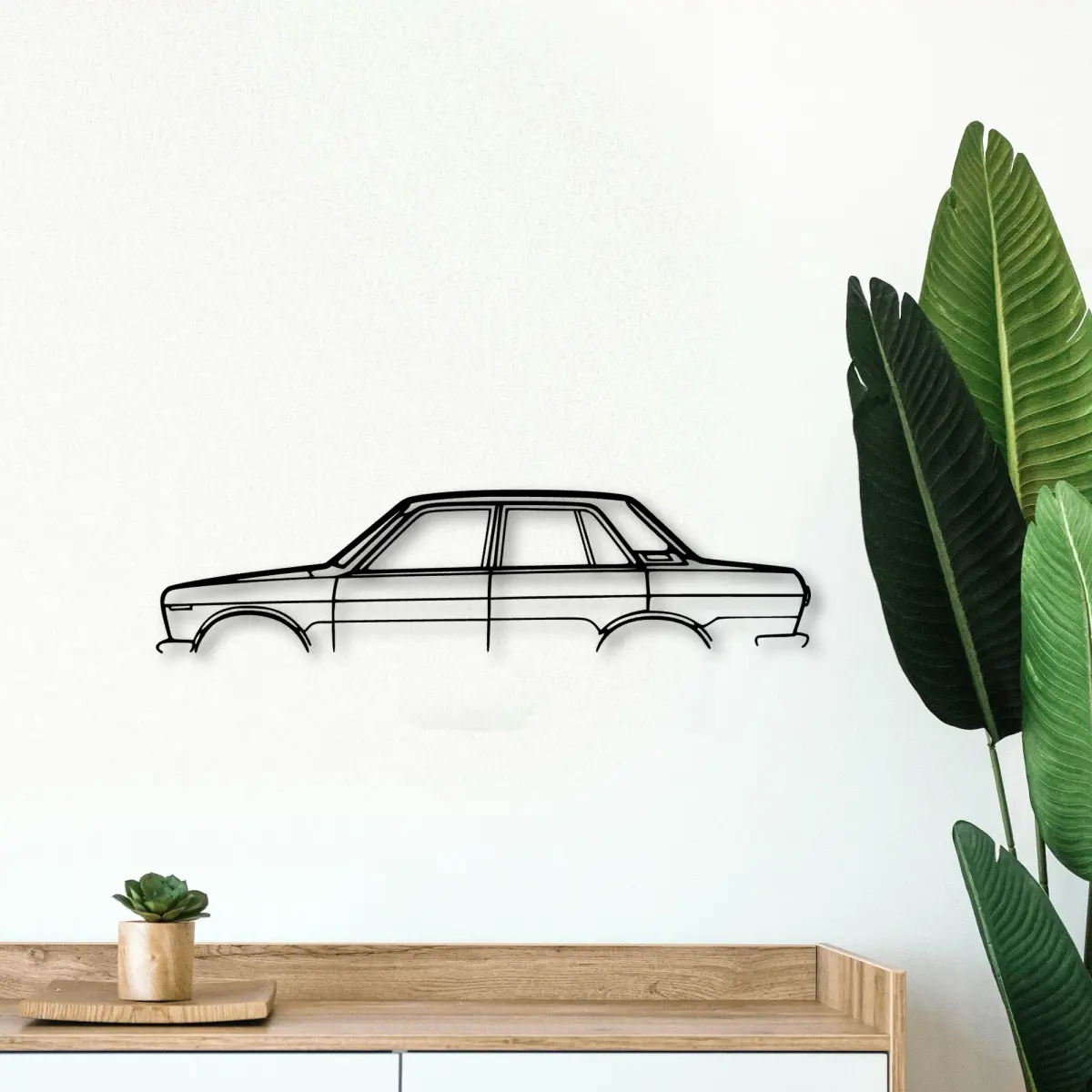
Quiet rooms suit a smaller silhouette; loud rooms need one that can hold its own from across the space.
A silhouette travels. Move it between rooms and it still makes sense, because the shape is the message.
Resist the urge to fill. An empty margin around the outline is what makes it feel considered.