Ask a designer what makes a car recognisable and they will not start with the grille or the badge. They will start with the beltline. It is the line where the glass stops and the body starts, and it does more work on a silhouette than any other single feature.
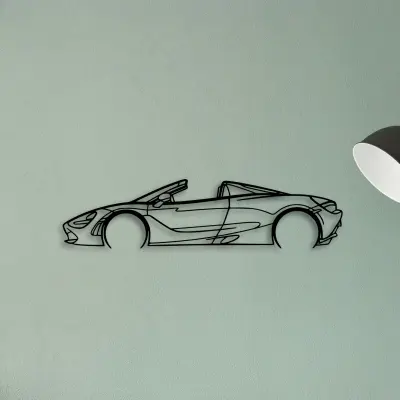
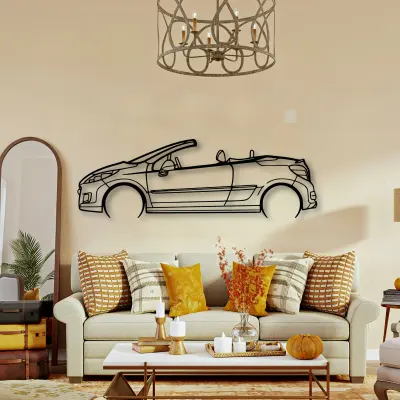
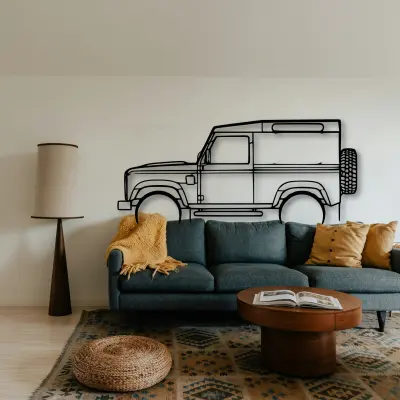
This matters if you buy car art. A cut-metal silhouette keeps exactly one thing from a real car: its outline. Every horizontal line inside that outline either survives the simplification or it does not. The beltline is the one that most often survives — and the one that most often decides whether a piece looks right on a wall.
What the beltline actually is
The beltline is the edge of the side glazing. Trace the bottom of the side windows from the base of the A-pillar to the base of the C-pillar, and you have traced it. In most cars it is not perfectly level: it rises towards the rear, sometimes steeply, and the angle of that rise is a signature of the design.
It exists for a structural reason — the glass has to sit somewhere and the doors have to seal below it — but it became a styling tool almost immediately. Designers use it to make a car look longer, lower, or more upright, without changing a single panel's size.
Where it sits on the car
Three things about its position matter when you are reading an outline:
- Height relative to the wheels. A beltline that sits high — near the top third of the wheel — makes a car look planted and heavy. A low one makes it look light and fast.
- Angle along the body. A rising beltline points the eye backwards and gives a sense of motion. A dead-level one reads as calm and formal.
- How it terminates. Some beltlines sweep down into the rear haunch; others turn back sharply at the C-pillar. The way it ends changes the whole rear third of the car.
How the beltline reads in outline only
Strip a car back to a side profile and the beltline becomes the dominant horizontal division. Everything above it is air; everything below it is mass. That single division is what a silhouette artist is really working with.
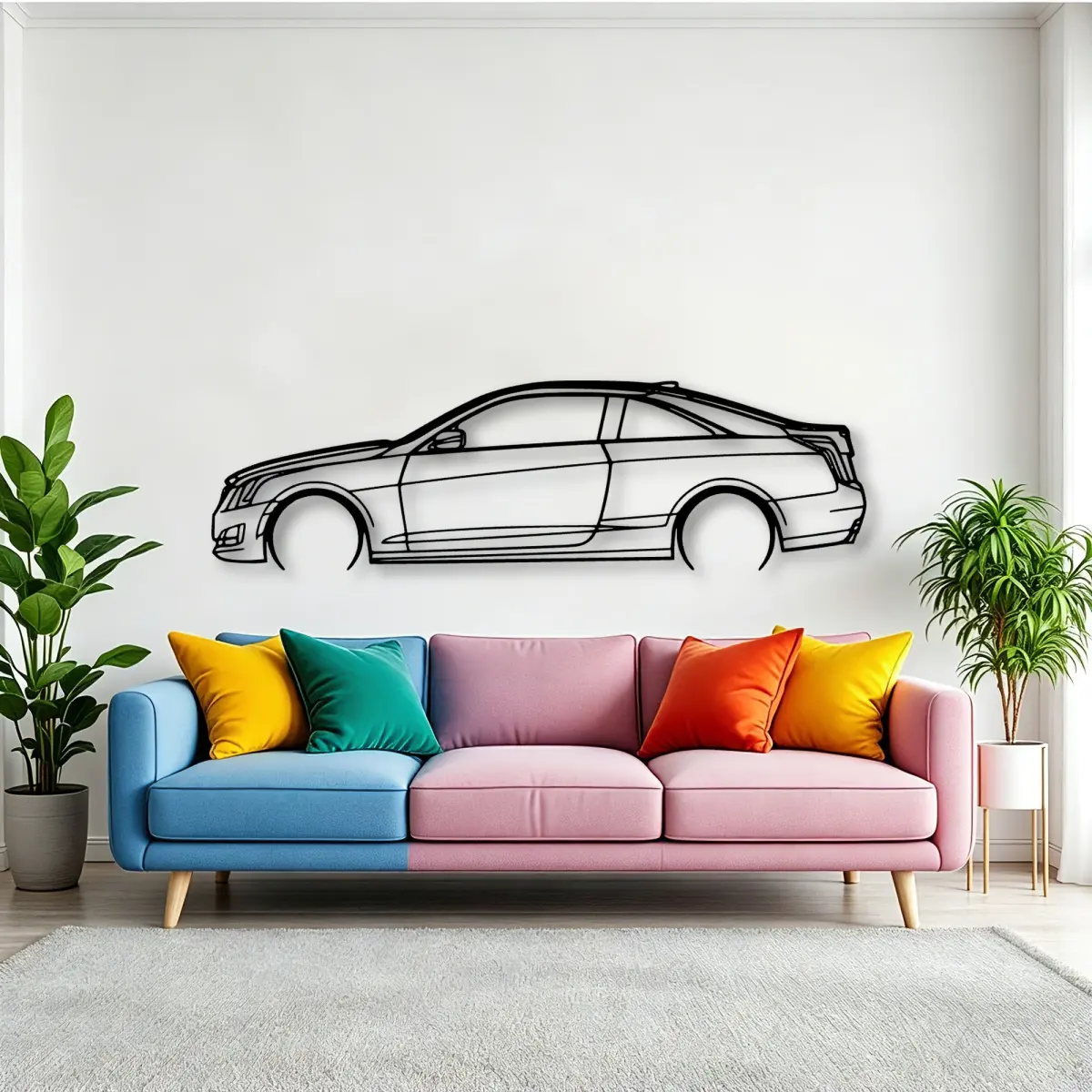
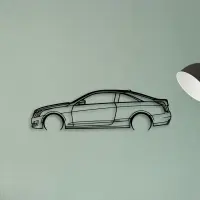
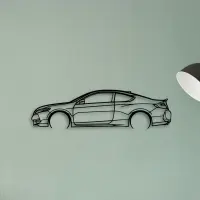
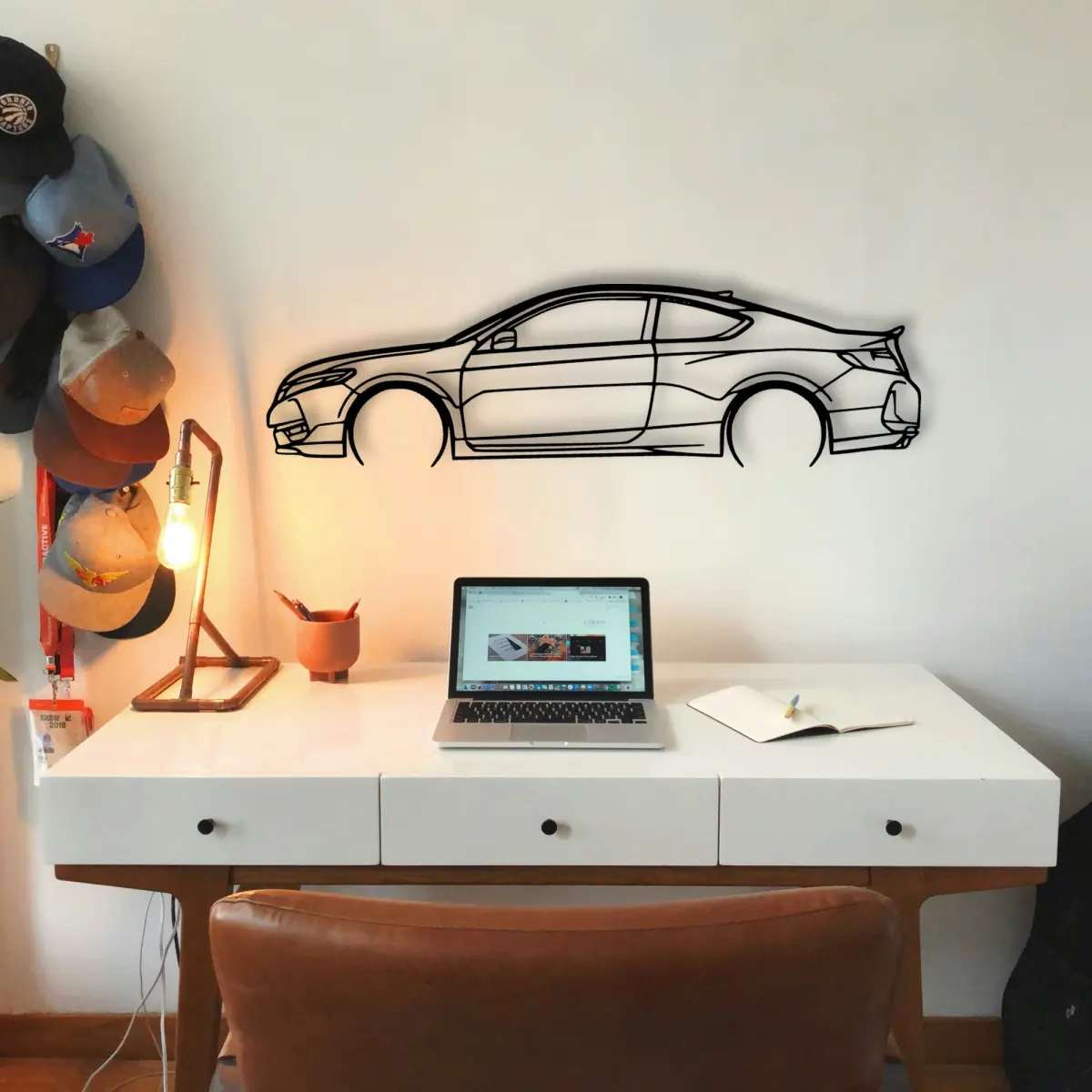
You can see this clearly by comparing two pieces from our own range. The A Coupe 2015 carries a low, gently rising beltline, so the glass area dominates and the outline feels open. The Accord Coupe 2 has a higher, flatter beltline, which pushes the glass into a smaller band and makes the body below read as the heavier element. Same discipline, same material, two completely different characters — and the beltline is doing most of that work.
Two beltlines, side by side
Judging a cut-out by its beltline
When you are looking at a metal silhouette, the beltline tells you whether the piece was cut from a real drawing or traced loosely. Four checks:
- Look at the front end. The beltline should meet the A-pillar at a clean angle. If it starts flat and then jumps, the line has been redrawn rather than followed.
- Check the rear third. The best silhouettes change character back here — the beltline drops, the haunch swells, the deck lid sits proud. If the rear is a straight copy of the middle, the piece will look unfinished.
- Compare the two sides at eye level. A cut piece is symmetrical; a car is not quite. Small asymmetry in the beltline rise is what makes it read as a real profile.
- Stand back three metres. The beltline should still be visible as a line, not a blur. If it disappears, the piece is either too small for the wall or too far from it.
The last check is the practical one. At 50 cm the beltline on a complex coupe can be a hairline; at 120 cm it is a confident edge. Size is not just about filling a wall — it decides how much of the design's internal structure stays legible.
The beltline is the line that survives simplification. If a silhouette only gets to keep one thing from the original car, this is usually the thing worth keeping.
Why silhouette art amplifies it
A painted car hides its beltline behind reflections, shut lines, trim and colour breaks. A single-colour cut-out cannot hide anything. That is why a metal silhouette feels like a more honest reading of a design than a photograph of one: every proportion is exposed, and the beltline is the first thing exposed.
It is also why two cars that look quite different in traffic can look surprisingly similar as wall art, and why two cars that look alike in traffic can be instantly distinguishable in outline. The difference is almost always in the lines, not the shapes.