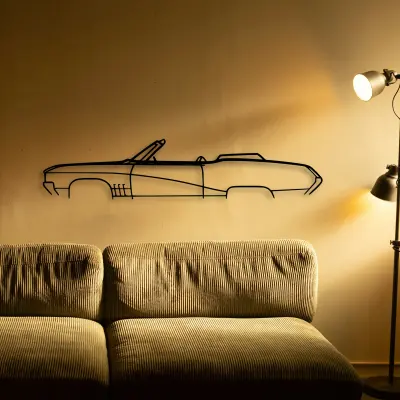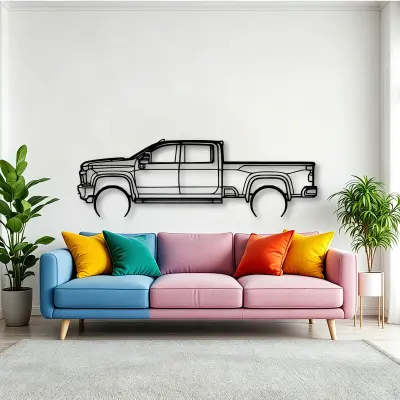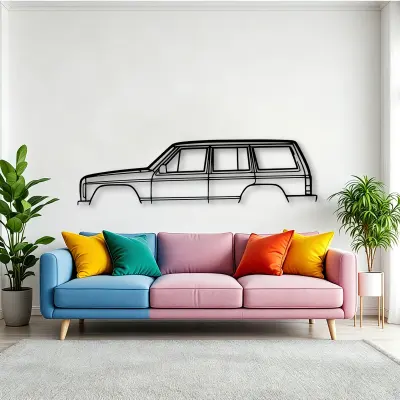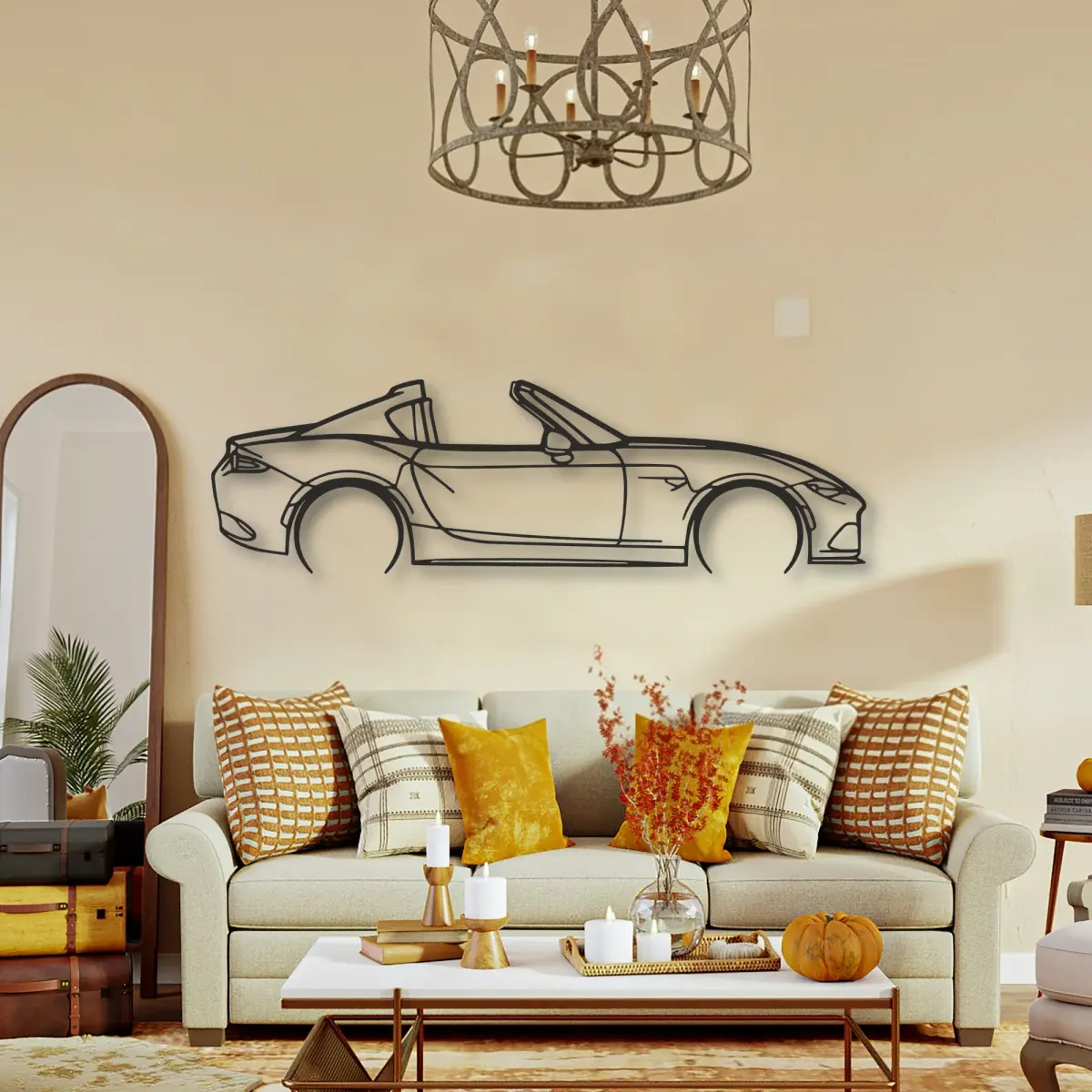
A Mazda laser-cut outline is built to be looked at, and looking at it well is half the fun. Before you point a camera at it, it helps to understand what the outline is doing on the backing.
The Mazda pieces in our range are cut from sheet metal and delivered ready to mount, with the price stepping from $69.95 at 50 cm to $209.95 at 140 cm — a range that lets the same outline work over a desk or across a full wall.
Between displays
If a Mazda outline comes off the surface for a while, store it flat and dry. Cut steel keeps its line as long as it stays straight.
Reading it from across the room
A Mazda outline has to work at distance, not just up close. At 120 cm it keeps its identifying line legible from the other end of the room.
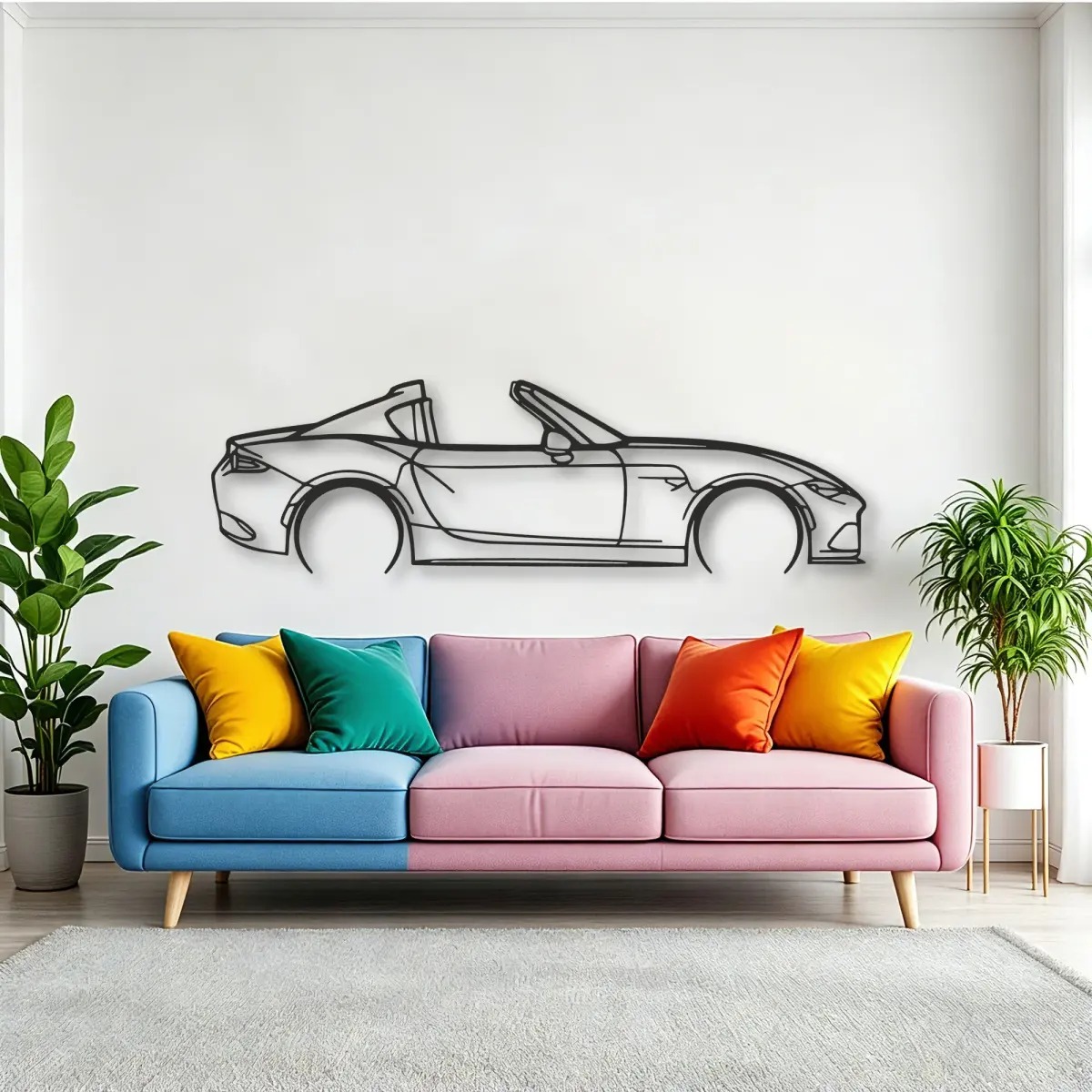
Era written into the line
Period is baked into proportion. A Mazda from one decade sits differently from another, and an outline is the fastest way to see that gap.
Honest material, no colour
A Mazda outline in steel asks the line to do all the work — there is no livery, no badge colour, no gradient to lean on.
Why it suits a man cave wall
A Mazda in cut metal belongs in the spaces cars actually live in. Over a workbench or a parked car it reads instantly.
Five size steps, one outline
Five size steps, one outline. The Mazda is offered from a 50 cm shelf piece up to a 140 cm statement, all cut to the same profile.
- 50 cm — a shelf or a study; an accent, not a feature.
- 80 cm — still modest, but reads across a doorway.
- 100 cm — the safe feature-wall default.
- 120 cm — for rooms where the car is the subject.
- 140 cm — the full statement piece.
More than one on the surface
A row of Mazda outlines, each a different car, turns a wall into a timeline you can read at a glance.
Build the set
Resist the urge to fill. An empty margin around the outline is what makes it feel considered.
A row of identical small frames fights itself. One larger outline settles the surface instead.
Placement is a quiet decision. Sight line for a focal wall, slightly over a desk, and well clear of a door swing that would clip it.
An outline travels. Move it between rooms and it still makes sense, because the shape is the message.
The right size is the one you forget to notice because it fits the surface so well.
Small changes in height read as care. Keep the horizon line steady when you group more than one.
Scale matters more than people expect. A piece that is too small disappears; one that is sized to the surface reads as intentional from the doorway.
Maintenance is close to nothing. A quick dust is enough; there are no frames to chip and no glass to clean.
Cut metal has a weight that printed art lacks. The shadow it casts is part of the piece, not an accident of the light.
Hang it where the light lands first. The edge you notice on the way in is the edge worth cutting.