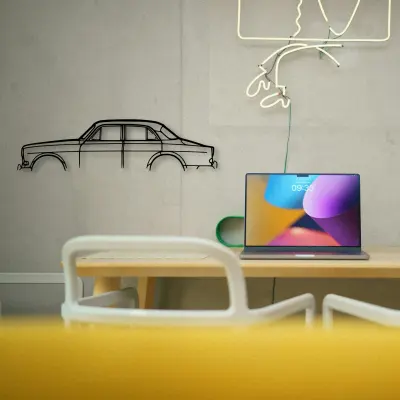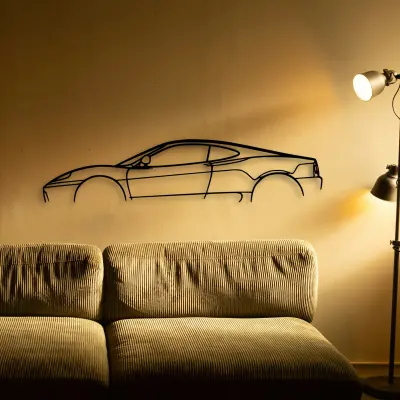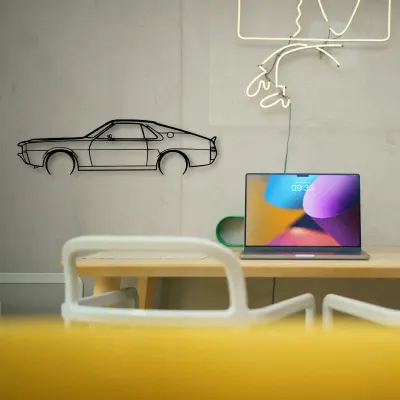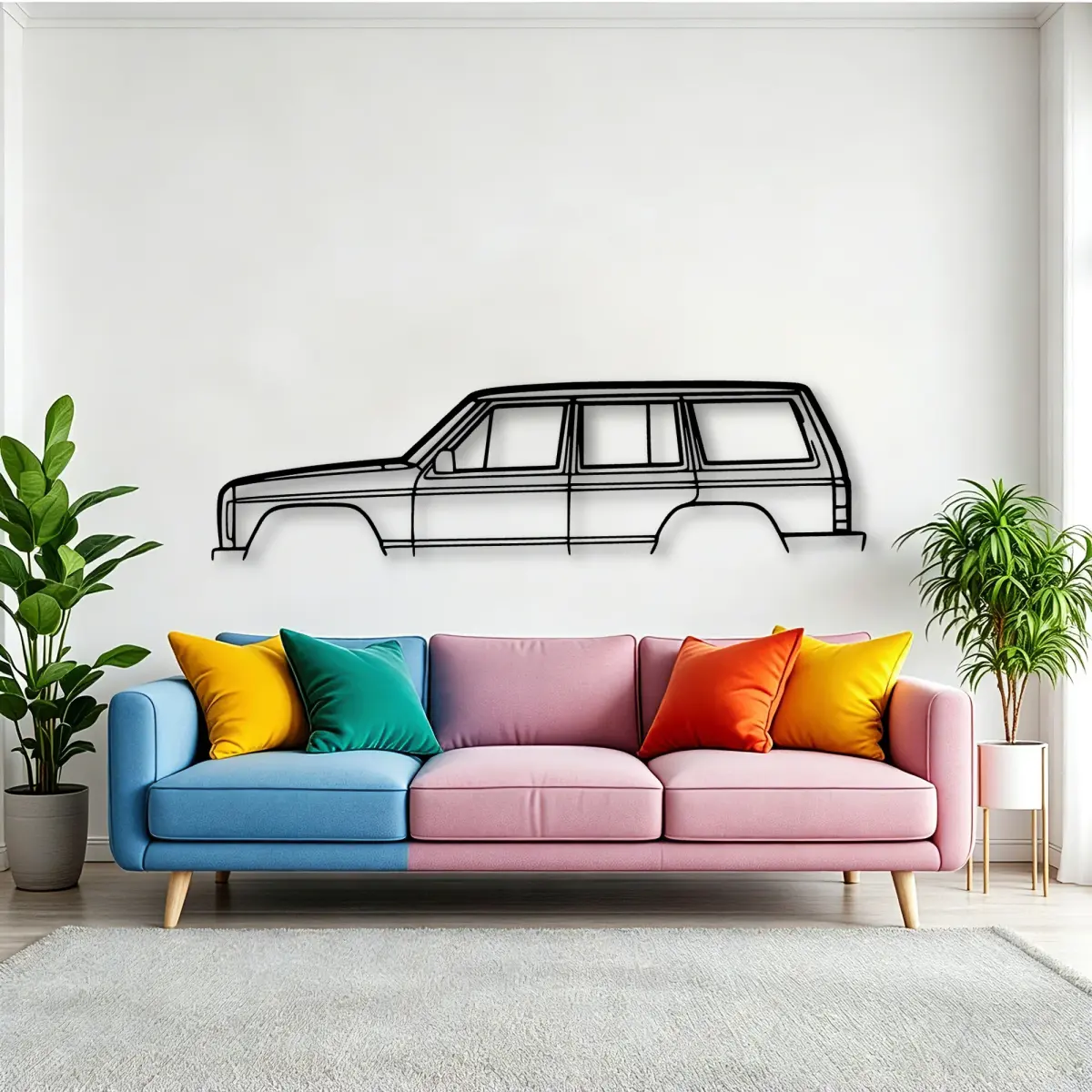
A Jeep sheet-metal profile is built to be looked at, and looking at it well is half the fun. Before you point a camera at it, it helps to understand what the outline is doing on the backing.
The Jeep Cherokee 2000 dates to 2000, and that year's proportions are exactly what the cut outline keeps — the roofline and the stance are period-correct, not stylised.
The Jeep pieces in our range are cut from sheet metal and delivered ready to mount, with the price stepping from $69.95 at 50 cm to $209.95 at 140 cm — a range that lets the same outline work by a workstation or across a full wall.
Era written into the line
You can often date a Jeep by its roof alone. The cut keeps those period cues so the shape reads as a moment without a caption.
Group by a rule
If you collect, let the Jeep be one of a set with a theme. The pieces next to each other make the differences obvious.
- Same era: let the decades argue with each other.
- Same body style: compare the proportions.
- Same marque: read the brand's habits at a glance.
Size ladder, one outline
Every Jeep profile comes in the same size ladder: 50 cm, 80 cm, 100 cm, 120 cm and 140 cm. The price steps with the size, from $69.95 to $209.95.
- 50 cm — a shelf or a study; an accent, not a feature.
- 80 cm — still modest, but reads across a doorway.
- 100 cm — the safe feature-wall default.
- 120 cm — for rooms where the car is the subject.
- 140 cm — the full statement piece.
Why it suits a den wall
A Jeep in cut metal belongs in the spaces cars actually live in. Over a workbench or a parked car it reads instantly.
More than one on the backing
If you collect, let the Jeep be one of a set with a rule. Next to its rivals, the differences are obvious.
Build the set
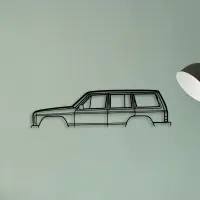
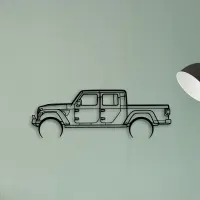
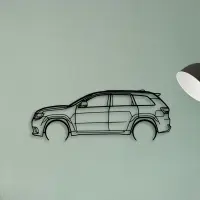
A profile on the backing is a quiet kind of confidence. It does not shout the spec sheet; it simply states the shape.
Depth comes from the shadow. The gap between metal and wall is part of the composition, not a flaw.
Metal art works best when it earns its place rather than filling a gap. A single well-chosen outline does more than a row of hesitant decoration.
Light from the side reveals the cut; light from the front flattens it. Aim for the reveal.
A row of identical small frames fights itself. One larger outline settles the backing instead.
Give it room to mean something. A profile left alone on a clear wall says more than the same shape lost in a crowd.
Recognition is the whole point. The outline is built so the car reads before the words do.
Cut metal has a weight that printed art lacks. The shadow it casts is part of the piece, not an accident of the light.
Small changes in height read as care. Keep the horizon line steady when you group more than one.
A dedicated wall beats a crowded one. Give the car room and it repays the attention.
Grouping works when the shapes contrast. A long low outline next to a tall upright one reads as a conversation, not a pile.