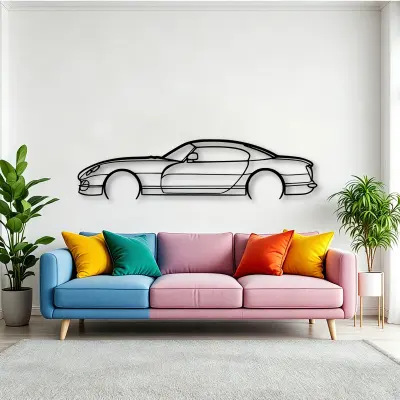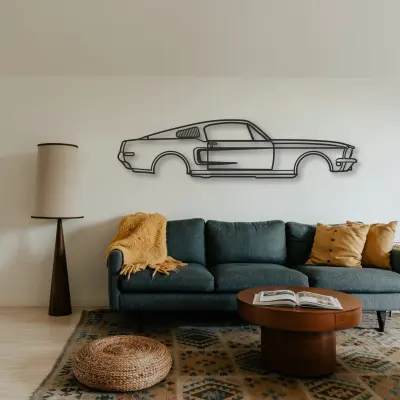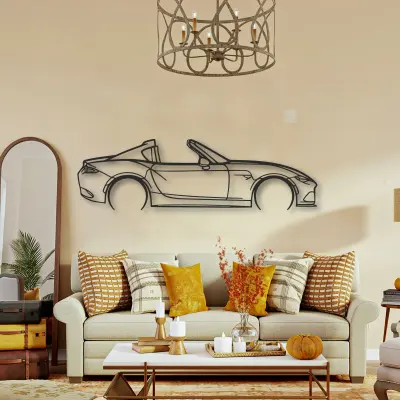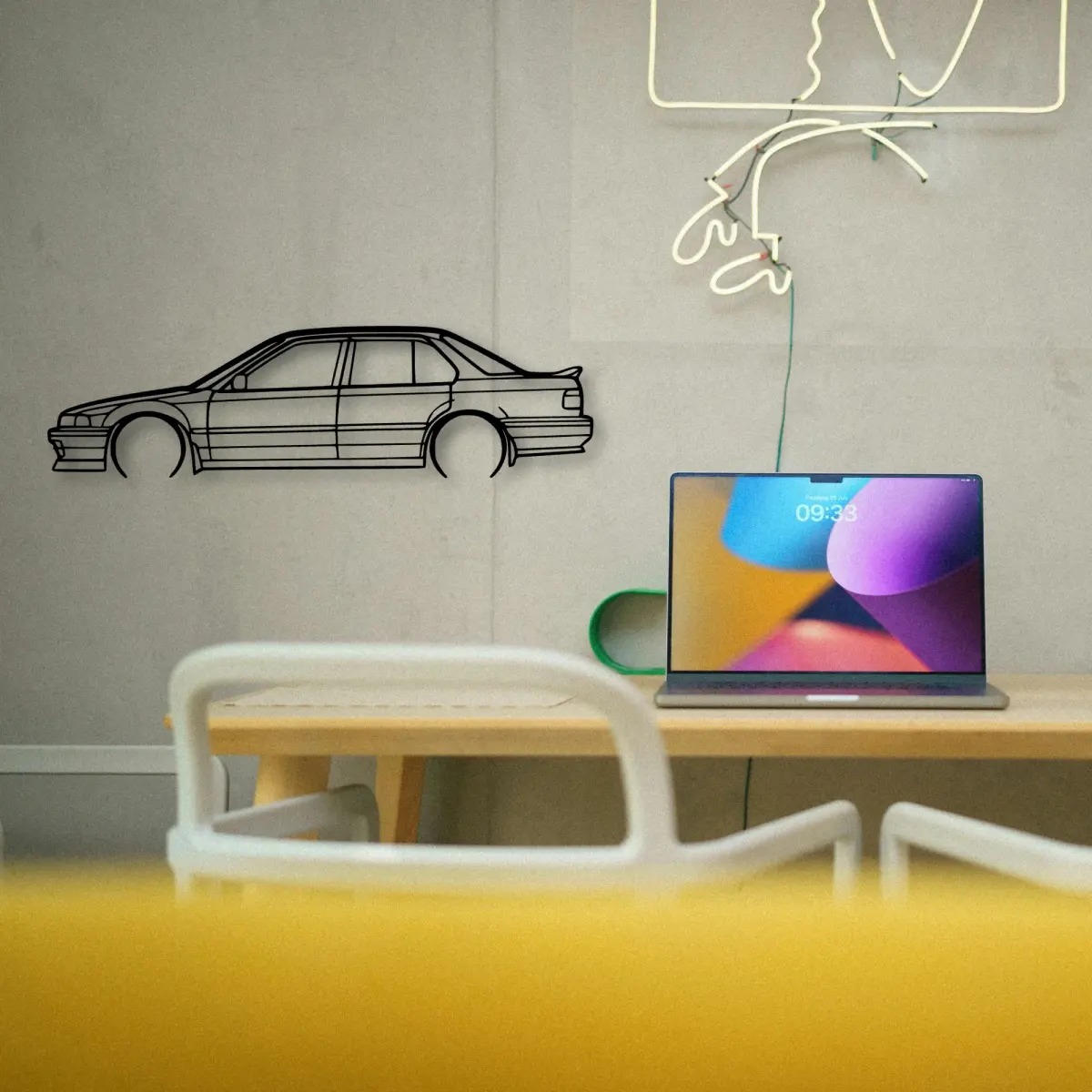
A laser-cut Honda piece carries no colour of its own, which makes it a forgiving subject — and a demanding one, because every shadow counts.
The Honda Accord 1990 dates to 1990, and that year's proportions are exactly what the cut outline keeps — the roofline and the stance are period-correct, not stylised.
What makes the Honda work as wall decor is that it carries no colour of its own. Cut from sheet metal and finished for wall display, it sits quietly in almost any room while the outline does the talking.
Why it suits a shed wall
A Honda in cut metal belongs in the spaces cars actually live in. Over a workbench or a parked car it reads instantly.
Era written into the line
You can often date a Honda by its roof alone. The cut keeps those period cues so the shape reads as a moment without a caption.
Five options, one outline
Five options, one outline. The Honda is offered from a 50 cm shelf piece up to a 140 cm statement, all cut to the same profile.
- 50 cm — a shelf or a study; an accent, not a feature.
- 80 cm — still modest, but reads across a doorway.
- 100 cm — the safe feature-wall default.
- 120 cm — for rooms where the car is the subject.
- 140 cm — the full statement piece.
Flat-lay on a surface
Lay a Honda mini cutout on a clean table and shoot from above. Flat-lay turns a small piece into a considered object.
More than one on the panel
A row of Honda outlines, each a different car, turns a wall into a timeline you can read at a glance.
Build the set
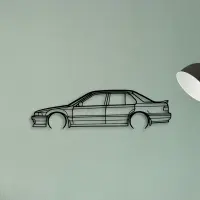
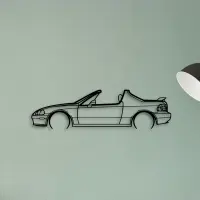
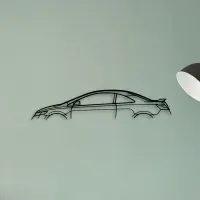
Think in edges, not pictures. The cut defines the object, and the shape defines the cut.
Resist the urge to fill. An empty margin around the outline is what makes it feel considered.
A piece does not need a frame to feel finished. The cut edge is the frame.
The best wall pieces are the ones you stop seeing as decor and start reading as a subject.
Placement is a quiet decision. Natural sightline for a hero wall, slightly above a worktop, and well clear of a door swing that would clip it.
A shape ages better than a photograph. There is no moment to date it and no colour to fall out of fashion.
Hang two that differ in length, not in mood, and they read as a pair rather than a repeat.
The room sets the size. A busy wall wants a bigger outline to hold its own; a calm wall lets a smaller piece breathe.
Grouping works when the shapes contrast. A long low outline next to a tall upright one reads as a conversation, not a pile.
Scale matters more than people expect. A piece that is too small disappears; one that is sized to the panel reads as intentional from the doorway.
Quiet rooms suit a smaller shape; loud rooms need one that can hold its own from across the space.
A dedicated wall beats a crowded one. Give the car room and it repays the attention.
A row of identical small frames fights itself. One larger outline settles the panel instead.