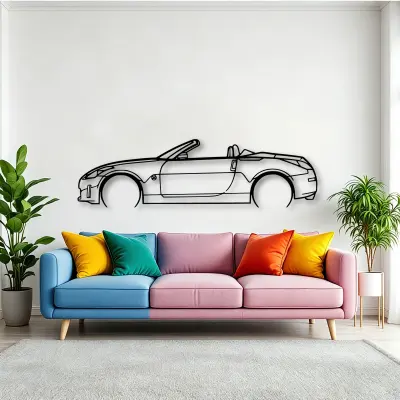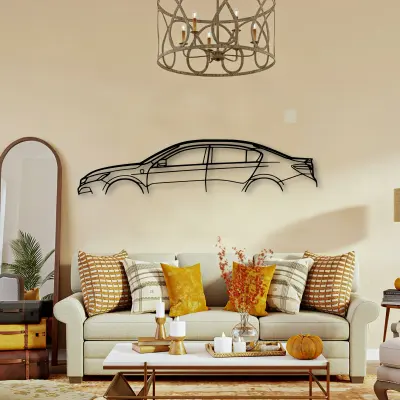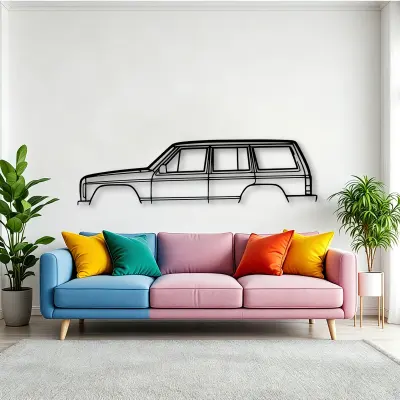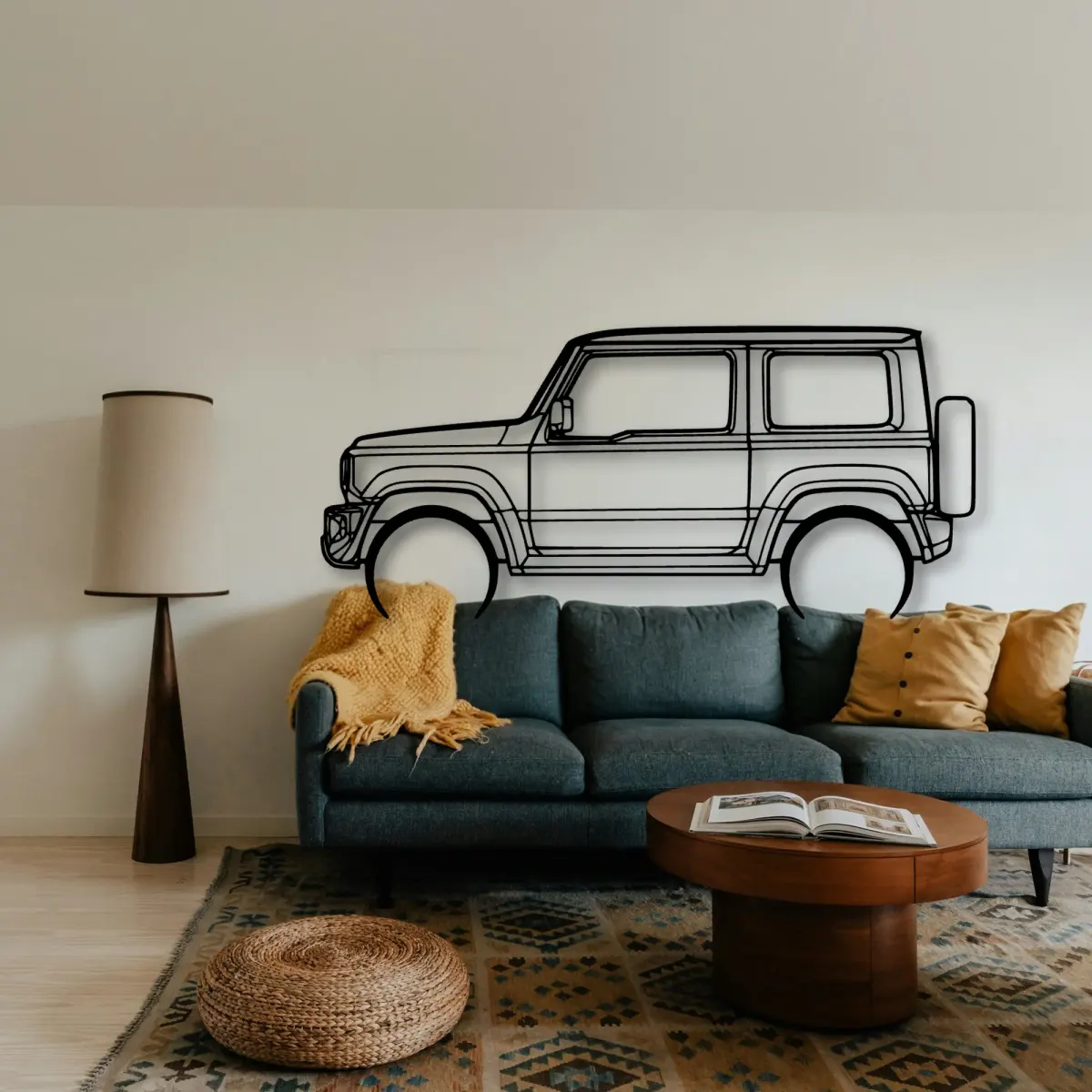
The Suzuki outline reads as a shape first and a car second. Photographing it is really about capturing that shape, not the metal.
The Suzuki Jimny 2020 dates to 2020, and that year's proportions are exactly what the cut outline keeps — the roofline and the stance are period-correct, not stylised.
The Suzuki pieces in our range are cut from sheet metal and delivered ready to mount, with the price stepping from $69.95 at 50 cm to $209.95 at 140 cm — a range that lets the same outline work by a workstation or across a full wall.
Small pieces deserve detail
A 50 cm Suzuki shape is easy to overlook but great to photograph. Get close and show the cut edge as a detail, not a thumbnail.
More than one on the panel
If you collect, let the Suzuki be one of a set with a rule. Next to its rivals, the differences are obvious.
Build the set
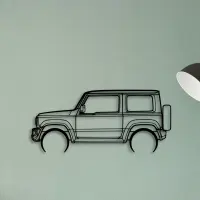
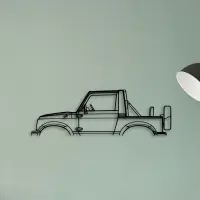
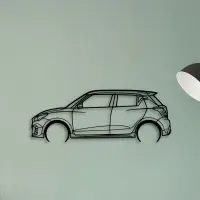
Flat-lay on a surface
Lay a Suzuki mini cutout on a clean table and shoot from above. Flat-lay turns a small piece into a considered object.
Reading it from across the room
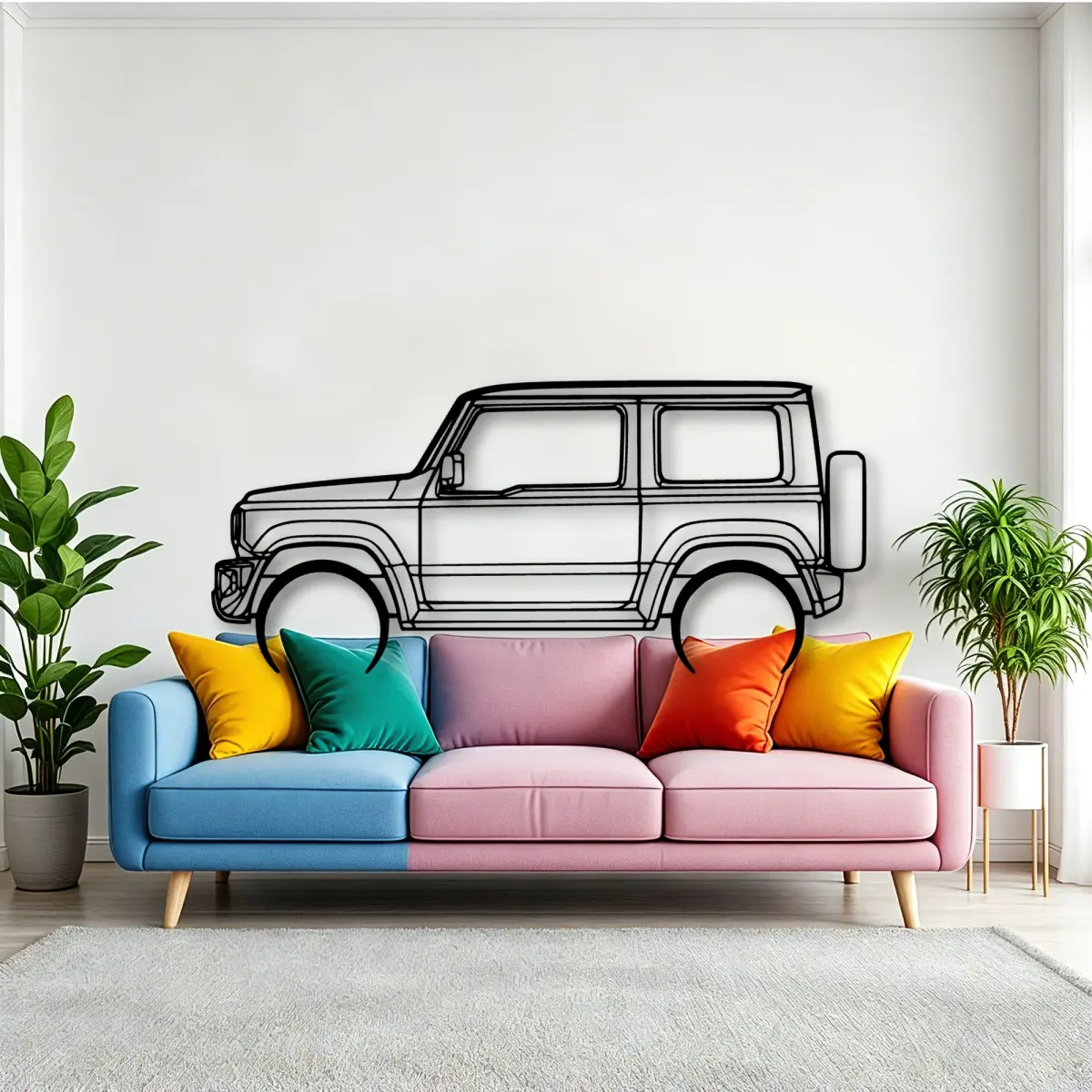
A Suzuki shape has to work at distance, not just up close. At 120 cm it keeps its identifying line legible from the other end of the room.
Five options, one outline
Every Suzuki shape comes in the same five options: 50 cm, 80 cm, 100 cm, 120 cm and 140 cm. The price steps with the size, from $69.95 to $209.95.
- 50 cm — a shelf or a study; an accent, not a feature.
- 80 cm — still modest, but reads across a doorway.
- 100 cm — the safe feature-wall default.
- 120 cm — for rooms where the car is the subject.
- 140 cm — the full statement piece.
The shape is the cheapest way to own the shape without owning the car.
Maintenance is close to nothing. A quick dust is enough; there are no frames to chip and no glass to clean.
The room sets the size. A busy wall wants a bigger outline to hold its own; a calm wall lets a smaller piece breathe.
Metal keeps its line. Unlike paper, it will not curl, fade, or bow under a warm lamp.
Quiet rooms suit a smaller shape; loud rooms need one that can hold its own from across the space.
Think in edges, not pictures. The cut defines the object, and the shape defines the cut.
A row of identical small frames fights itself. One larger outline settles the panel instead.
Light from the side reveals the cut; light from the front flattens it. Aim for the reveal.
Depth comes from the shadow. The gap between metal and wall is part of the composition, not a flaw.
The best wall pieces are the ones you stop seeing as decor and start reading as a subject.
The shadow line is the second drawing. Where it falls tells you as much as the metal itself.
Read it from the doorway, not up close. The whole point is the gesture the line makes at a distance.
A shape travels. Move it between rooms and it still makes sense, because the shape is the message.