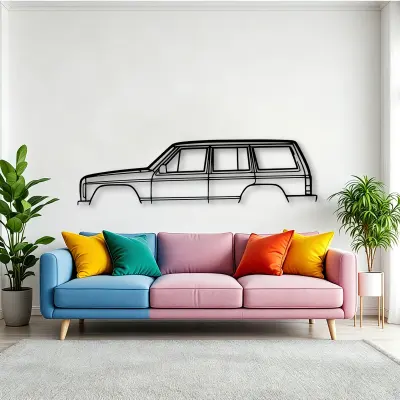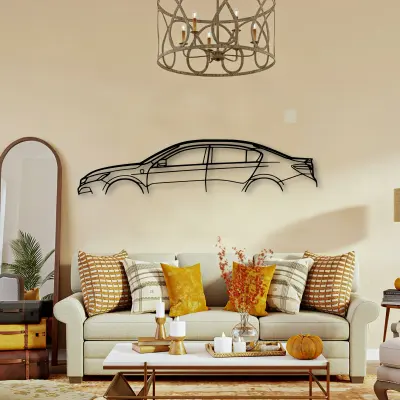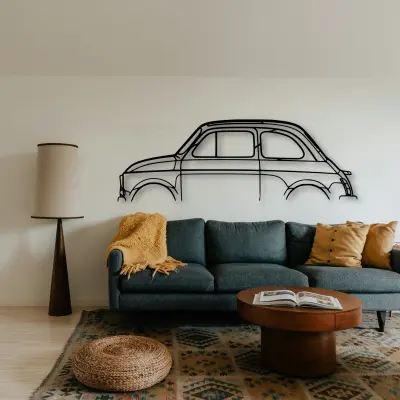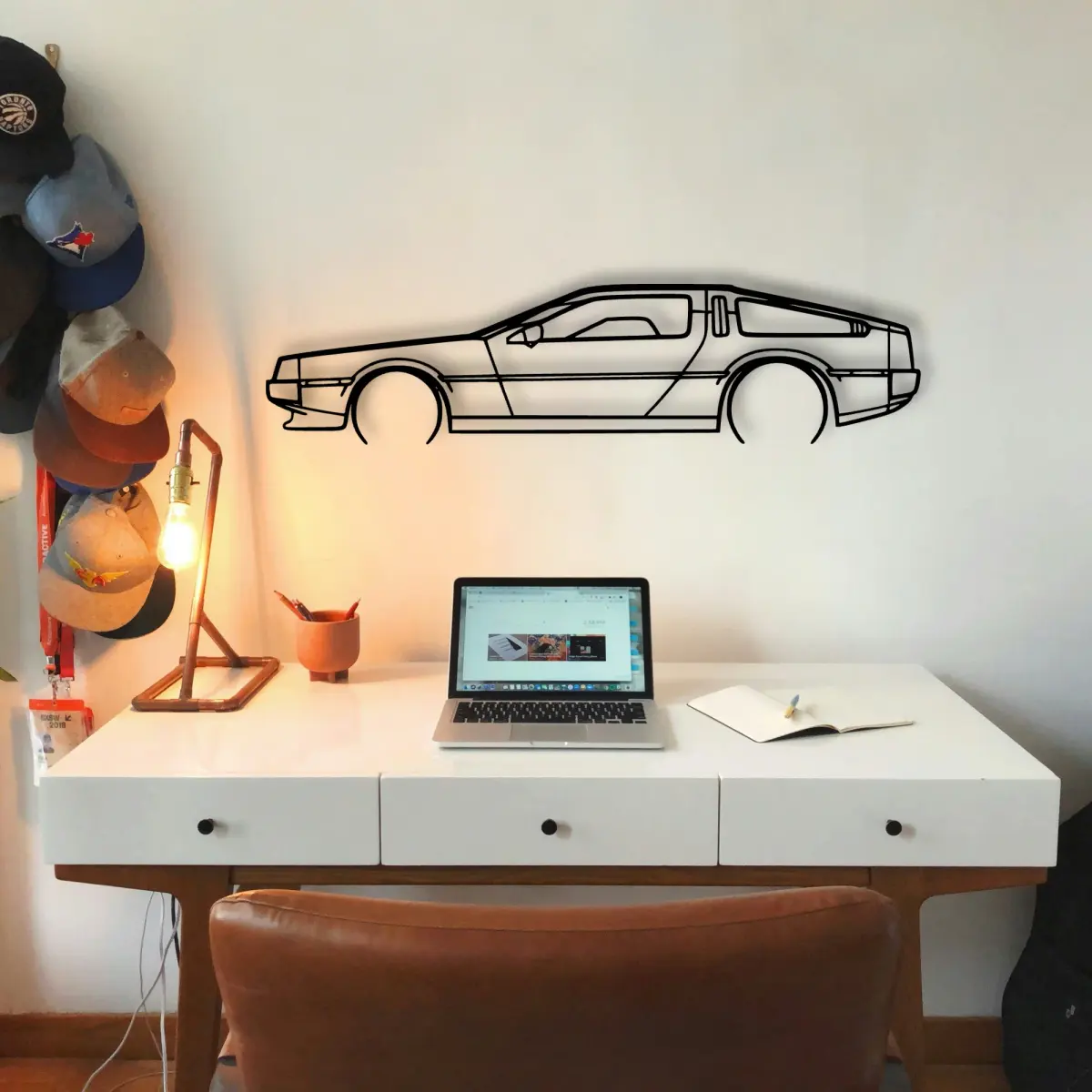
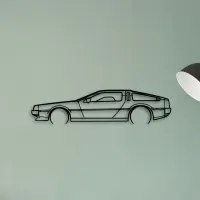
A DeLorean cut-metal silhouette is built to be looked at, and looking at it well is half the fun. Before you point a camera at it, it helps to understand what the outline is doing on the wall.
The DeLorean pieces in our range are cut from sheet metal and delivered ready to mount, with the price stepping from $69.95 at 50 cm to $209.95 at 140 cm — a range that lets the same outline work by a workstation or across a full wall.
Era written into the line
Period is baked into proportion. A DeLorean from one decade sits differently from another, and a silhouette is the fastest way to see that gap.
Five sizes, one outline
Every DeLorean silhouette comes in the same five sizes: 50 cm, 80 cm, 100 cm, 120 cm and 140 cm. The price steps with the size, from $69.95 to $209.95.
- 50 cm — a shelf or a study; an accent, not a feature.
- 80 cm — still modest, but reads across a doorway.
- 100 cm — the safe feature-wall default.
- 120 cm — for rooms where the car is the subject.
- 140 cm — the full statement piece.
More than one on the wall
If you collect, let the DeLorean be one of a set with a rule. Next to its rivals, the differences are obvious.
Build the set
Contrast in length, not mood
Hang a long, low DeLorean outline next to a taller one. The contrast in length is what makes a pair feel like a conversation.
Why it suits a garage wall
A DeLorean in cut metal belongs in the spaces cars actually live in. Over a workbench or a parked car it reads instantly.
Pick the outline that matches the room's energy: calm spaces want restraint, busy ones want a statement.
Scale matters more than people expect. A piece that is too small disappears; one that is sized to the wall reads as intentional from the doorway.
The silhouette is the cheapest way to own the shape without owning the car.
Depth comes from the shadow. The gap between metal and wall is part of the composition, not a flaw.
A silhouette ages better than a photograph. There is no moment to date it and no colour to fall out of fashion.
Metal keeps its line. Unlike paper, it will not curl, fade, or bow under a warm lamp.
Think in edges, not pictures. The cut defines the object, and the shape defines the cut.
Recognition is the whole point. The outline is built so the car reads before the words do.
Small changes in height read as care. Keep the horizon line steady when you group more than one.
A dedicated wall beats a crowded one. Give the car room and it repays the attention.
Lighting decides the mood. An even wash from above flatters the edge; a single hard spotlight only hardens one corner.
A silhouette travels. Move it between rooms and it still makes sense, because the shape is the message.
The wall behind should be the quietest thing in the room. Let the outline be the loud part.
Maintenance is close to nothing. A quick dust is enough; there are no frames to chip and no glass to clean.