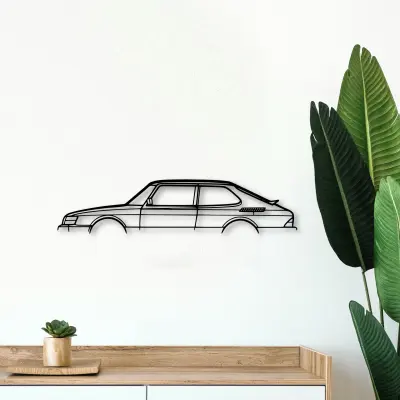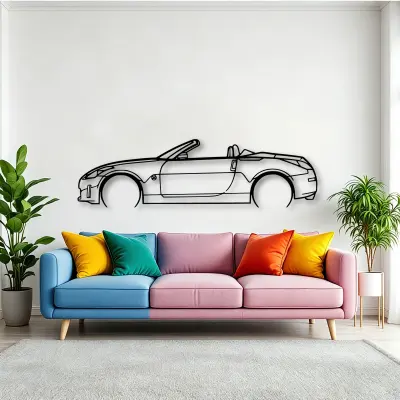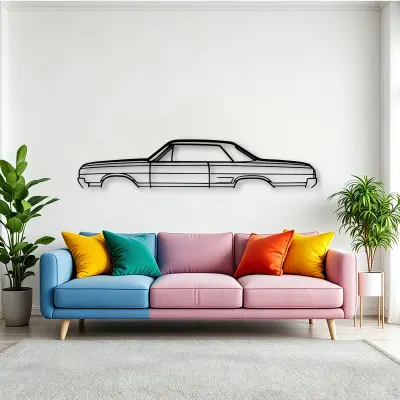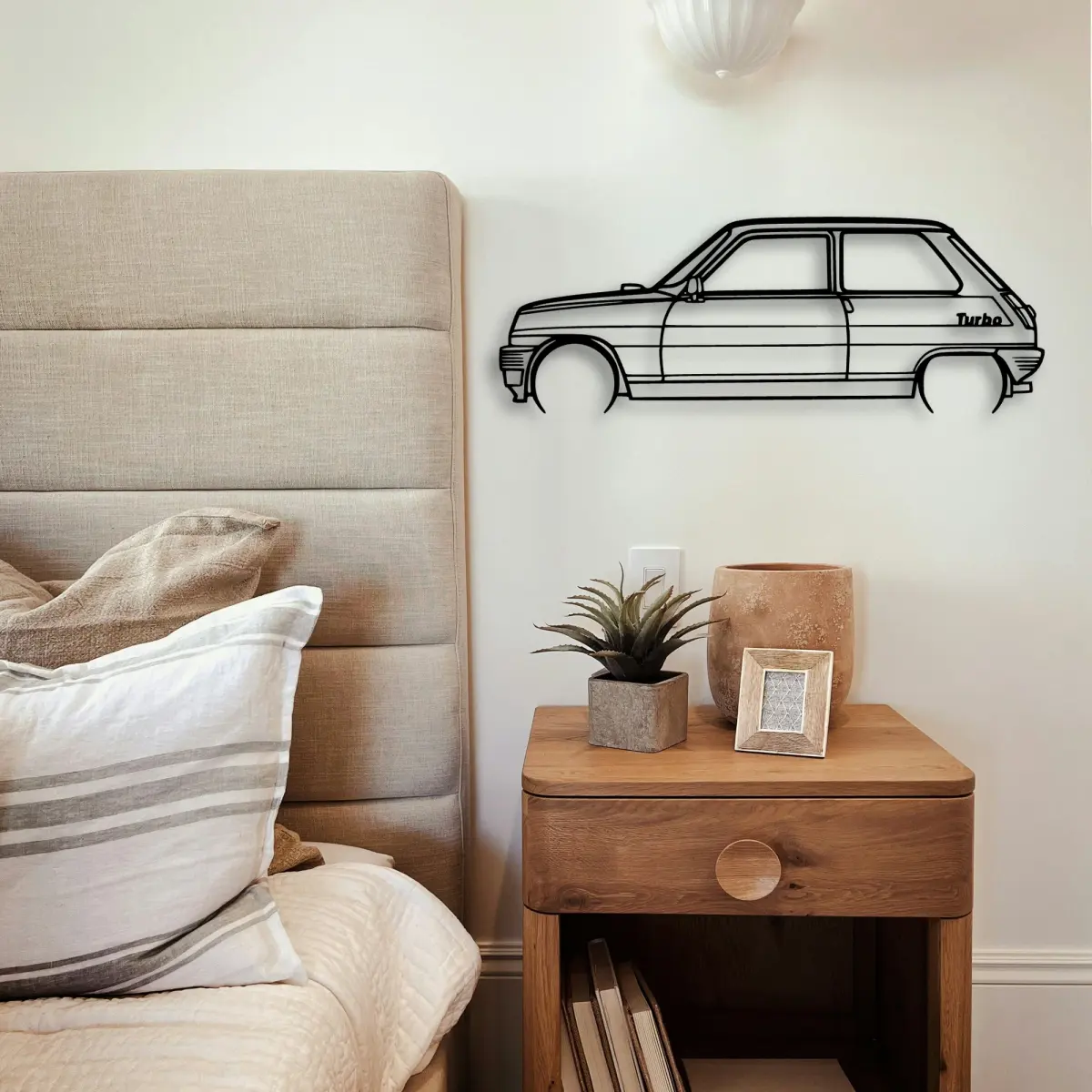
A Renault cut outline is built to be looked at, and looking at it well is half the fun. Before you point a camera at it, it helps to understand what the outline is doing on the panel.
The Renault 5 Alpine Turbo 1983 dates to 1983, and that year's proportions are exactly what the cut outline keeps — the roofline and the stance are period-correct, not stylised.
The Renault pieces in our range are cut from sheet metal and delivered ready to mount, with the price stepping from $69.95 at 50 cm to $209.95 at 140 cm — a range that lets the same outline work by a workstation or across a full wall.
Era written into the line
Period is baked into proportion. A Renault from one decade sits differently from another, and a shape is the fastest way to see that gap.
Honest material, no colour
Because the Renault comes in bare cut metal, every proportion is exposed. That is harder than a photograph, and it is why a good outline feels earned.
A matte read as a fallback
When glare won't behave, choose the Renault outline that reads as a shape first and a surface second.
Five options, one outline
Five options, one outline. The Renault is offered from a 50 cm shelf piece up to a 140 cm statement, all cut to the same profile.
- 50 cm — a shelf or a study; an accent, not a feature.
- 80 cm — still modest, but reads across a doorway.
- 100 cm — the safe feature-wall default.
- 120 cm — for rooms where the car is the subject.
- 140 cm — the full statement piece.
More than one on the panel
If you collect, let the Renault be one of a set with a rule. Next to its rivals, the differences are obvious.
Build the set
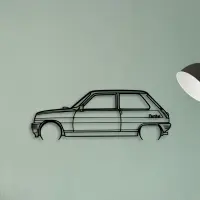
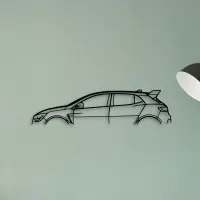
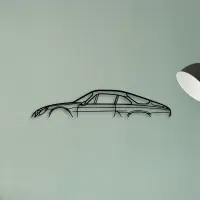
A shape ages better than a photograph. There is no moment to date it and no colour to fall out of fashion.
Colour is optional here. The outline carries the identity, so the panel behind it can stay exactly as it is.
A row of identical small frames fights itself. One larger outline settles the panel instead.
Give it room to mean something. A shape left alone on a clear wall says more than the same shape lost in a crowd.
Read it from the doorway, not up close. The whole point is the gesture the line makes at a distance.
Hang two that differ in length, not in mood, and they read as a pair rather than a repeat.
Hang it where the light lands first. The edge you notice on the way in is the edge worth cutting.
Light from the side reveals the cut; light from the front flattens it. Aim for the reveal.
The best wall pieces are the ones you stop seeing as decor and start reading as a subject.
Resist the urge to fill. An empty margin around the outline is what makes it feel considered.
Cut metal has a weight that printed art lacks. The shadow it casts is part of the piece, not an accident of the light.
Lighting decides the mood. An even wash from above flatters the edge; a single hard spotlight only hardens one corner.