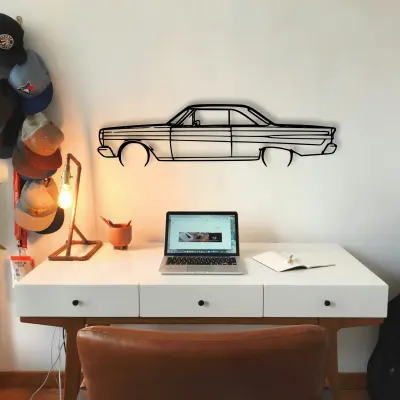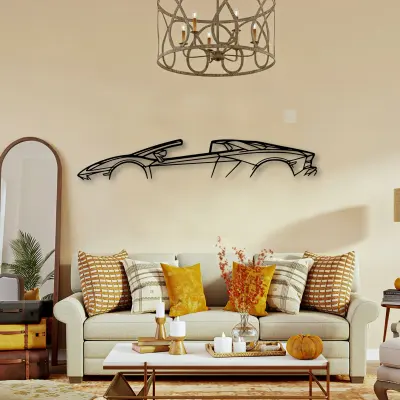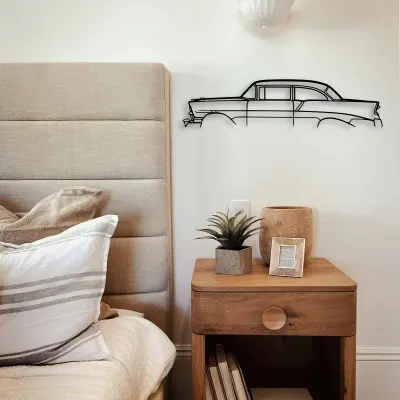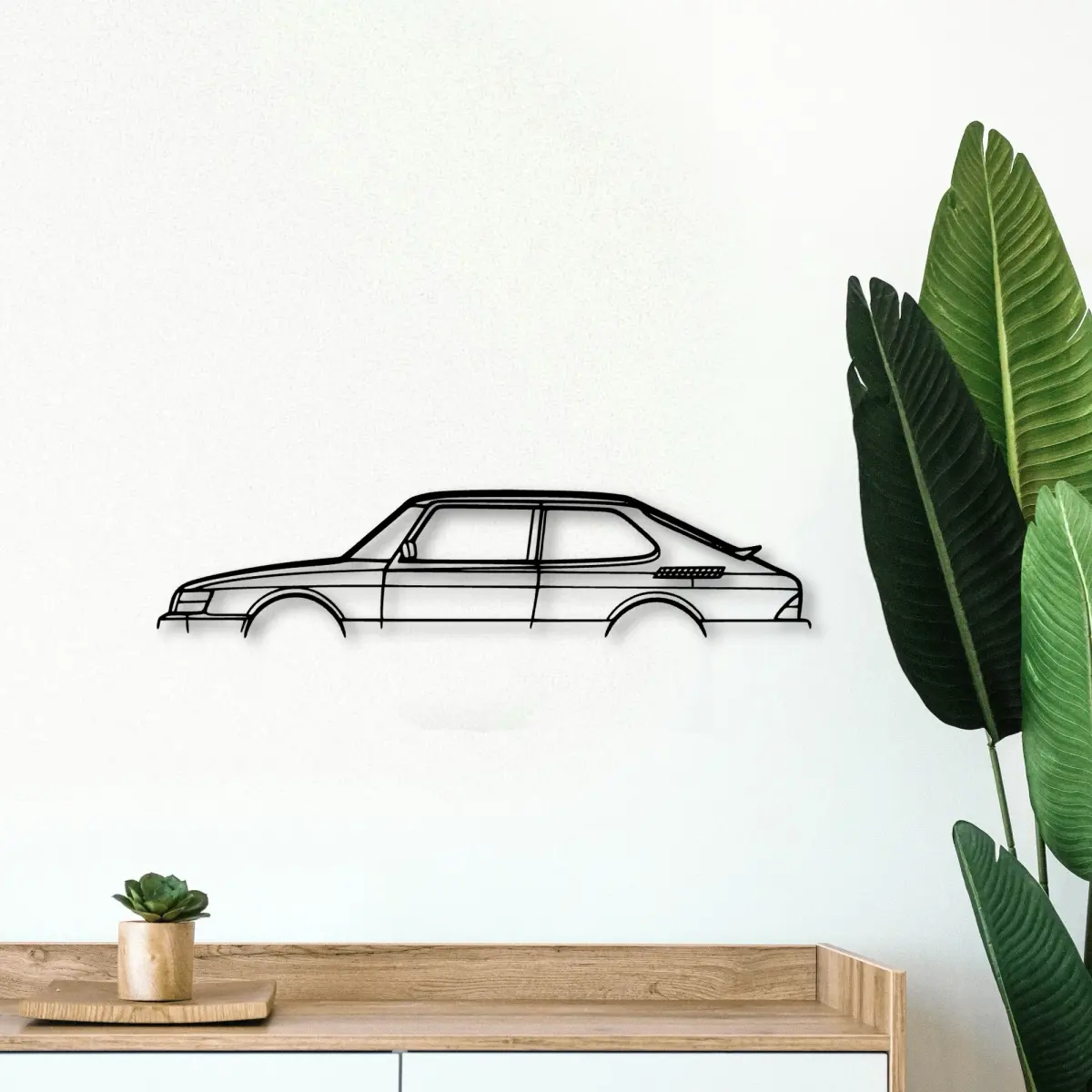
Most photos of metal art fail for one reason: they fight the piece. A Saab profile wants clean light and a calm background, not a clever setup.
The Saab 900 1993 dates to 1993, and that year's proportions are exactly what the cut outline keeps — the roofline and the stance are period-correct, not stylised.
At Tinvibe the Saab is offered as a sheet-metal profile in size ladder, from 50 cm to 140 cm, finished for indoor wall display. The smaller sizes suit a shelf or a study; the larger sizes take a full man cave.
Why it suits a den wall
Garages reward honest shapes. The Saab cut from steel belongs there in a way a framed poster never quite does.
Context over close-up
A Saab profile reads best in a real room, not as a zoomed crop. Show the backing, not just the metal.
Reading it from across the room
Up close you admire the cut; from across the room you recognise the Saab. The piece is designed so both readings land.
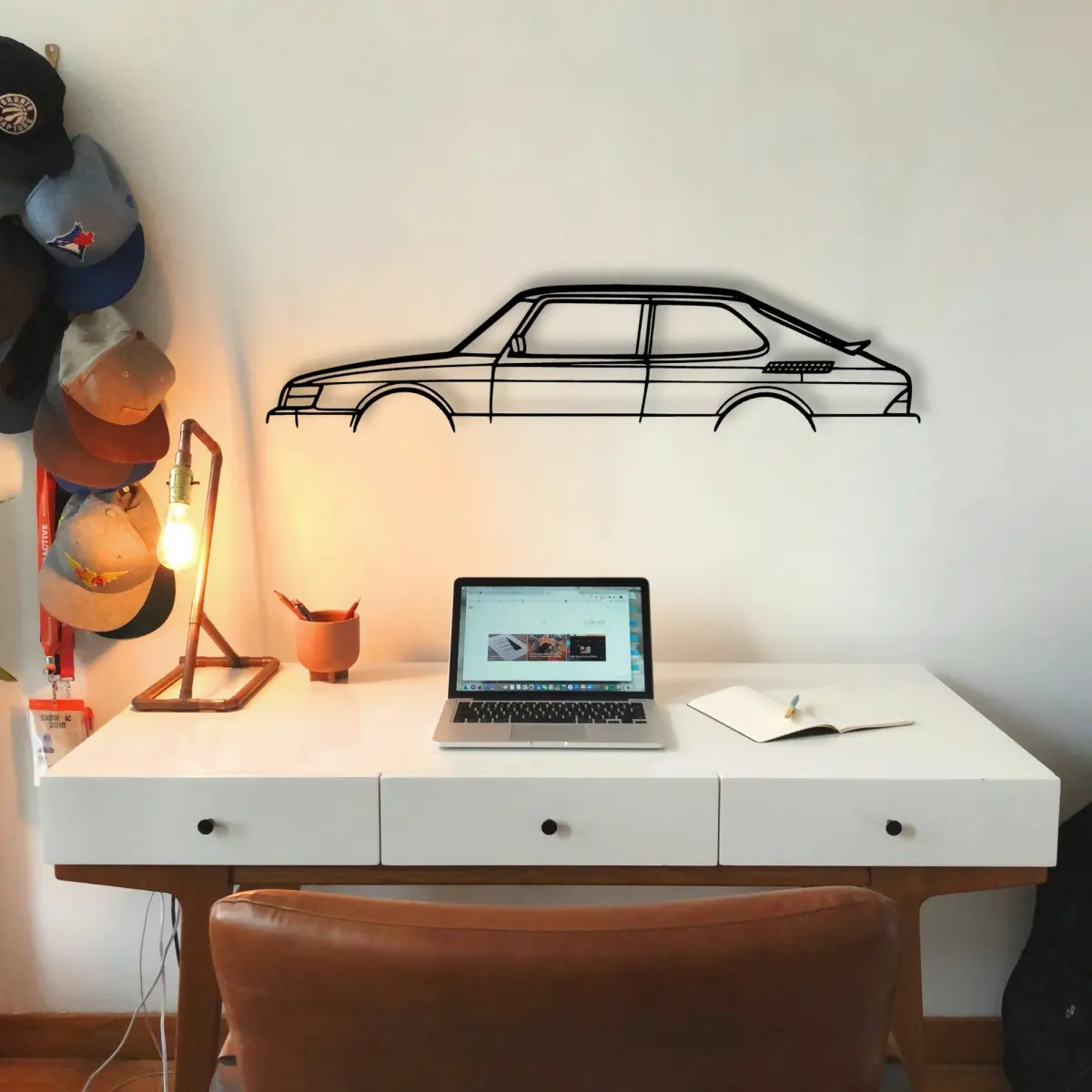
Era written into the line
Period is baked into proportion. A Saab from one decade sits differently from another, and a profile is the fastest way to see that gap.
Honest material, no colour
Because the Saab comes in bare cut metal, every proportion is exposed. That is harder than a photograph, and it is why a good outline feels earned.
Size ladder, one outline
Every Saab profile comes in the same size ladder: 50 cm, 80 cm, 100 cm, 120 cm and 140 cm. The price steps with the size, from $69.95 to $209.95.
- 50 cm — a shelf or a study; an accent, not a feature.
- 80 cm — still modest, but reads across a doorway.
- 100 cm — the safe feature-wall default.
- 120 cm — for rooms where the car is the subject.
- 140 cm — the full statement piece.
More than one on the backing
A row of Saab outlines, each a different car, turns a wall into a timeline you can read at a glance.
Build the set
Quiet rooms suit a smaller profile; loud rooms need one that can hold its own from across the space.
A single strong subject is easier to live with than a wall that argues with itself.
The shadow line is the second drawing. Where it falls tells you as much as the metal itself.
Small changes in height read as care. Keep the horizon line steady when you group more than one.
The profile is the cheapest way to own the shape without owning the car.
Hang two that differ in length, not in mood, and they read as a pair rather than a repeat.
The backing behind should be the quietest thing in the room. Let the outline be the loud part.
A profile travels. Move it between rooms and it still makes sense, because the shape is the message.
The best wall pieces are the ones you stop seeing as decor and start reading as a subject.
A dedicated wall beats a crowded one. Give the car room and it repays the attention.
The room sets the size. A busy wall wants a bigger outline to hold its own; a calm wall lets a smaller piece breathe.