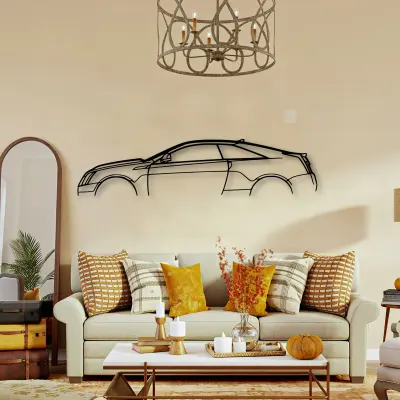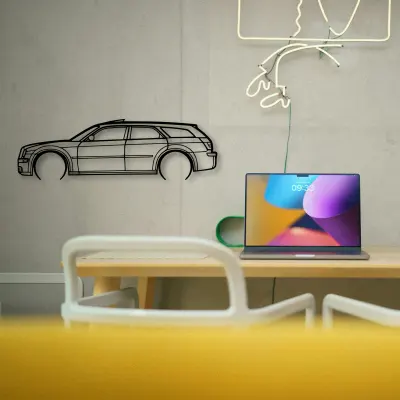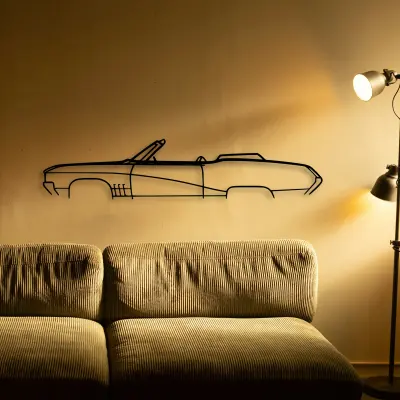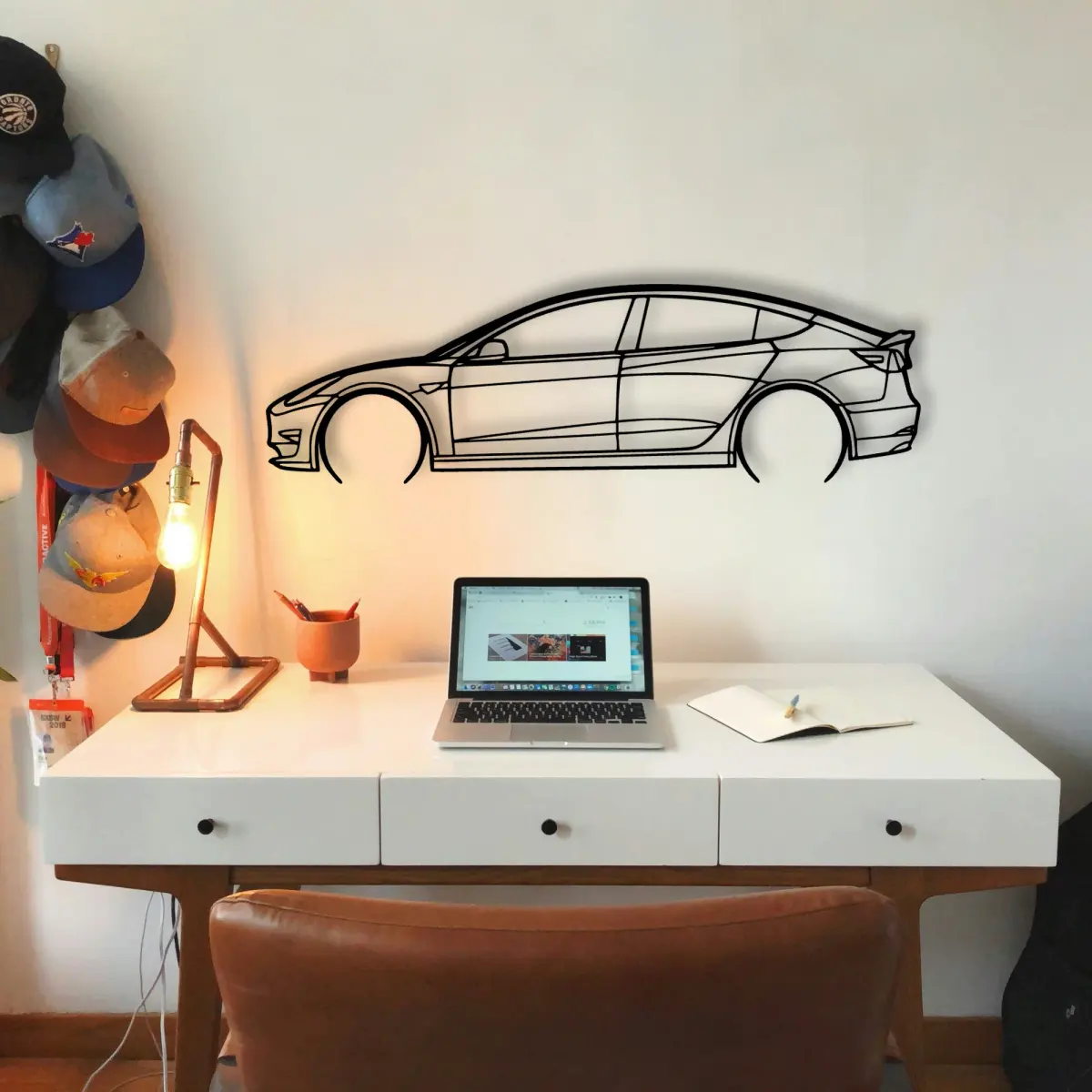
The Tesla outline reads as a shape first and a car second. Photographing it is really about capturing that shape, not the metal.
At Tinvibe the Tesla is offered as a laser-cut outline in five size steps, from 50 cm to 140 cm, finished for indoor wall display. The smaller sizes suit a shelf or a study; the larger sizes take a full studio.
Why it suits a man cave wall
A Tesla in cut metal belongs in the spaces cars actually live in. Over a workbench or a parked car it reads instantly.
More than one on the surface
If you collect, let the Tesla be one of a set with a rule. Next to its rivals, the differences are obvious.
Build the set
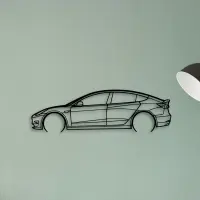
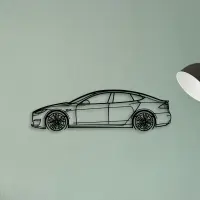
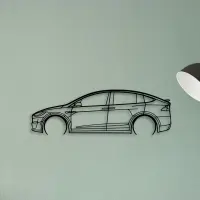
Where the shadow falls
Cut metal throws a real shadow because it sits proud of the panel. On a Tesla the shadow under the roofline is what gives the piece depth a print cannot.
Honest material, no colour
Because the Tesla comes in bare cut metal, every proportion is exposed. That is harder than a photograph, and it is why a good outline feels earned.
Era written into the line
You can often date a Tesla by its roof alone. The cut keeps those period cues so the shape reads as a moment without a caption.
Five size steps, one outline
Five size steps, one outline. The Tesla is offered from a 50 cm shelf piece up to a 140 cm statement, all cut to the same profile.
- 50 cm — a shelf or a study; an accent, not a feature.
- 80 cm — still modest, but reads across a doorway.
- 100 cm — the safe feature-wall default.
- 120 cm — for rooms where the car is the subject.
- 140 cm — the full statement piece.
An outline travels. Move it between rooms and it still makes sense, because the shape is the message.
The right size is the one you forget to notice because it fits the surface so well.
The best wall pieces are the ones you stop seeing as decor and start reading as a subject.
A dedicated wall beats a crowded one. Give the car room and it repays the attention.
Lighting decides the mood. An even wash from above flatters the edge; a single hard spotlight only hardens one corner.
A piece does not need a frame to feel finished. The cut edge is the frame.
A single strong subject is easier to live with than a wall that argues with itself.
Maintenance is close to nothing. A quick dust is enough; there are no frames to chip and no glass to clean.
Cut metal has a weight that printed art lacks. The shadow it casts is part of the piece, not an accident of the light.
Hang two that differ in length, not in mood, and they read as a pair rather than a repeat.
Small changes in height read as care. Keep the horizon line steady when you group more than one.
Resist the urge to fill. An empty margin around the outline is what makes it feel considered.
A neutral wall is a gift. It lets the cut do the talking without competing colour.
Quiet rooms suit a smaller outline; loud rooms need one that can hold its own from across the space.