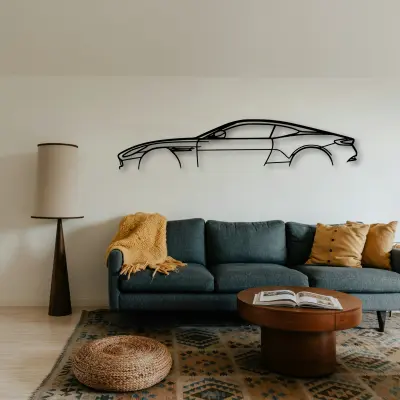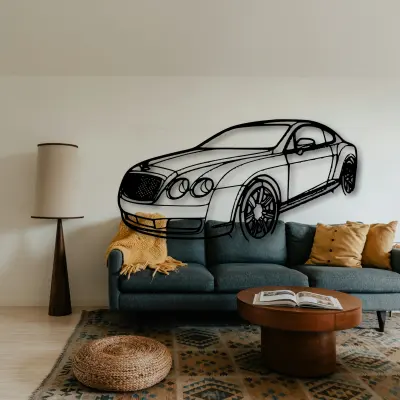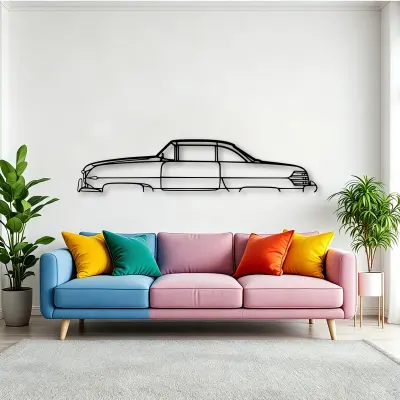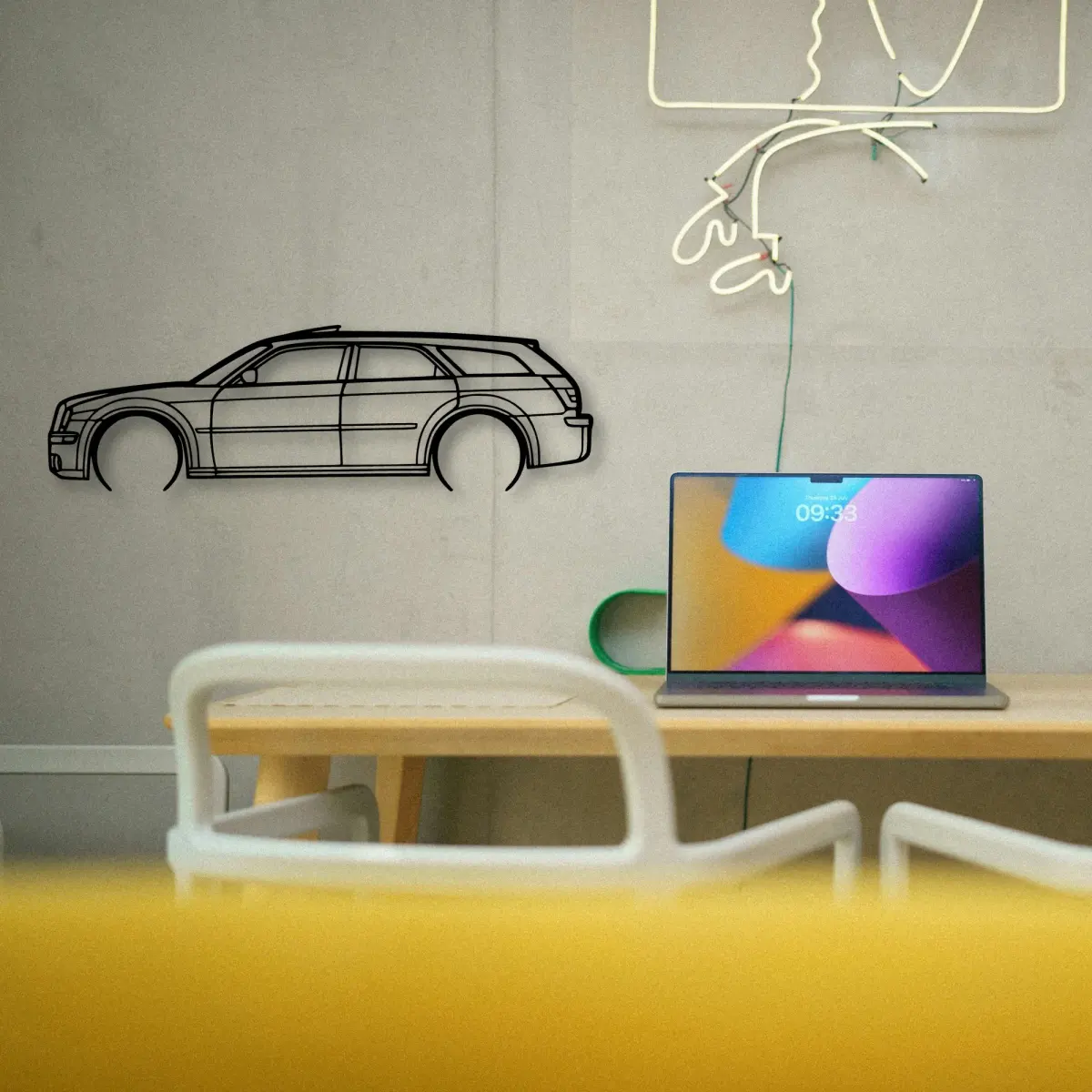
A laser-cut wagon piece carries no colour of its own, which makes it a forgiving subject — and a demanding one, because every shadow counts.
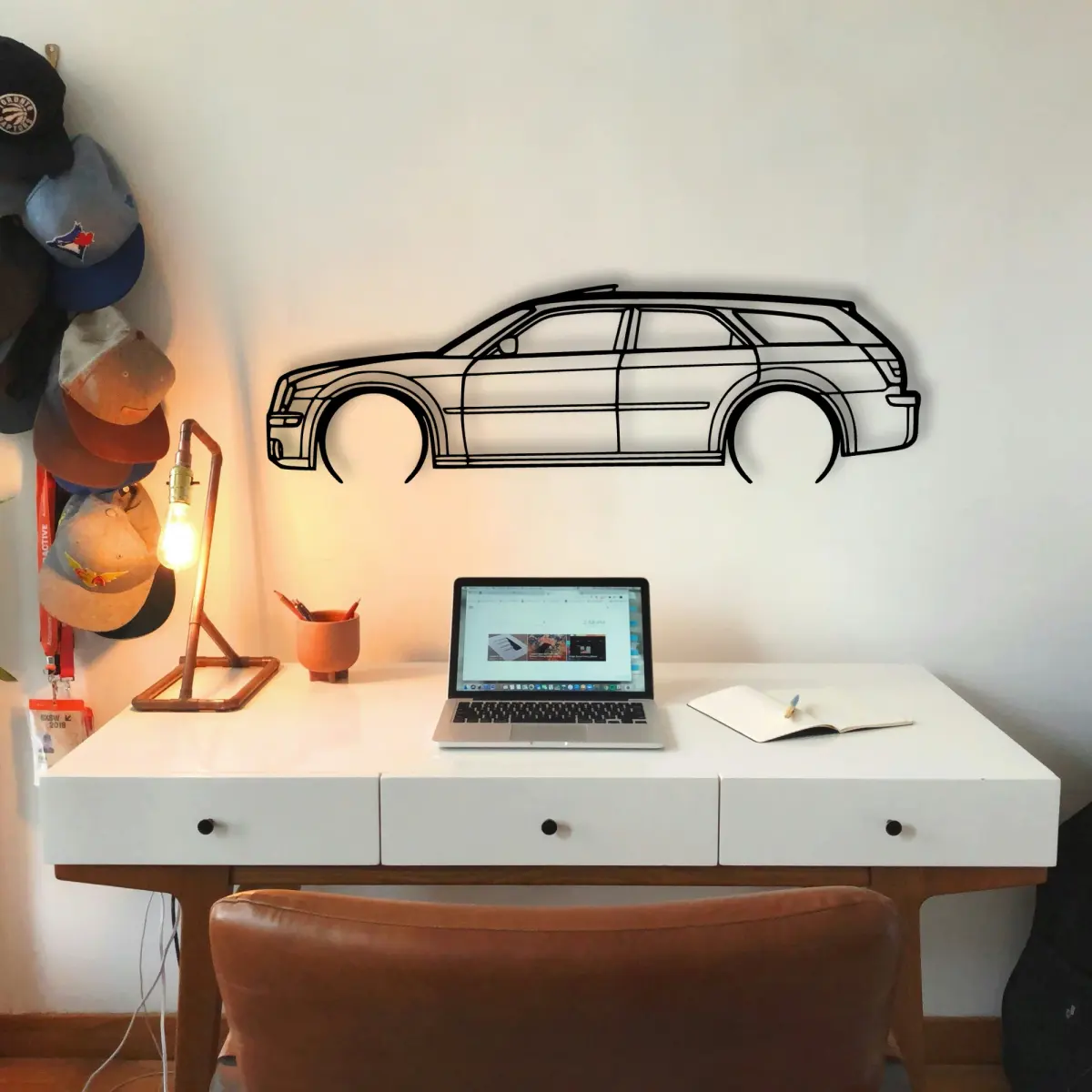
The Chrysler 300c 2006 Touring dates to 2006, and that year's proportions are exactly what the cut outline keeps — the roofline and the stance are period-correct, not stylised.
The wagon pieces in our range are cut from sheet metal and delivered ready to mount, with the price stepping from $69.95 at 50 cm to $209.95 at 140 cm — a range that lets the same outline work over a desk or across a full wall.
Honest material, no colour
A wagon outline in steel asks the line to do all the work — there is no livery, no badge colour, no gradient to lean on.
Height is a quiet decision
For a wagon outline, height is a small choice with a large effect. Centre it on the clear wall space, clear of door swings.
More than one on the surface
A row of wagon outlines, each a different car, turns a wall into a timeline you can read at a glance.
Build the set
Reading it from across the room
A wagon outline has to work at distance, not just up close. At 120 cm it keeps its identifying line legible from the other end of the room.
Era written into the line
You can often date a wagon by its roof alone. The cut keeps those period cues so the shape reads as a moment without a caption.
Five size steps, one outline
Every wagon outline comes in the same five size steps: 50 cm, 80 cm, 100 cm, 120 cm and 140 cm. The price steps with the size, from $69.95 to $209.95.
- 50 cm — a shelf or a study; an accent, not a feature.
- 80 cm — still modest, but reads across a doorway.
- 100 cm — the safe feature-wall default.
- 120 cm — for rooms where the car is the subject.
- 140 cm — the full statement piece.
The best wall pieces are the ones you stop seeing as decor and start reading as a subject.
An outline ages better than a photograph. There is no moment to date it and no colour to fall out of fashion.
Pick the outline that matches the room's energy: calm spaces want restraint, busy ones want a statement.
A dedicated wall beats a crowded one. Give the car room and it repays the attention.
Think in edges, not pictures. The cut defines the object, and the shape defines the cut.
The room sets the size. A busy wall wants a bigger outline to hold its own; a calm wall lets a smaller piece breathe.
Hang it where the light lands first. The edge you notice on the way in is the edge worth cutting.
Metal keeps its line. Unlike paper, it will not curl, fade, or bow under a warm lamp.
Cut metal has a weight that printed art lacks. The shadow it casts is part of the piece, not an accident of the light.
Scale matters more than people expect. A piece that is too small disappears; one that is sized to the surface reads as intentional from the doorway.
Light from the side reveals the cut; light from the front flattens it. Aim for the reveal.