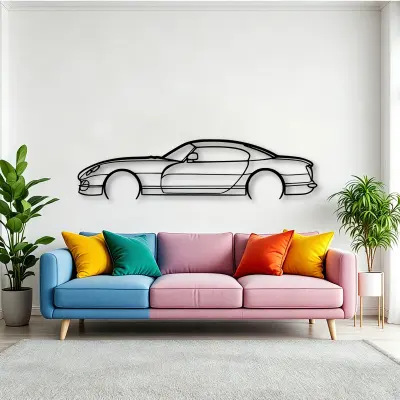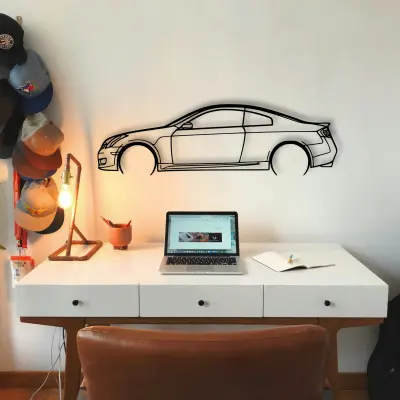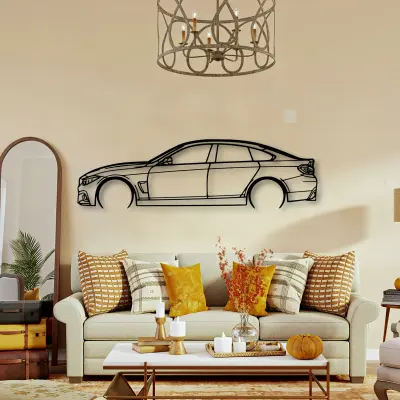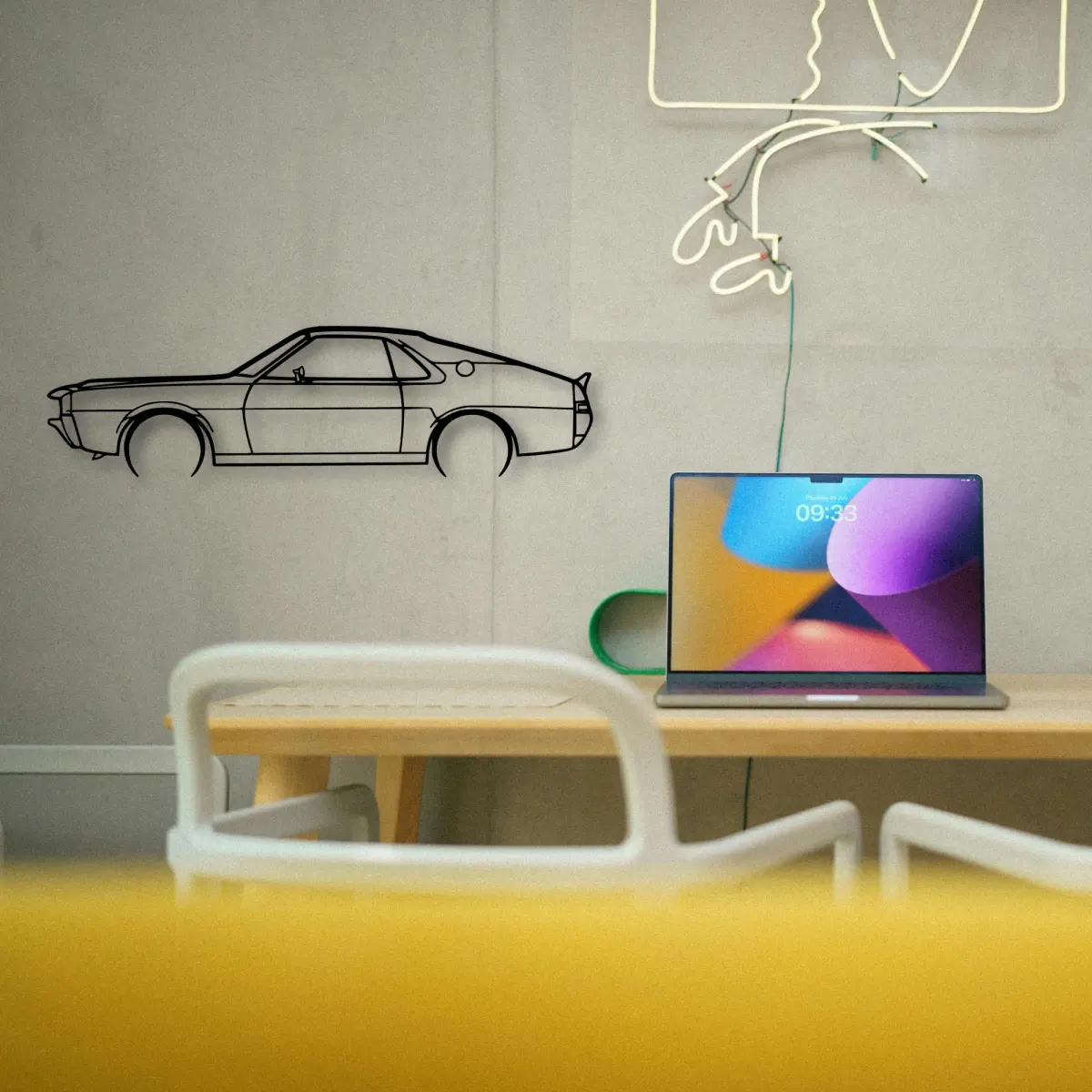
A laser-cut AMC piece carries no colour of its own, which makes it a forgiving subject — and a demanding one, because every shadow counts.
The Amc Amx 1969 dates to 1969, and that year's proportions are exactly what the cut outline keeps — the roofline and the stance are period-correct, not stylised.
The AMC pieces in our range are cut from sheet metal and delivered ready to mount, with the price stepping from $69.95 at 50 cm to $209.95 at 140 cm — a range that lets the same outline work over a desk or across a full wall.
More than one on the plane
If you collect, let the AMC be one of a set with a rule. Next to its rivals, the differences are obvious.
Build the set
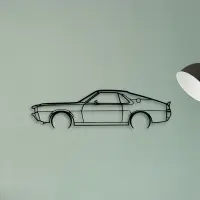
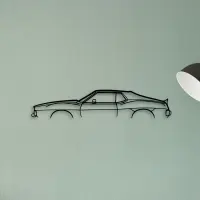
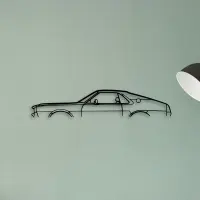
Reading it from across the room
Up close you admire the cut; from across the room you recognise the AMC. The piece is designed so both readings land.
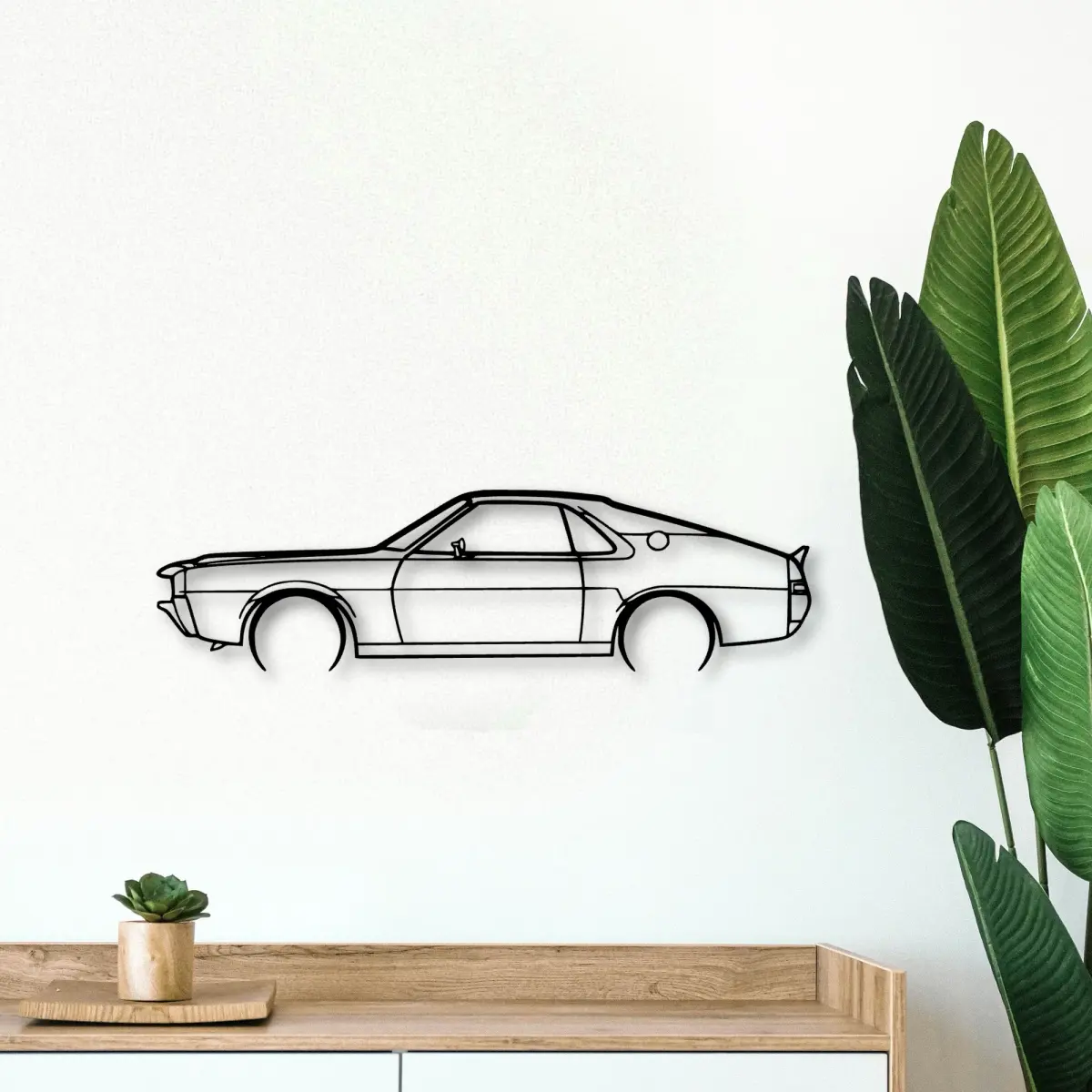
Why it suits a studio wall
A AMC in cut metal belongs in the spaces cars actually live in. Over a workbench or a parked car it reads instantly.
Height is a quiet decision
For a AMC outline, height is a small choice with a large effect. Centre it on the clear wall space, clear of door swings.
Five sizes, one outline
Five sizes, one outline. The AMC is offered from a 50 cm shelf piece up to a 140 cm statement, all cut to the same profile.
- 50 cm — a shelf or a study; an accent, not a feature.
- 80 cm — still modest, but reads across a doorway.
- 100 cm — the safe feature-wall default.
- 120 cm — for rooms where the car is the subject.
- 140 cm — the full statement piece.
A form ages better than a photograph. There is no moment to date it and no colour to fall out of fashion.
Placement is a quiet decision. Eye level for a feature wall, slightly above a desk, and well clear of a door swing that would clip it.
Lighting decides the mood. An even wash from above flatters the edge; a single hard spotlight only hardens one corner.
The form is the cheapest way to own the shape without owning the car.
Hang it where the light lands first. The edge you notice on the way in is the edge worth cutting.
Scale matters more than people expect. A piece that is too small disappears; one that is sized to the plane reads as intentional from the doorway.
A piece does not need a frame to feel finished. The cut edge is the frame.
The best wall pieces are the ones you stop seeing as decor and start reading as a subject.
The plane behind should be the quietest thing in the room. Let the outline be the loud part.
Resist the urge to fill. An empty margin around the outline is what makes it feel considered.
A neutral wall is a gift. It lets the cut do the talking without competing colour.
Pick the outline that matches the room's energy: calm spaces want restraint, busy ones want a statement.
A profile on the plane is a quiet kind of confidence. It does not shout the spec sheet; it simply states the shape.