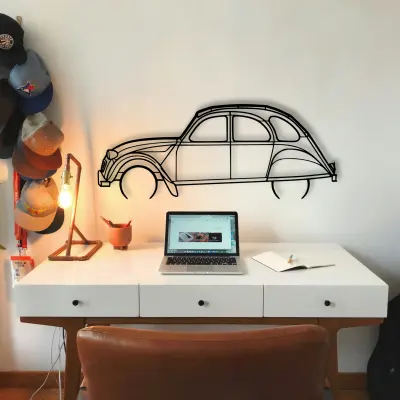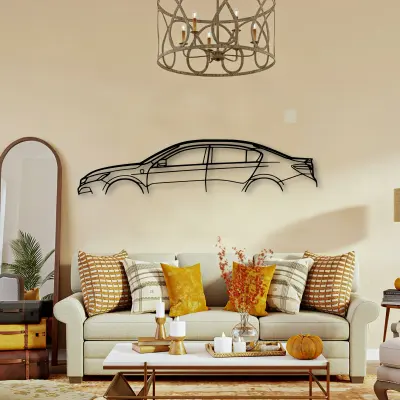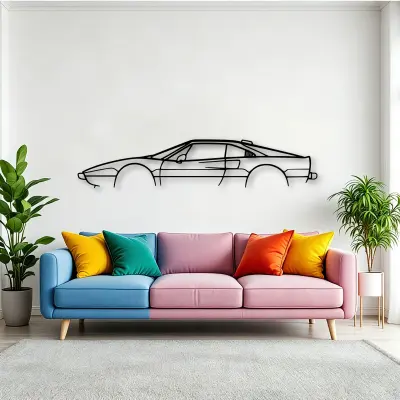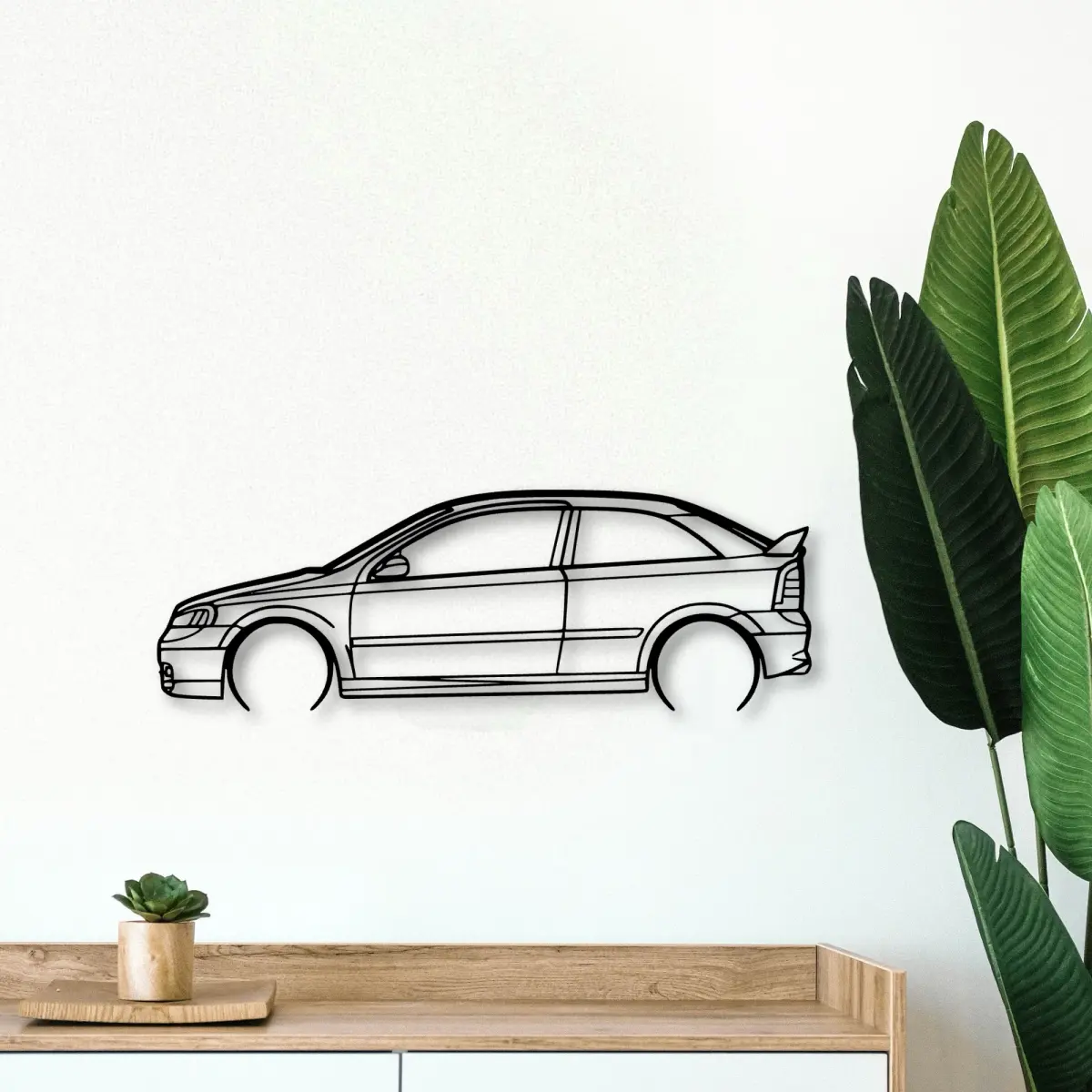
Most photos of wall art fail for one reason: they fight the piece. A Opel & Vauxhall silhouette wants clean light and a calm background, not a clever setup.
The Opel & Vauxhall Astra 2000 dates to 2000, and that year's proportions are exactly what the cut outline keeps — the roofline and the stance are period-correct, not stylised.
What makes the Opel & Vauxhall work as wall art is that it carries no colour of its own. Cut from sheet metal and finished for indoor display, it sits quietly in almost any room while the outline does the talking.
Height is a quiet decision
Hang a Opel & Vauxhall silhouette at eye level on a feature wall, or just above a desk where you actually look at it. The right height is the one you stop noticing.
Reading it from across the room
A Opel & Vauxhall silhouette has to work at distance, not just up close. At 120 cm it keeps its identifying line legible from the other end of the room.
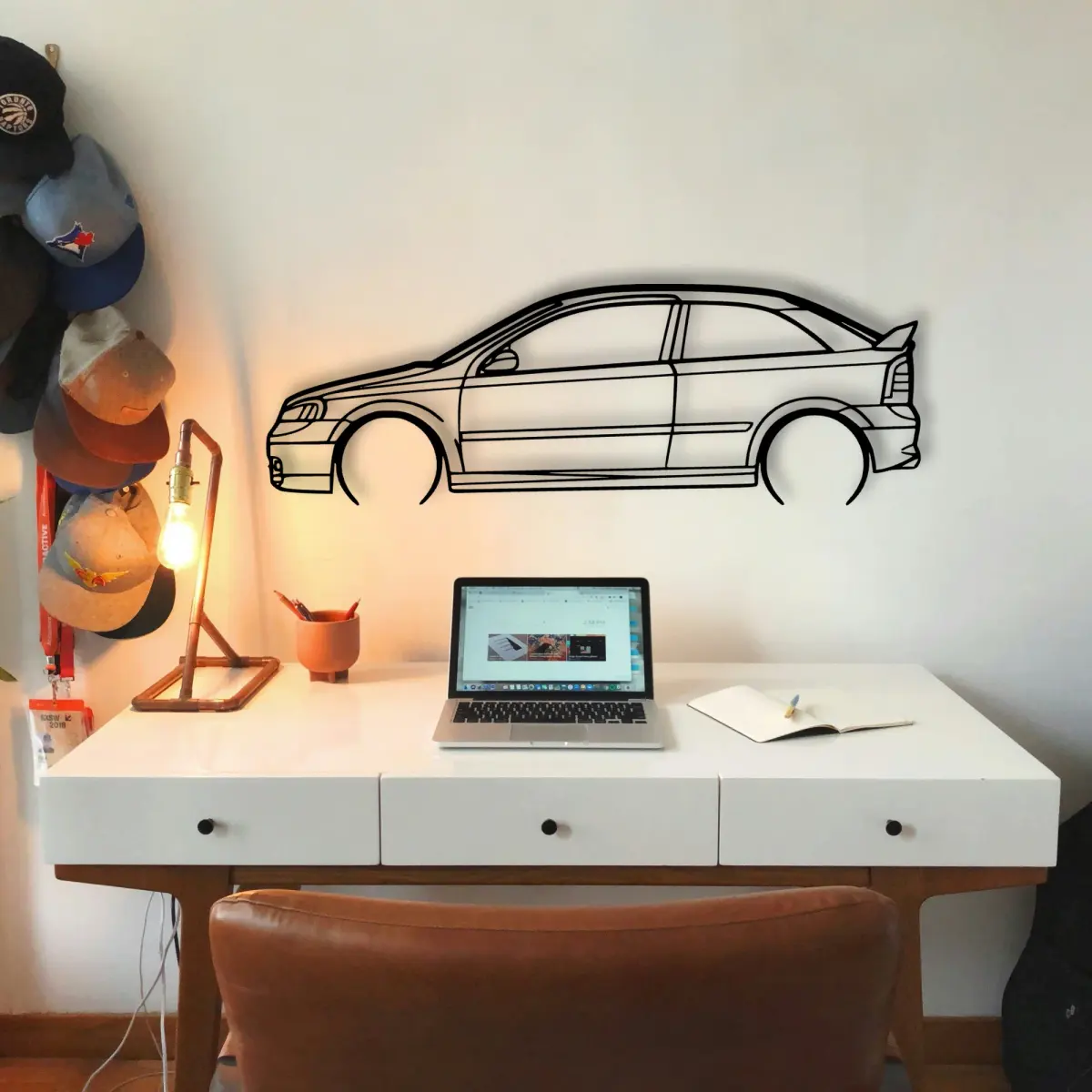
Five sizes, one outline
Every Opel & Vauxhall silhouette comes in the same five sizes: 50 cm, 80 cm, 100 cm, 120 cm and 140 cm. The price steps with the size, from $69.95 to $209.95.
- 50 cm — a shelf or a study; an accent, not a feature.
- 80 cm — still modest, but reads across a doorway.
- 100 cm — the safe feature-wall default.
- 120 cm — for rooms where the car is the subject.
- 140 cm — the full statement piece.
Honest material, no colour
Because the Opel & Vauxhall comes in bare cut metal, every proportion is exposed. That is harder than a photograph, and it is why a good outline feels earned.
More than one on the wall
A row of Opel & Vauxhall outlines, each a different car, turns a wall into a timeline you can read at a glance.
Build the set
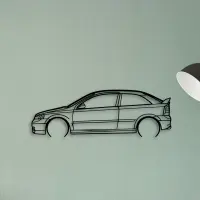
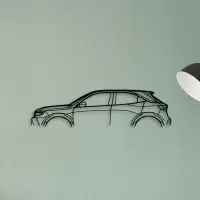
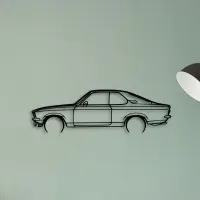
Cut metal has a weight that printed art lacks. The shadow it casts is part of the piece, not an accident of the light.
Wall art works best when it earns its place rather than filling a gap. A single well-chosen outline does more than a row of hesitant decoration.
A row of identical small frames fights itself. One larger outline settles the wall instead.
Pick the outline that matches the room's energy: calm spaces want restraint, busy ones want a statement.
The silhouette is the cheapest way to own the shape without owning the car.
Metal keeps its line. Unlike paper, it will not curl, fade, or bow under a warm lamp.
Read it from the doorway, not up close. The whole point is the gesture the line makes at a distance.
Maintenance is close to nothing. A quick dust is enough; there are no frames to chip and no glass to clean.
A silhouette travels. Move it between rooms and it still makes sense, because the shape is the message.
Scale matters more than people expect. A piece that is too small disappears; one that is sized to the wall reads as intentional from the doorway.
A single strong subject is easier to live with than a wall that argues with itself.