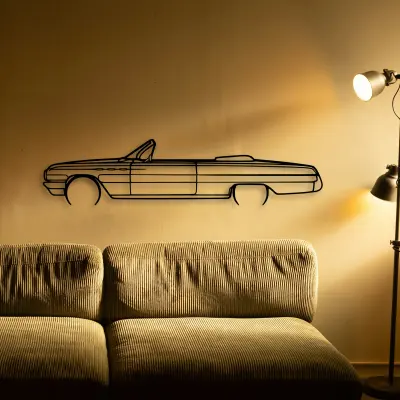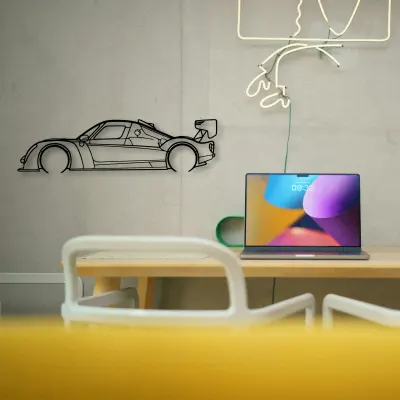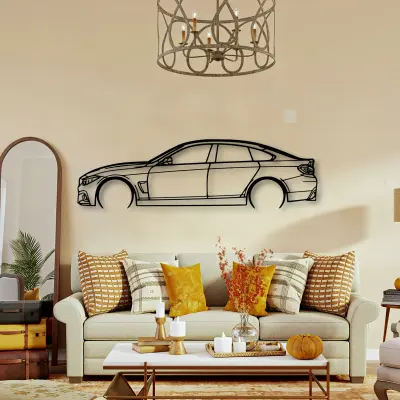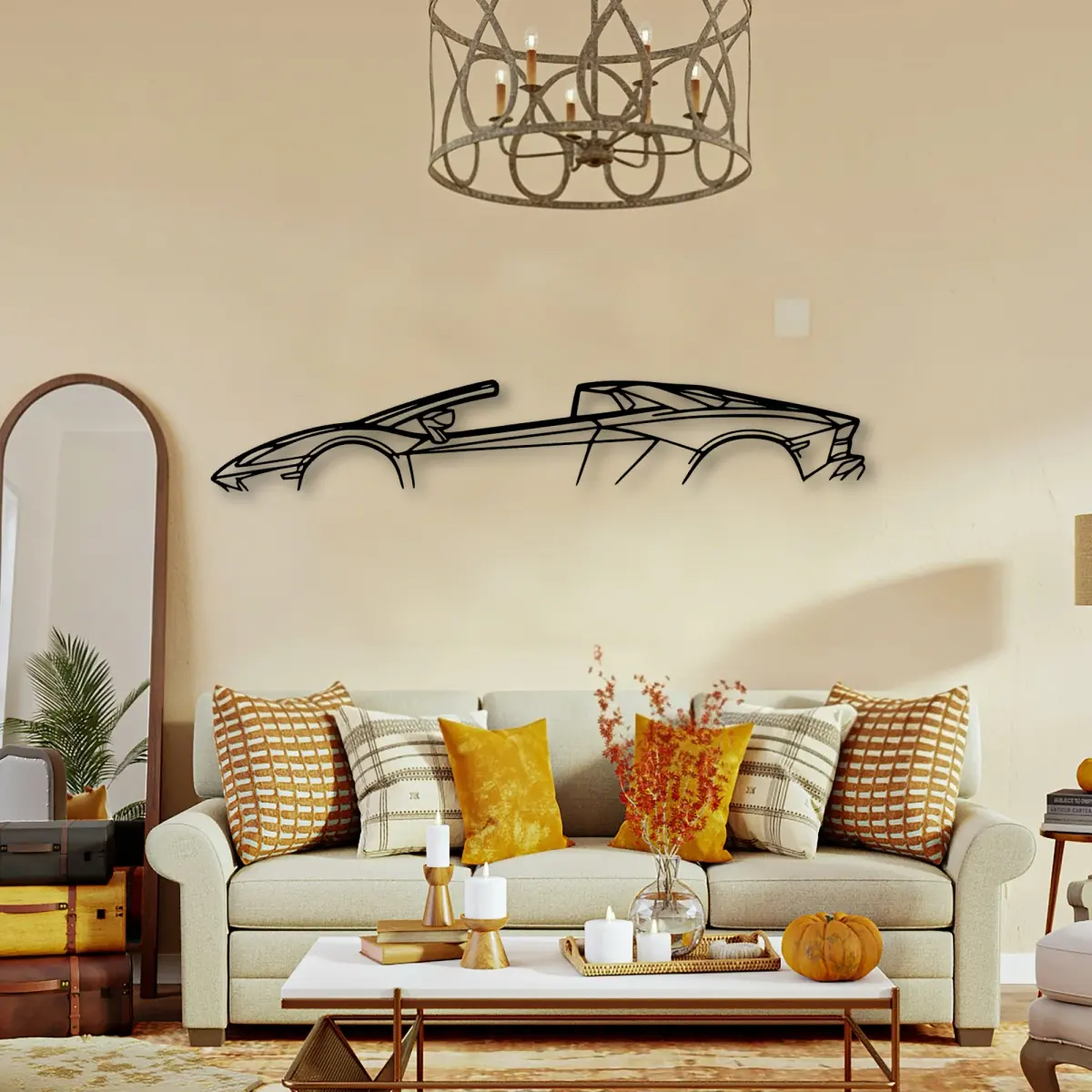
Most photos of wall decor fail for one reason: they fight the piece. A Lamborghini shape wants clean light and a calm background, not a clever setup.
The Lamborghini Aventador Roadster 2019 dates to 2019, and that year's proportions are exactly what the cut outline keeps — the roofline and the stance are period-correct, not stylised.
The Lamborghini pieces in our range are cut from sheet metal and delivered ready to mount, with the price stepping from $69.95 at 50 cm to $209.95 at 140 cm — a range that lets the same outline work by a workstation or across a full wall.
Reading it from across the room
A Lamborghini shape has to work at distance, not just up close. At 120 cm it keeps its identifying line legible from the other end of the room.
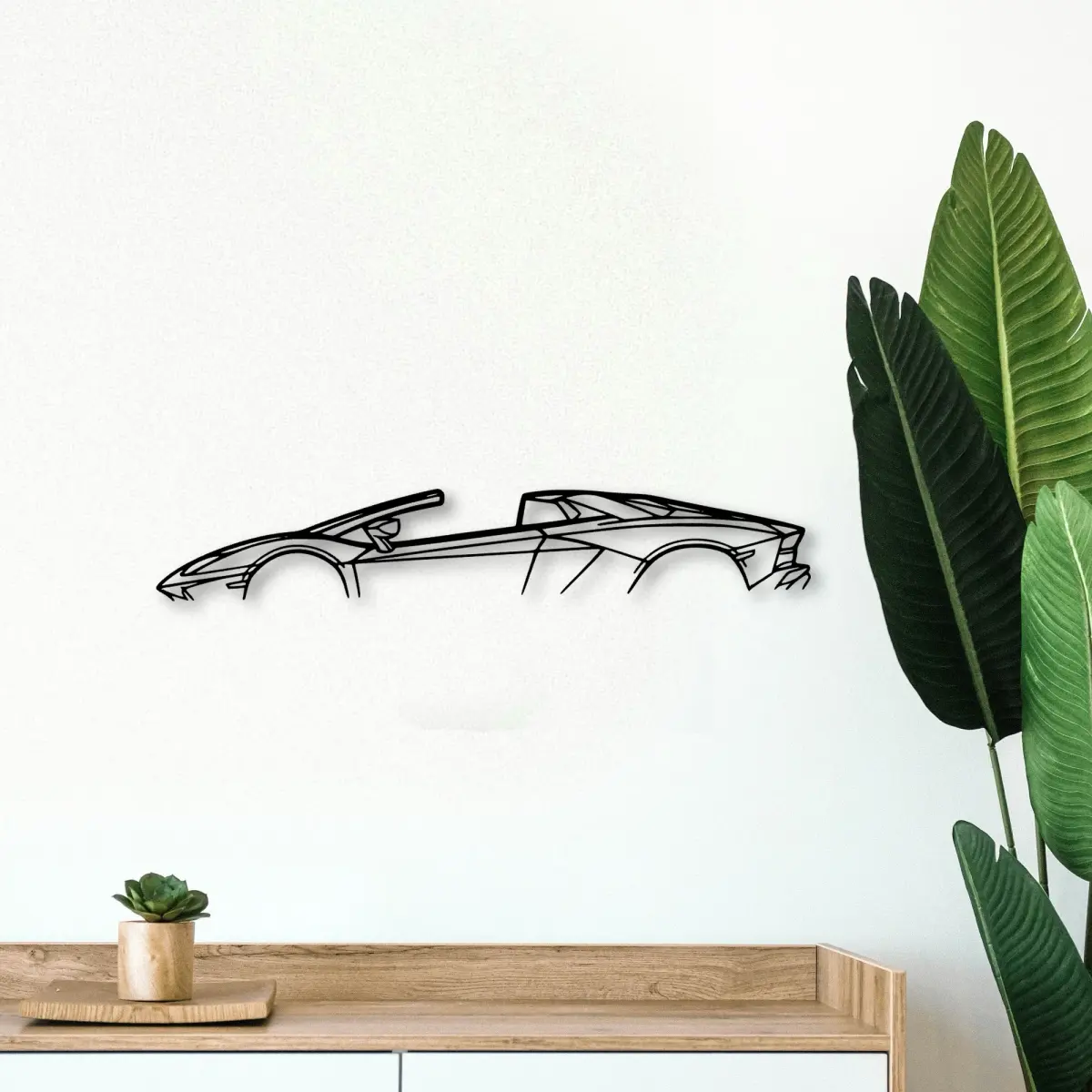
Camera height and the panel
Keep the camera square to the backing. A straight-on shot of a Lamborghini shape preserves the stance that makes it recognisable.
What the photo should prove
The test for any Lamborghini wall-art shot is recognition at a glance. Crop tight enough that the shape, not the setting, is the story.
Start with the outline, not the metal
When you photograph a Lamborghini outline, the subject is the line. Keep the metal secondary and the picture reads as the car, not as a framed thing.
Five options, one outline
Five options, one outline. The Lamborghini is offered from a 50 cm shelf piece up to a 140 cm statement, all cut to the same profile.
- 50 cm — a shelf or a study; an accent, not a feature.
- 80 cm — still modest, but reads across a doorway.
- 100 cm — the safe feature-wall default.
- 120 cm — for rooms where the car is the subject.
- 140 cm — the full statement piece.
More than one on the panel
A row of Lamborghini outlines, each a different car, turns a wall into a timeline you can read at a glance.
Build the set
The panel behind should be the quietest thing in the room. Let the outline be the loud part.
Metal keeps its line. Unlike paper, it will not curl, fade, or bow under a warm lamp.
Start with one. A single correct piece teaches the eye what the rest of the panel should do.
Lighting decides the mood. An even wash from above flatters the edge; a single hard spotlight only hardens one corner.
Give it room to mean something. A shape left alone on a clear wall says more than the same shape lost in a crowd.
Hang it where the light lands first. The edge you notice on the way in is the edge worth cutting.
Small changes in height read as care. Keep the horizon line steady when you group more than one.
Maintenance is close to nothing. A quick dust is enough; there are no frames to chip and no glass to clean.
Grouping works when the shapes contrast. A long low outline next to a tall upright one reads as a conversation, not a pile.
The best wall pieces are the ones you stop seeing as decor and start reading as a subject.