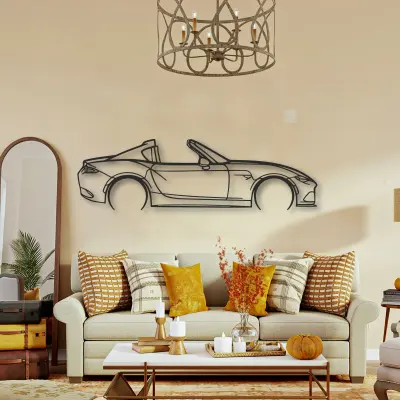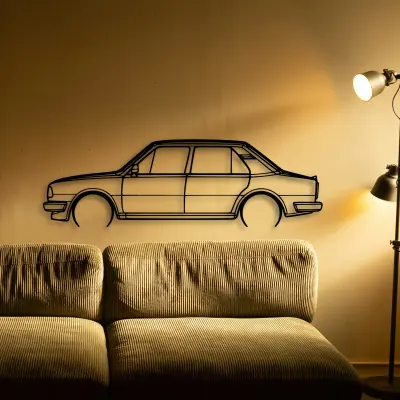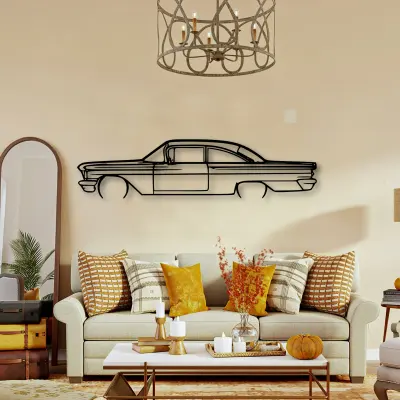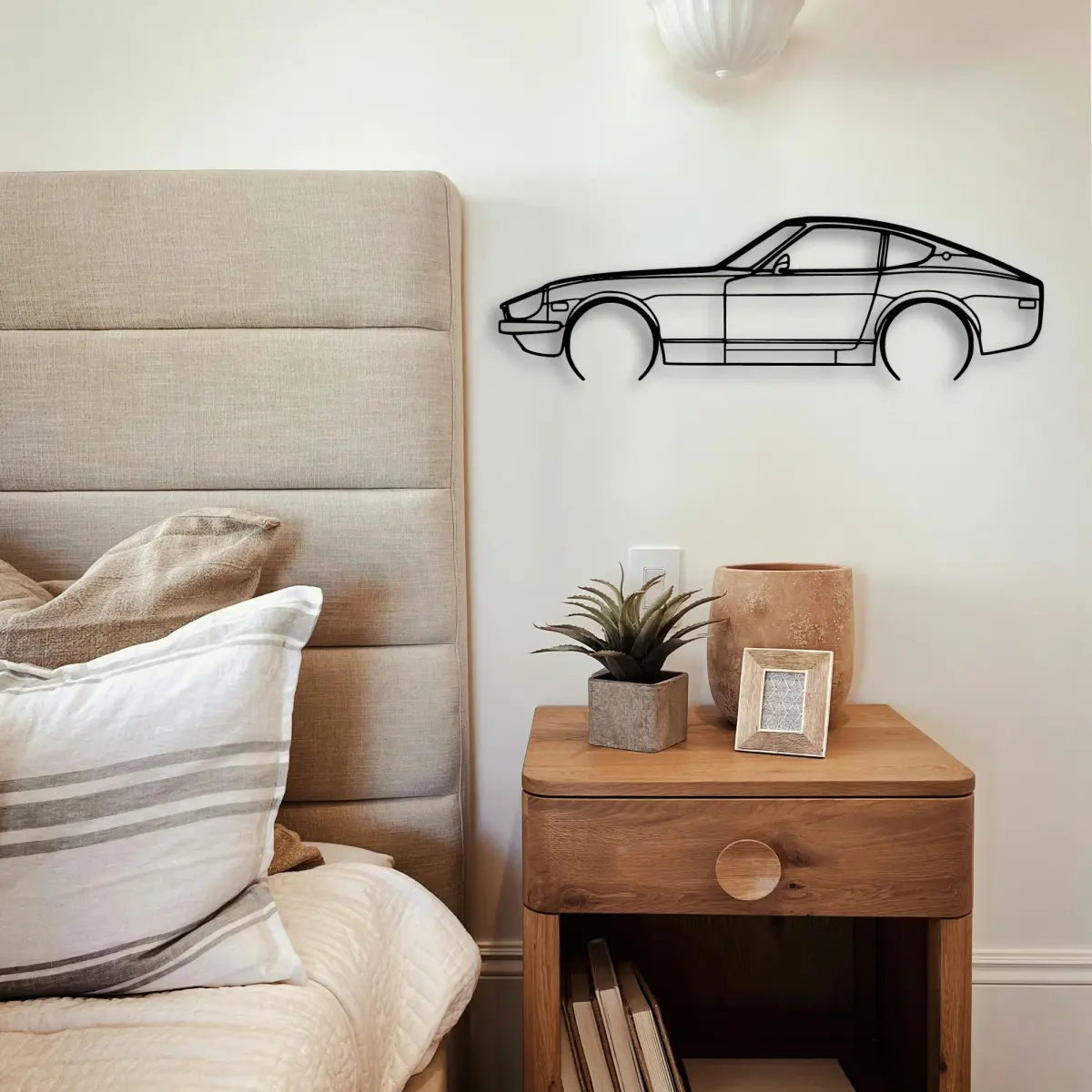
Most photos of wall art fail for one reason: they fight the piece. A coupe silhouette wants clean light and a calm background, not a clever setup.
At Tinvibe the coupe is offered as a cut-metal silhouette in five sizes, from 50 cm to 140 cm, finished for indoor wall display. The smaller sizes suit a shelf or a study; the larger sizes take a full living room.
Context over close-up
For a coupe piece, a photo that includes the space tells more than a macro of the cut.
Era written into the line
Period is baked into proportion. A coupe from one decade sits differently from another, and a silhouette is the fastest way to see that gap.
Five sizes, one outline
Every coupe silhouette comes in the same five sizes: 50 cm, 80 cm, 100 cm, 120 cm and 140 cm. The price steps with the size, from $69.95 to $209.95.
- 50 cm — a shelf or a study; an accent, not a feature.
- 80 cm — still modest, but reads across a doorway.
- 100 cm — the safe feature-wall default.
- 120 cm — for rooms where the car is the subject.
- 140 cm — the full statement piece.
Shoot before you hang
The easiest coupe silhouette photo is the one taken before it goes on the wall, flat and lit evenly. Hang later; post now.
Honest material, no colour
A coupe silhouette in steel asks the line to do all the work — there is no livery, no badge colour, no gradient to lean on.
More than one on the wall
If you collect, let the coupe be one of a set with a rule. Next to its rivals, the differences are obvious.
Build the set
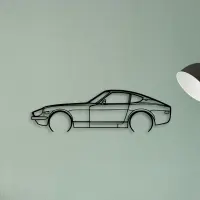
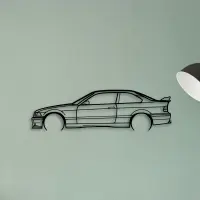
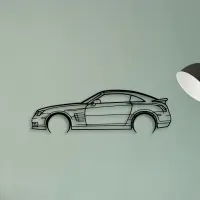
The shadow line is the second drawing. Where it falls tells you as much as the metal itself.
Metal keeps its line. Unlike paper, it will not curl, fade, or bow under a warm lamp.
Give it room to mean something. A silhouette left alone on a clear wall says more than the same shape lost in a crowd.
A row of identical small frames fights itself. One larger outline settles the wall instead.
Grouping works when the shapes contrast. A long low outline next to a tall upright one reads as a conversation, not a pile.
Wall art works best when it earns its place rather than filling a gap. A single well-chosen outline does more than a row of hesitant decoration.
The wall behind should be the quietest thing in the room. Let the outline be the loud part.
A neutral wall is a gift. It lets the cut do the talking without competing colour.
The right size is the one you forget to notice because it fits the wall so well.
The silhouette is the cheapest way to own the shape without owning the car.
Depth comes from the shadow. The gap between metal and wall is part of the composition, not a flaw.
Placement is a quiet decision. Eye level for a feature wall, slightly above a desk, and well clear of a door swing that would clip it.
A single strong subject is easier to live with than a wall that argues with itself.
A silhouette ages better than a photograph. There is no moment to date it and no colour to fall out of fashion.