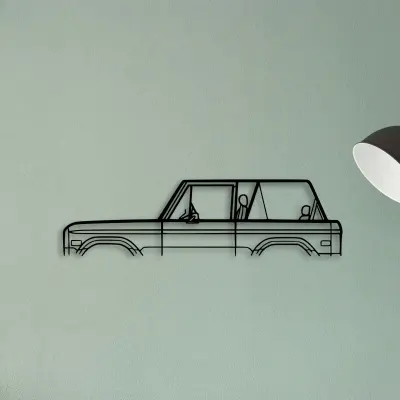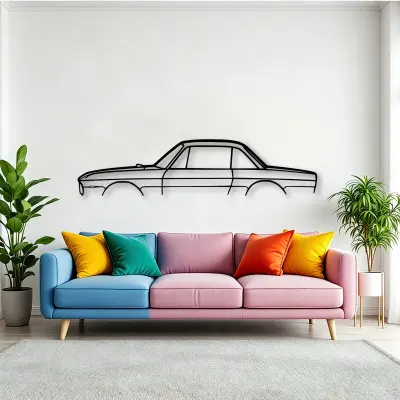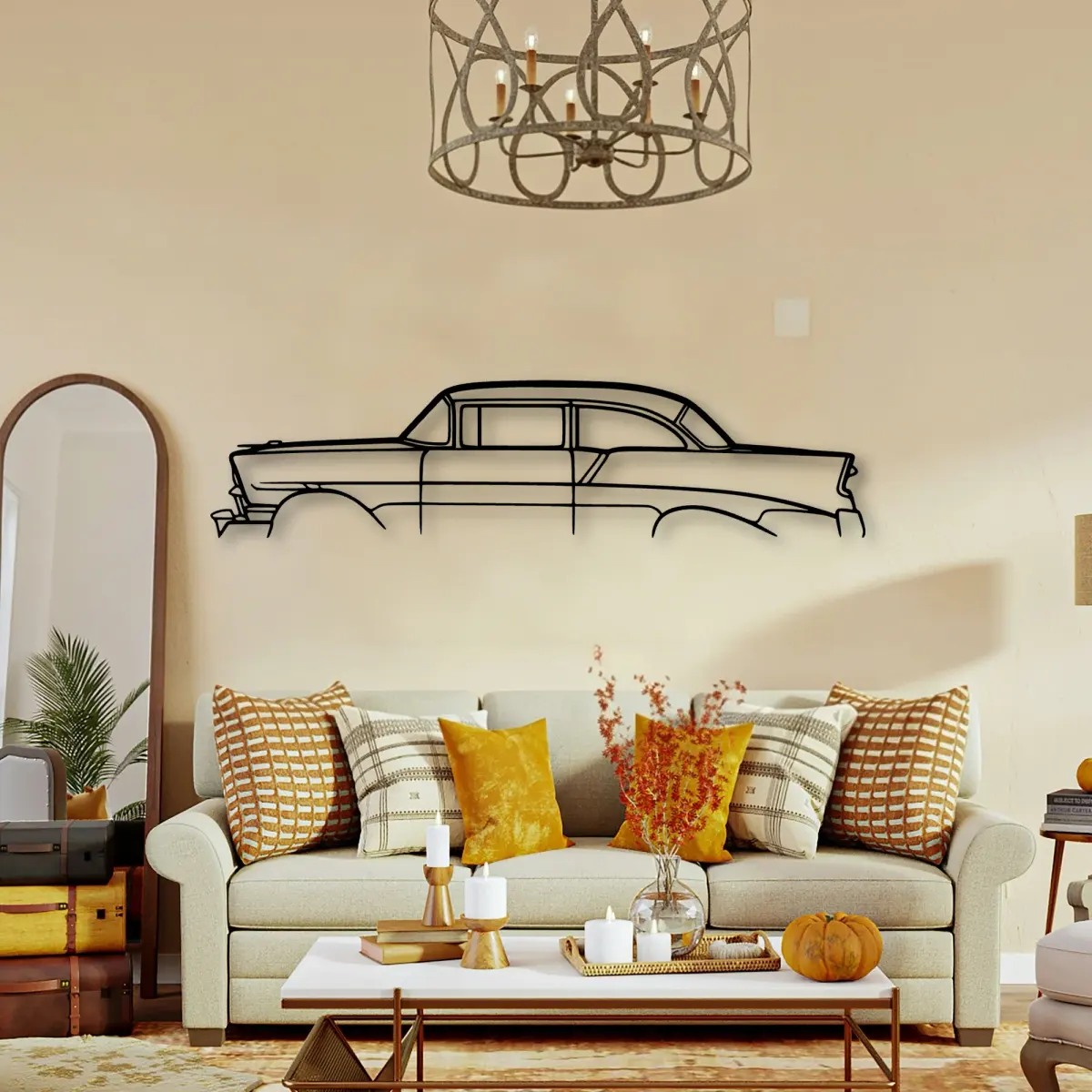
A form is the shortest argument for why a Chevrolet 210 1956 is worth remembering. It drops the colour and the livery and keeps the shape, which is the part people actually recall.
The Chevrolet 210 1956 dates to 1956, and that year's proportions are exactly what the cut outline keeps, the roofline and the stance are period-correct, not stylised.
At Tinvibe the Chevrolet 210 1956 is offered as a laser-metal profile in five sizes, from 50 cm right up to 140 cm, finished for indoor wall display. The smaller sizes suit a shelf or a study; the larger sizes take a full studio or living-room wall.
A five-size range, one outline
A 50 cm or 80 cm piece is enough to read across a doorway but stays quiet on a busy wall. A 100 cm piece is the safe default for a feature wall; 120 cm and 140 cm are for rooms where the car is the subject.
- 50-80 cm: study, home office, a shelf, or paired with other small pieces.
- 100 cm: the standard feature-wall size for most living rooms and bedrooms.
- 120-140 cm: garages, man caves, and open-plan rooms where the form should dominate.
Choosing between the Chevrolet 210 1956 and the Chevrolet C3 1979
If you are deciding between the Chevrolet 210 1956 and the Chevrolet C3 1979, the honest answer is that they serve different walls. Chevrolet 210 1956 leans understated; Chevrolet C3 1979 reads longer.
Priced from $69.95 at the small end to $209.95 at the largest across the size ladder, neither is a compromise; they are simply two different answers to the same shape.
Two outlines, side by side
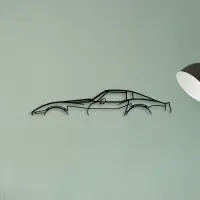
The Chevrolet 210 1956 in profile
The Chevrolet 210 1956 reads like a confident shape the moment it is cut from sheet metal. Its tapered tail is the kind of detail that survives simplification and keeps the piece feeling like the real car.
In our range the Chevrolet 210 1956 is available between 50 cm and 140 cm, priced from $69.95 at the small end to $209.95 at the largest. At the smaller end it works above a desk; at 120 cm and 140 cm it becomes the anchor of a wall.
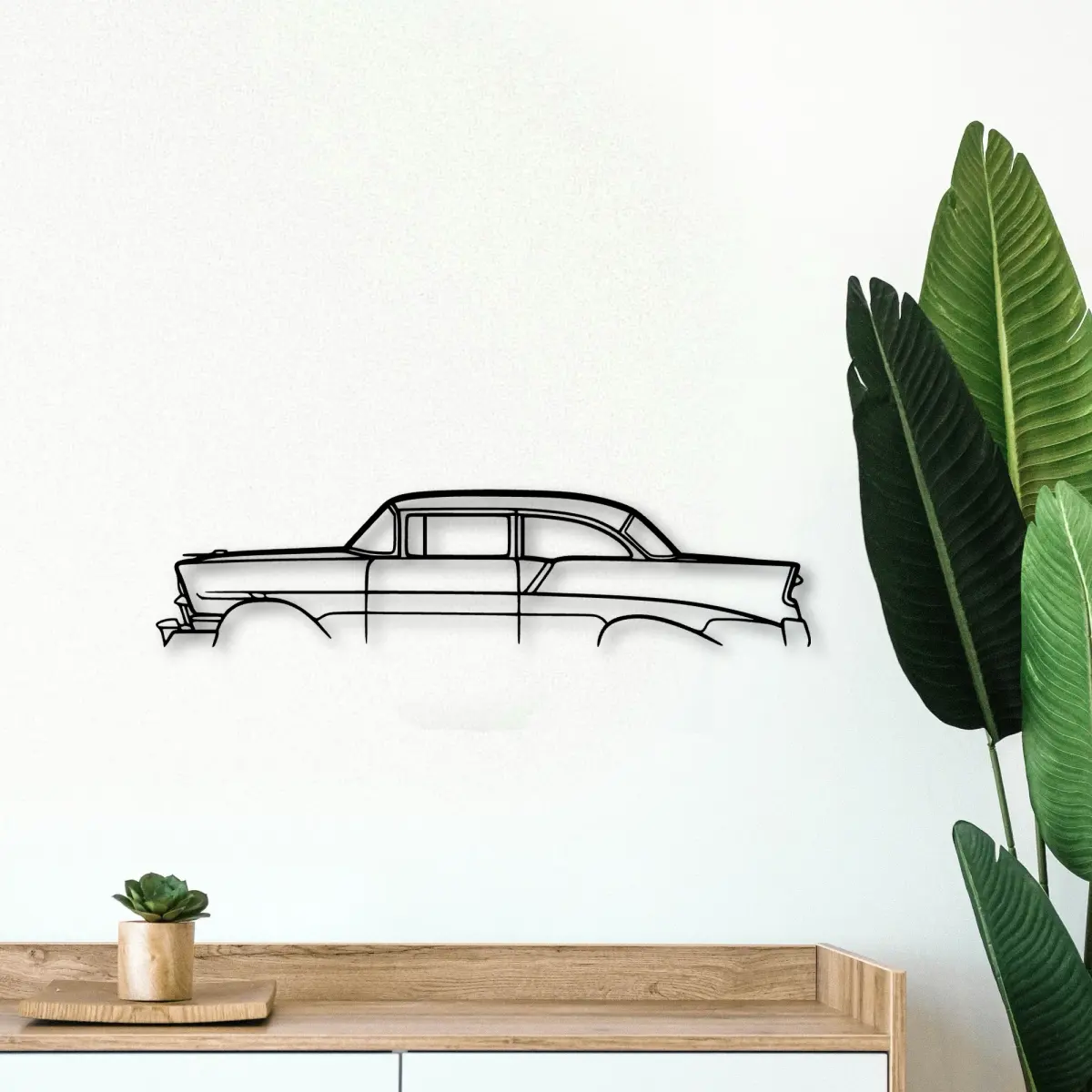
Giving the Chevrolet 210 1956
A Chevrolet 210 1956 form is an easy gift for someone who already knows the shape by heart. It is specific without being expensive, and it frames a passion they already have.
What ages well
A cut outline does not tell you the year or the paint. It tells you the shape, and the shape of the Chevrolet 210 1956 is the part worth keeping.
A form is the shortest argument for why a car is worth remembering. It keeps the shape and drops everything that dates.
Why this outline holds up
As a Chevrolet shape, the Chevrolet 210 1956 carries a brand outline you recognise before you read a badge, which is why the form works as piece.
If you are buying for a fan of the Chevrolet 210 1956, the outline is the safest possible choice: it cannot clash with a room, and it names the car without naming a colour.
For the enthusiast
A piece you keep
The Chevrolet 210 1956 is the kind of piece you stop noticing as decor and start reading as a car. That is the point of cutting it to the profile.
Why collectors keep coming back
The appeal of the Chevrolet 210 1956 as a form is that it ages well. There is no colour to fall out of fashion and no livery to date it; there is only the outline, which is the part people actually remember.