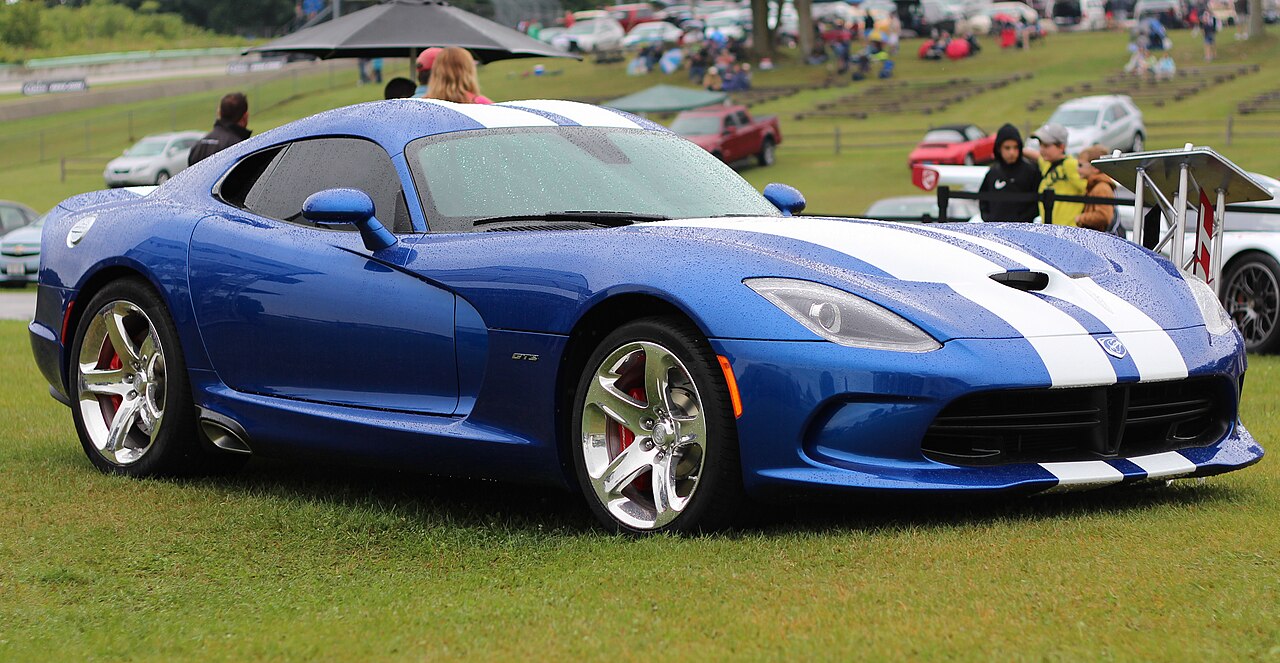
The Dodge Viper launched in 1992 as a deliberately raw, old-school supercar: a huge V10 engine up front, a manual gearbox, no traction control and no power steering in the early cars. Where rivals went high-tech, the Viper stayed gloriously brutal, and it became one of the most distinctive American performance cars of its era.
Generations and evolution
SR I and II (1992–2002)
The original side-exit-exhaust Viper with its big-block V10, evolving through the GTS coupe and the powerful ACR.
ZB I and II (2003–2010)
A more refined but still brutal Viper, with the coupe 'Viper Competition Coupe' and record-setting ACR track cars.
VX I and II (2013–2017)
The final generation, with a smoother look, more power and the track-focused ACR that set numerous lap records.
Design language and the silhouette
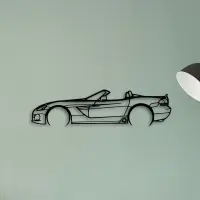
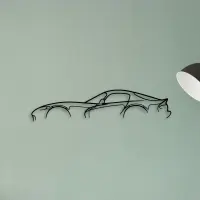
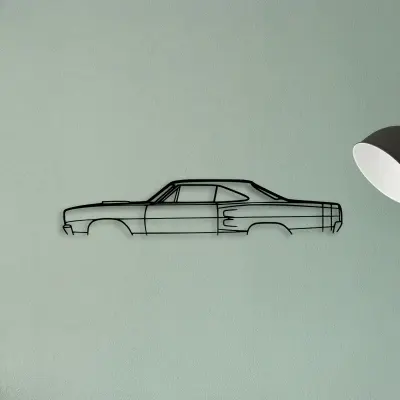
Wide, low and aggressive, with a long hood over the V10, a broad rear haunch and, on the first cars, side exhausts that made its presence known before it even moved. Because we cut every Tinvibe piece from 2 mm steel to the car's true outline, the traits that make the Dodge Viper recognizable — its roofline, stance and key details — are exactly what the metal keeps, in matte black powder coat across five sizes from 50 cm to 140 cm.
Production, sales and availability
Dodge has not published a single combined Viper total across all generations, so we avoid quoting one; production ended in 2017, and the ACR models are the most collectible.
The Viper in the Tinvibe collection
We cut the Dodge Viper as a laser-cut steel silhouette in five sizes from 50 cm to 140 cm, finished in matte black powder coat. The designs below are drawn from our catalogue for this nameplate.