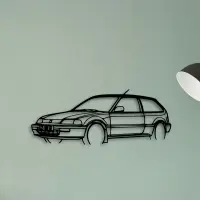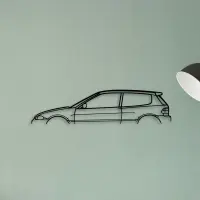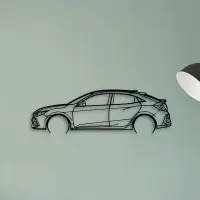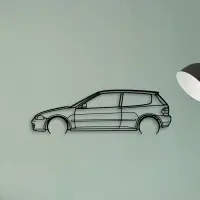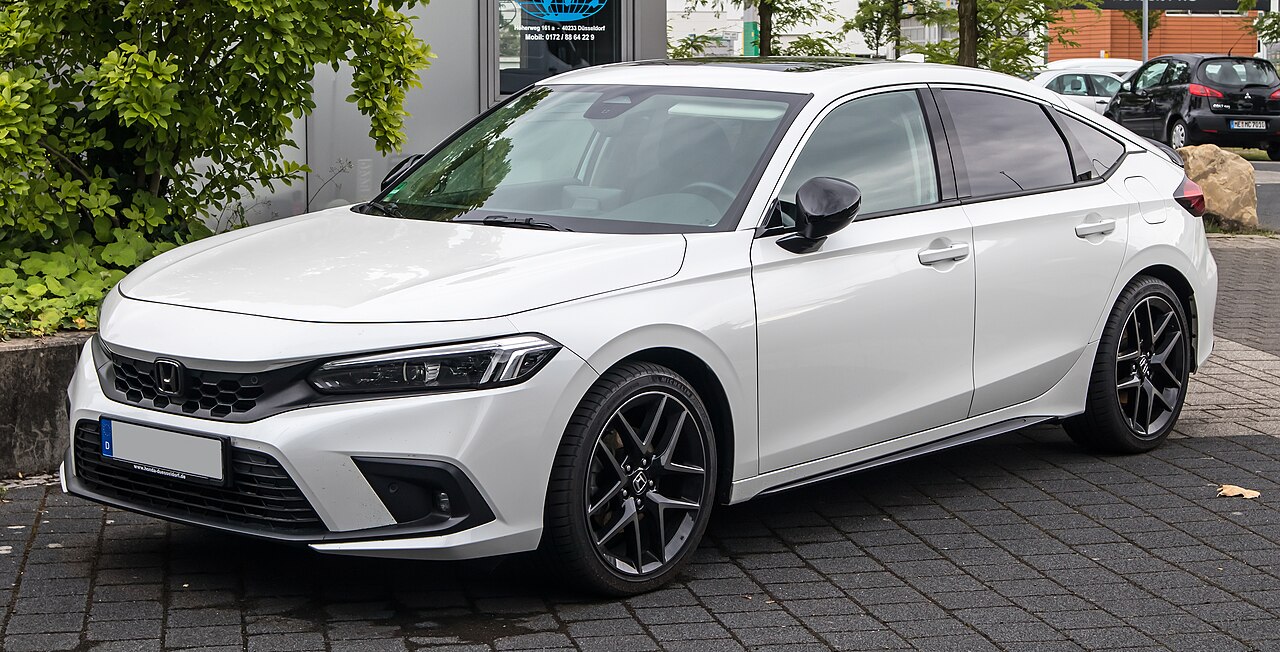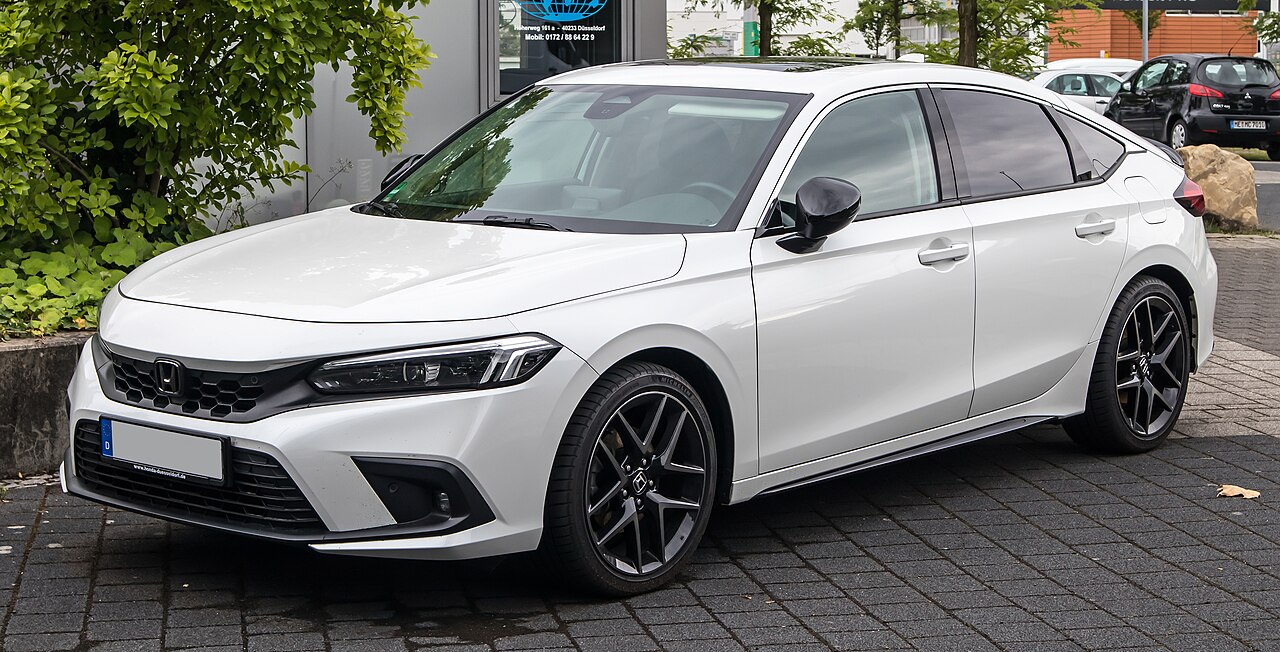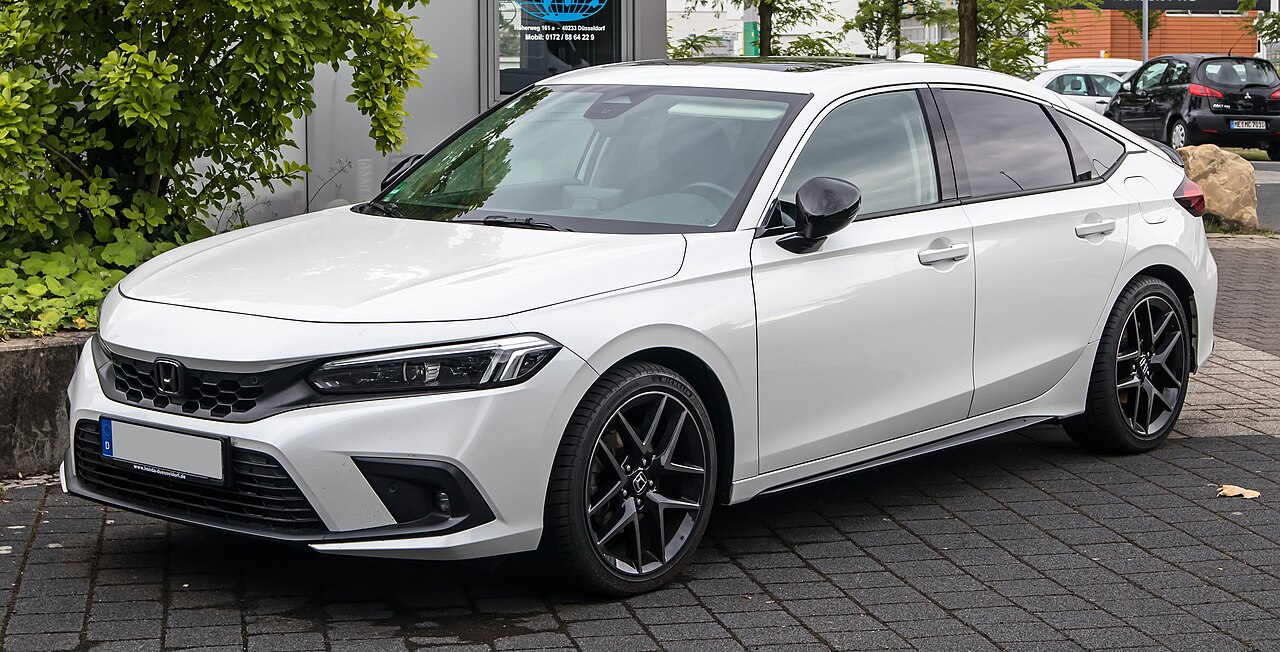
The Honda Civic arrived in 1973, born from the oil crisis as a small, fuel-efficient and reliable car. That combination turned it into one of the best-selling nameplates on earth, now spanning eleven generations. Along the way it also spawned the Civic Type R, a hot-hatch benchmark that proved the humble Civic could be a genuine performance car.
Generations and evolution
First to third generations (1972–1983)
The original compact and the CVCC engine that helped it meet early emissions rules without a catalytic converter in some markets.
Fourth to sixth generations (1983–1995)
The Civic grew into a genuinely modern small car; the fifth-generation Si and the EG hatchback became tuner favourites.
Seventh to tenth generations (2000–2021)
The Civic went global and grew up, with the EK9 Type R (1997) marking Honda's first Type R and the FK8 (2017) bringing a turbo, hatchback Type R to more markets.
Eleventh generation (2021–present)
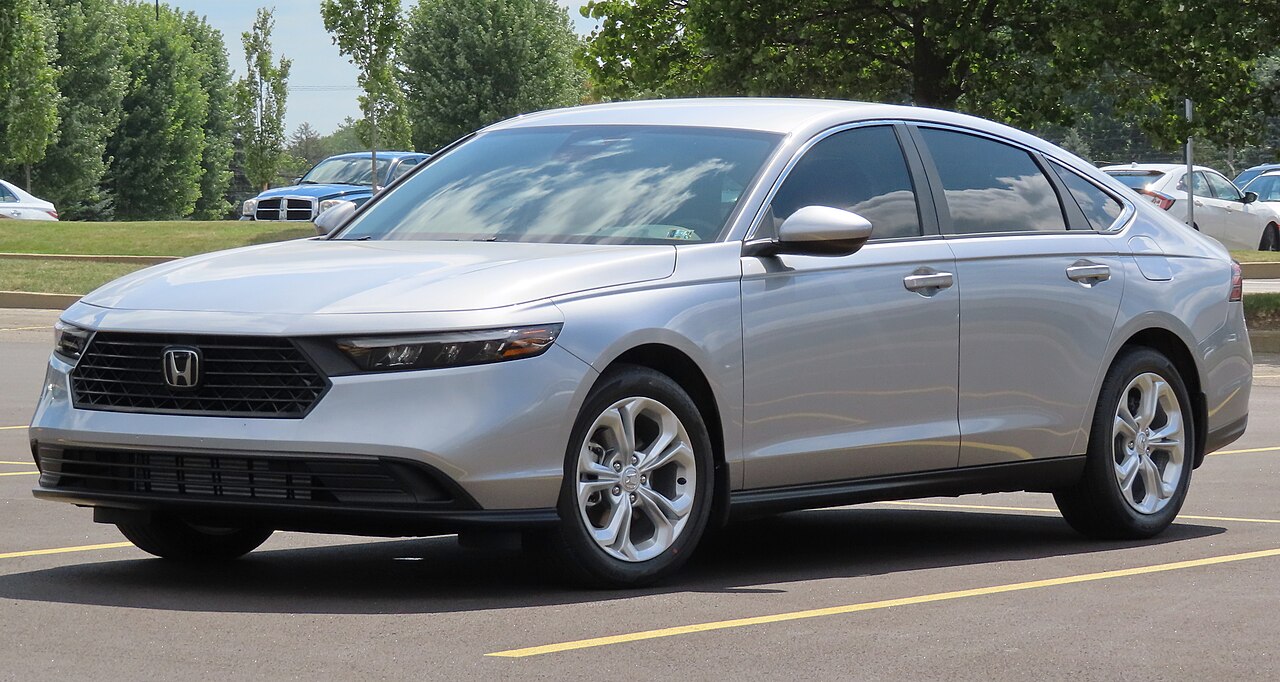
A cleaner, more mature design with a hybrid option, carrying the Civic into the electrified era.
Design language and the silhouette
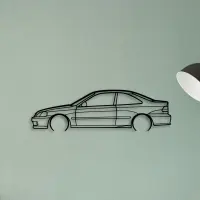
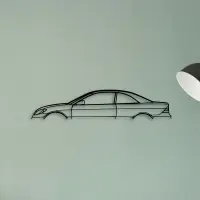
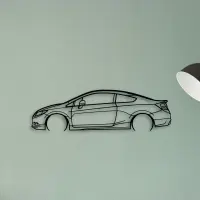
The Civic's shape has tracked fifty years of small-car design, from boxy and upright to sleek and wedge-like — but the short overhangs and practical hatchback proportions that made it famous are still there. Because we cut every Tinvibe piece from 2 mm steel to the car's true outline, the traits that make the Honda Civic recognizable — its roofline, stance and key details — are exactly what the metal keeps, in matte black powder coat across five sizes from 50 cm to 140 cm.
Production, sales and availability
Honda has built tens of millions of Civics across the generations, making it one of the best-selling car lines in history; we don't quote a single combined figure because Honda reports it by year and market.
The Civic in the Tinvibe collection
We cut the Honda Civic as a laser-cut steel silhouette in five sizes from 50 cm to 140 cm, finished in matte black powder coat. The designs below are drawn from our catalogue for this nameplate.