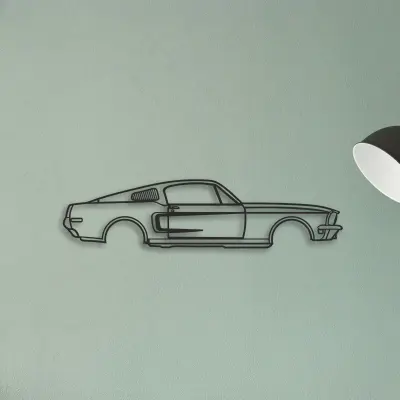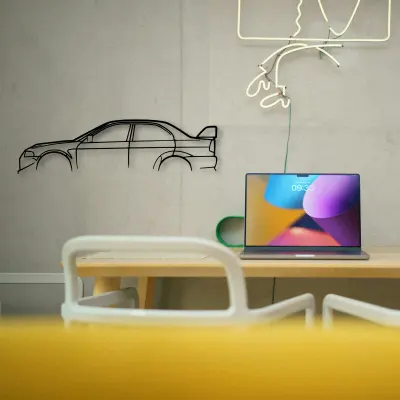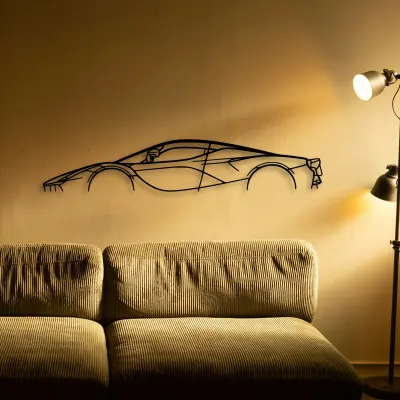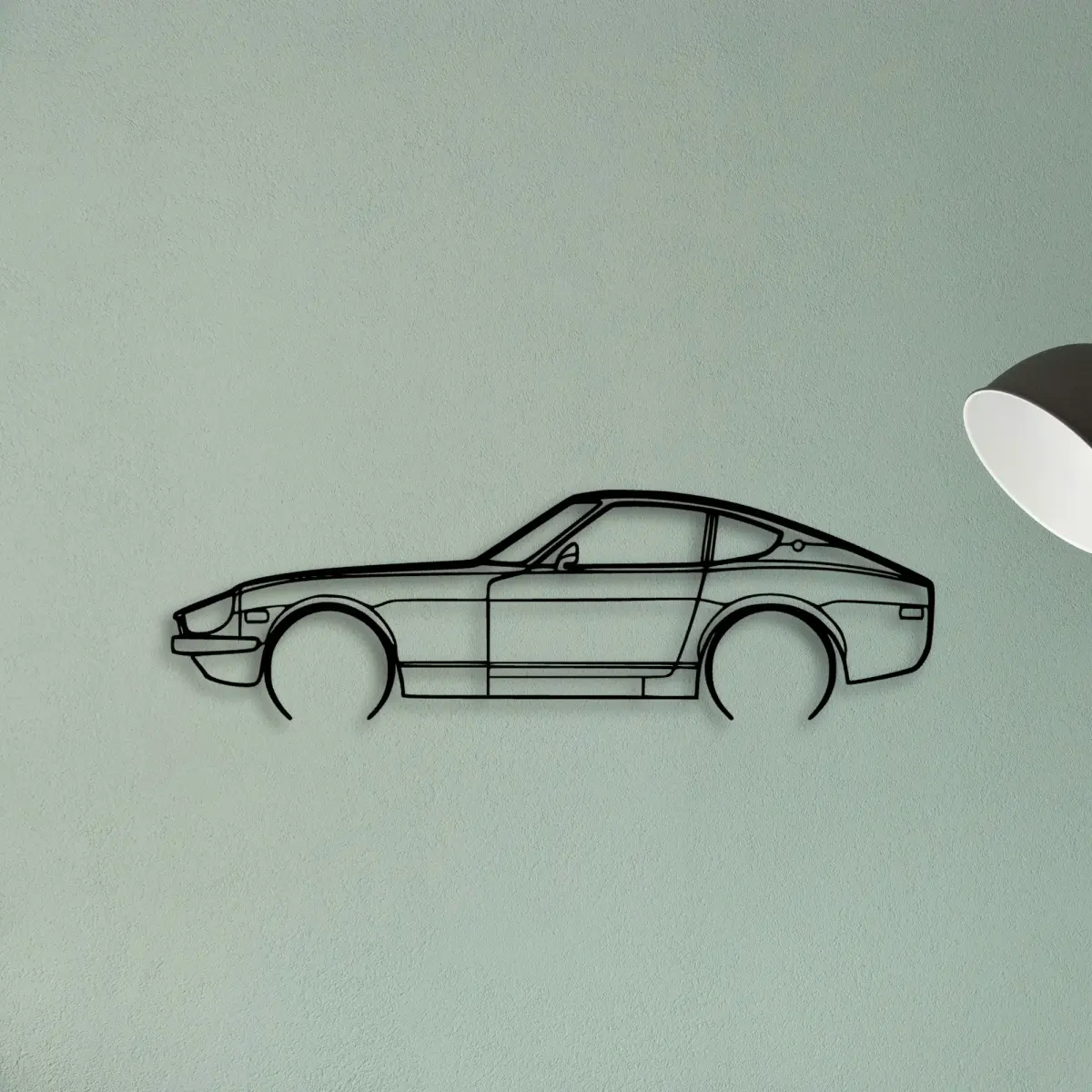
Our pieces are matte black powder-coated steel, and matte helps — but it does not make glare impossible. A garage is a hard room to light: bare bulbs, a concrete floor, a metal door and often a window. All four bounce light back at the wall.
The good news is that glare on a silhouette is easy to predict and easy to avoid. It comes down to where the light is relative to the piece, not how bright it is.
Why glare happens on metal
Glare happens when a light source sits inside the angle your eye uses to look at the piece. For a wall-mounted object, that is roughly a 60-degree cone in front of it. Any fixture inside that cone will show up as a bright patch somewhere on the surface.
Matte powder coat scatters light instead of mirroring it, so you get a soft wash rather than a hard reflection. That is much better, but the wash still brightens the whole piece unevenly if the source is close and off to one side.
Fixture placement in a garage
- Aim the light at the wall, not at the piece. Washing the wall around the art gives you contrast without a hot spot.
- Keep fixtures at least 60 cm out from the plane of the wall. The further the source, the wider and softer the wash.
- Use two fixtures from opposite sides rather than one from above. Two soft sources cancel out most shadow direction.
- Angle down at about 30 degrees. Steeper angles put the reflection straight back at your eye.
If you already have a single overhead fixture directly in front of the wall, move the piece rather than the light. Shifting the art 40 cm to one side takes it out of the reflection cone and usually solves the problem completely.
Pieces that reward good lighting
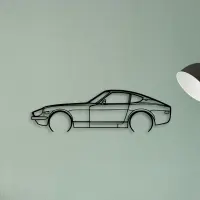
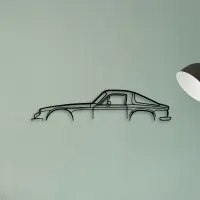
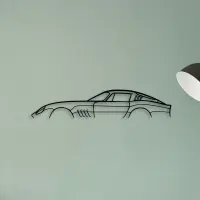
Colour temperature
Matte black powder coat looks best under warm light. Around 2700–3000 K gives the surface a soft, slightly warm cast and keeps the edges readable. Cool white at 4000 K and above makes matte black look flat and slightly grey, and it exaggerates any texture in the coating.
If your garage already has cool fluorescent tubes, that is worth changing before you invest in art lighting. A warm LED replacement is the single cheapest upgrade you can make to how the pieces look.
Daylight considerations
A garage window or an open door is a very large, very diffuse source — which is usually the best light you will get. The problem is when direct sun lands on the piece for part of the day, because the angle changes hour by hour.
- Avoid hanging directly opposite a south-facing window or door.
- If the wall gets direct sun for part of the day, use a sheer blind or a translucent film rather than moving the art.
- Check the wall at three times of day before you commit. A wall that looks perfect at 10 am can be unreadable at 4 pm.
Test before you drill. Hold the piece up at the height you plan to hang it, then look at it from where you will actually stand.
A quick glare test
- Hold the piece flat against the wall at your intended height.
- Stand where you will normally view it from.
- Crouch to sitting eye height and check again — this is where most garage glare shows up.
- If either position shows a bright patch, shift the piece sideways or change the fixture angle, then retest.