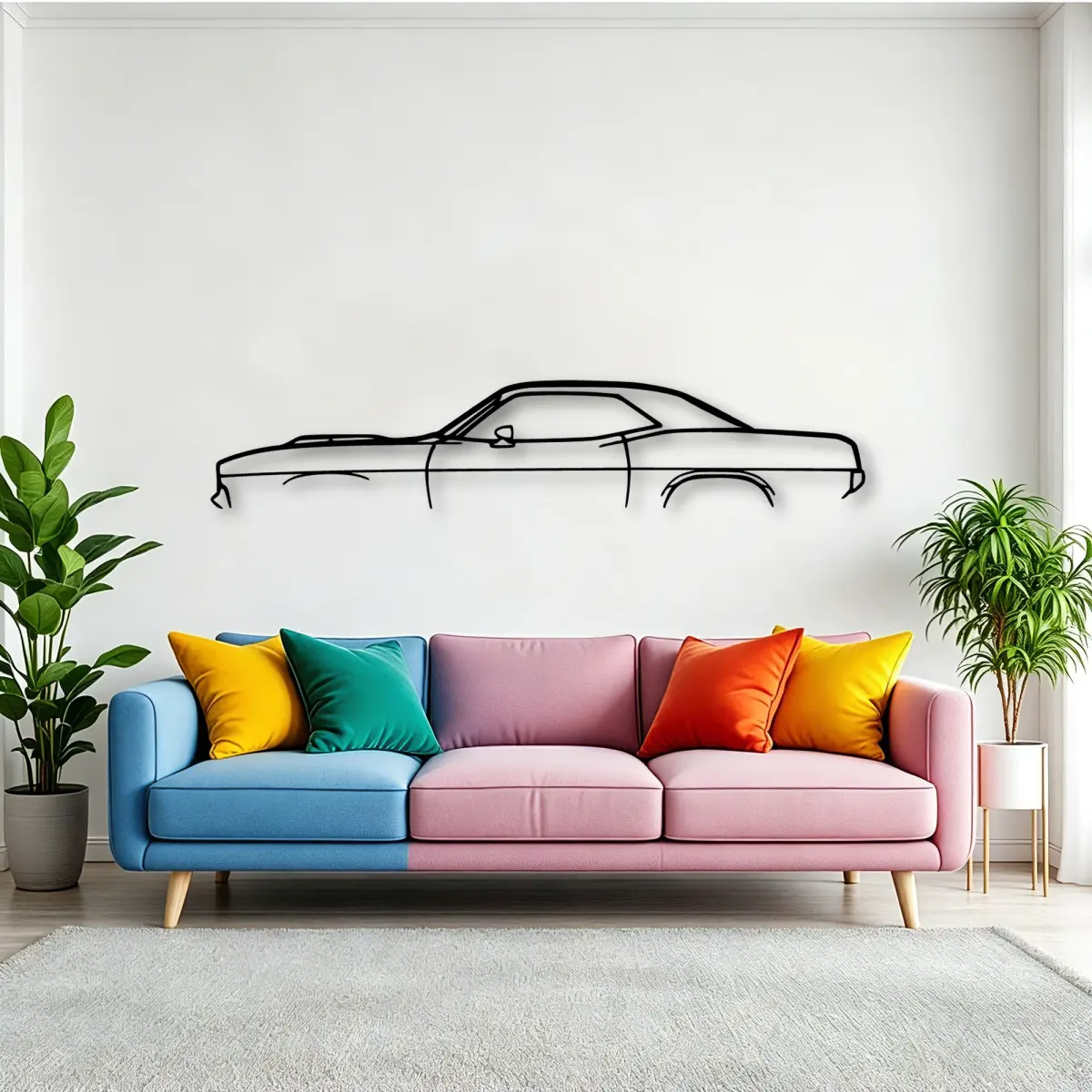
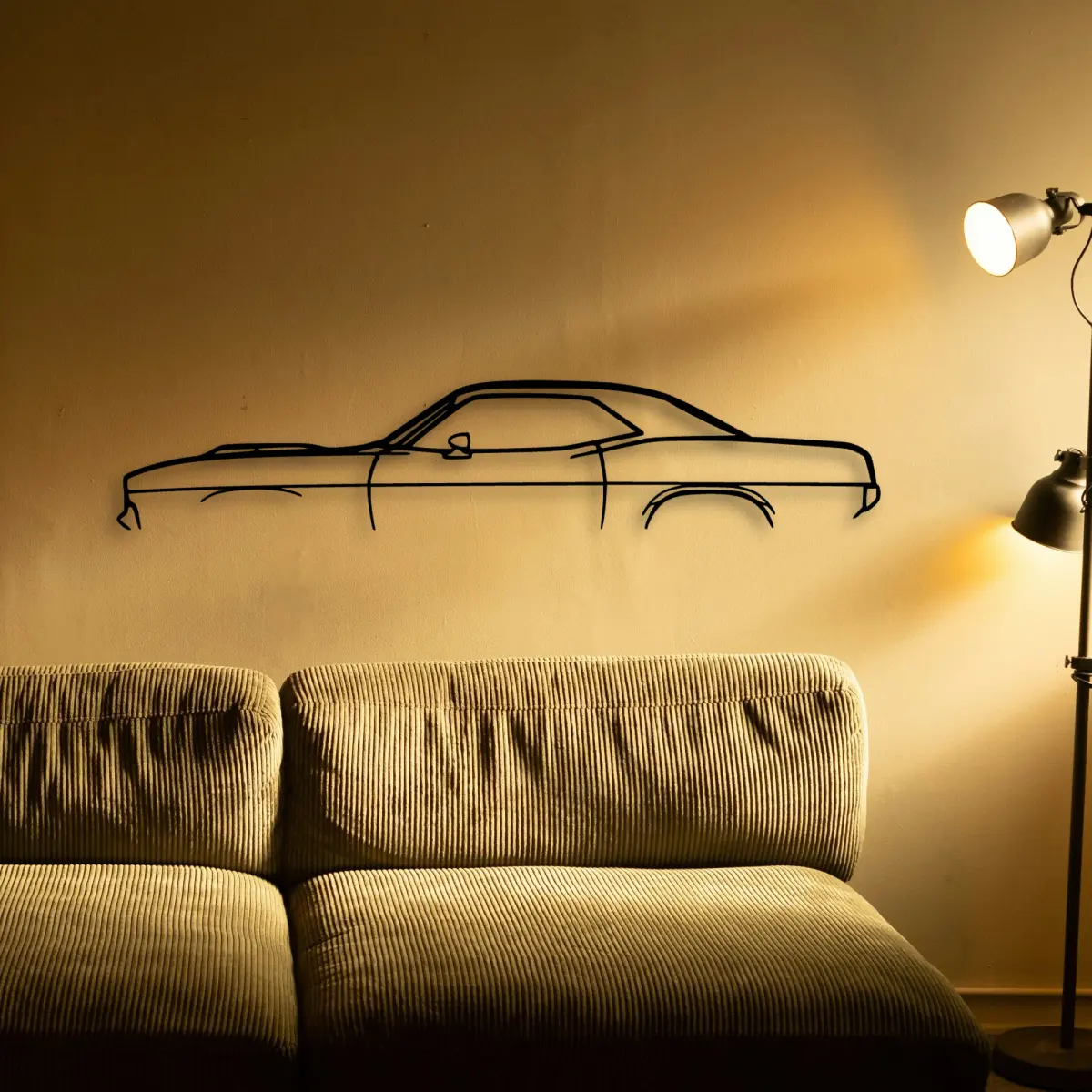
A cut-metal silhouette strips a Plymouth Barracuda 1970 back to the one thing that makes it recognisable: its outline. That outline is the whole point, and it is worth understanding before you choose a piece for the wall.
The Plymouth Barracuda 1970 dates to 1970, and that year's proportions are exactly what the cut outline keeps — the roofline and the stance are period-correct, not stylised.
The Plymouth Barracuda 1970 pieces in our range are cut from sheet metal and delivered ready to mount, with the price stepping from $69.95 at 50 cm to $209.95 at 140 cm — a range that lets the same outline work above a desk or across a full wall.
The racing outline
Race-bred cars have a particular silhouette: low, wide, and impatient. The Plymouth Barracuda 1970 keeps that shape in metal, and because a silhouette removes the livery, what is left is pure stance.
Why it works on a wall
A Plymouth Barracuda 1970 outline reads as motion even when it is stationary. The proportion alone suggests speed, which is exactly why it suits a garage or a fan's study.
Performance silhouettes
Sizing a tribute wall
For a tribute wall, go large. A 120 cm or 140 cm Plymouth Barracuda 1970 outline holds its own next to a number plate or a helmet, and it will not clash because it carries no colour of its own.
- 120–140 cm as the anchor of a tribute wall.
- Pair with a smaller second car for depth.
- Keep the bottom edges aligned so the wall reads composed.
Why this outline holds up
As a Plymouth shape, the Plymouth Barracuda 1970 carries a brand outline you recognise before you read a badge, which is why the silhouette works as wall art.
A motorsport profile is all attitude. The Plymouth Barracuda 1970 keeps the low, wide read that makes the shape read as speed even when it is bolted still.
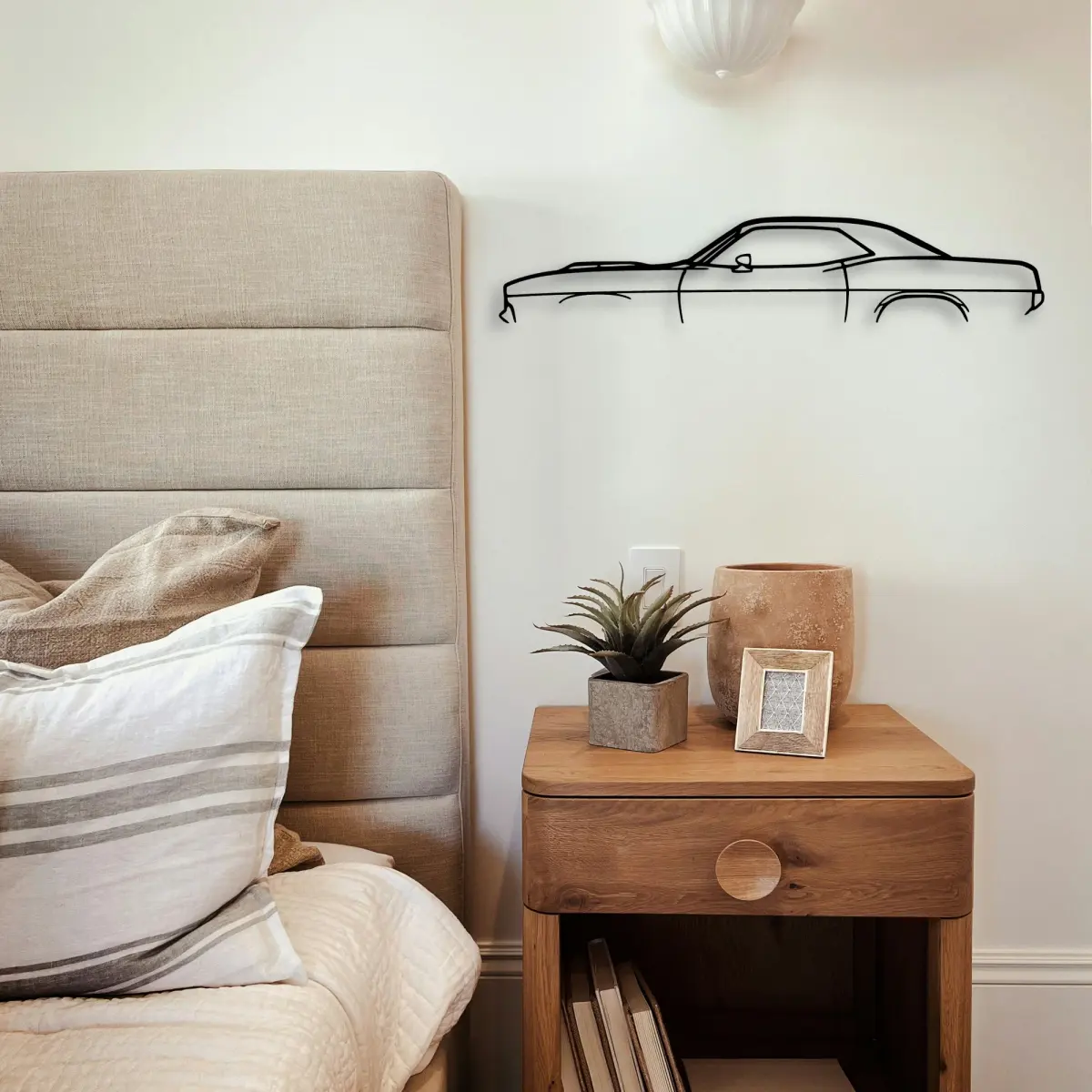
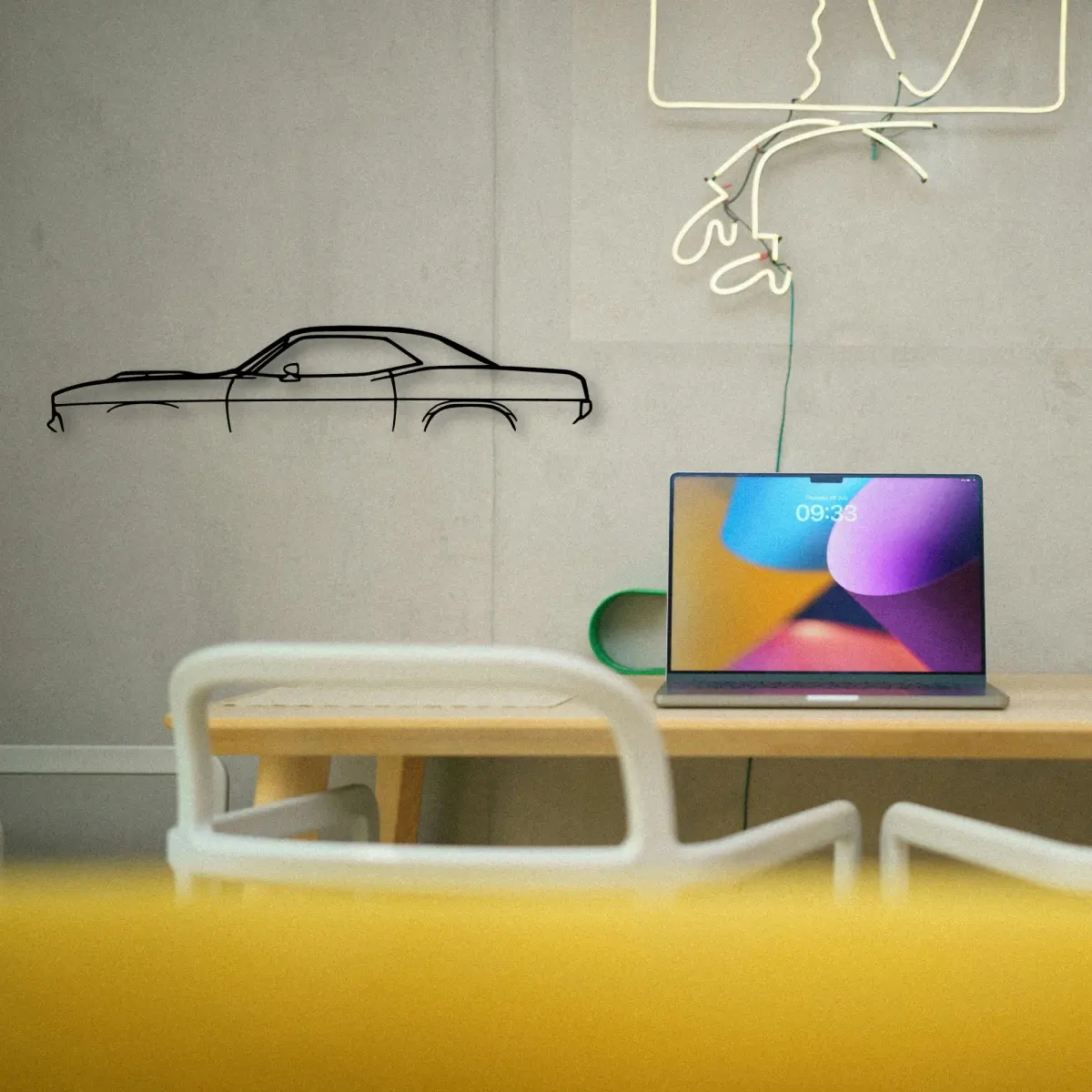
No livery, no number round — just the shape. The Plymouth Barracuda 1970 works on a wall because the stance does the talking.
A tribute wall wants one anchor. A 120–140 cm Plymouth Barracuda 1970 piece gives the wall a centre without dictating a colour scheme.
Maintenance is close to nothing. A quick dust is enough; there are no frames to chip and no glass to clean.
Drawn from the 1970s, the Plymouth Barracuda 1970 already had the roofline and stance that a laser-cut silhouette is built to preserve.
A laser-cut Plymouth Barracuda 1970 keeps the exact side profile measured from the real Plymouth — no colour, no livery, just the line that makes it recognisable.
The Barracuda 1970 is the specific car behind the Plymouth Barracuda 1970; the outline is taken from its production side profile, so the shape is the real one.
the right size is the one you forget to notice because it fits the wall so well.
A profile on the wall is a quiet kind of confidence. It does not shout the spec sheet; it simply states the shape.