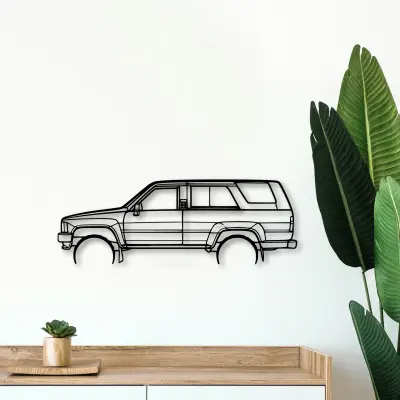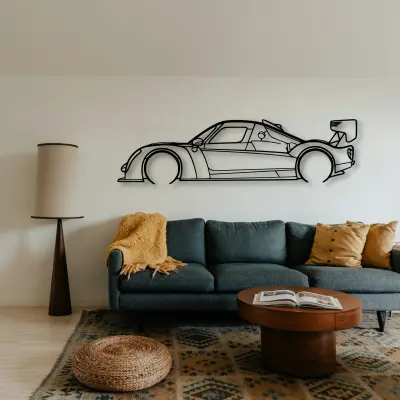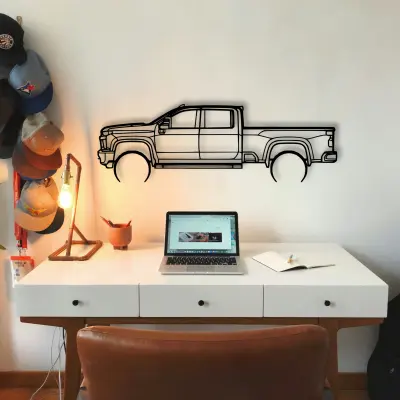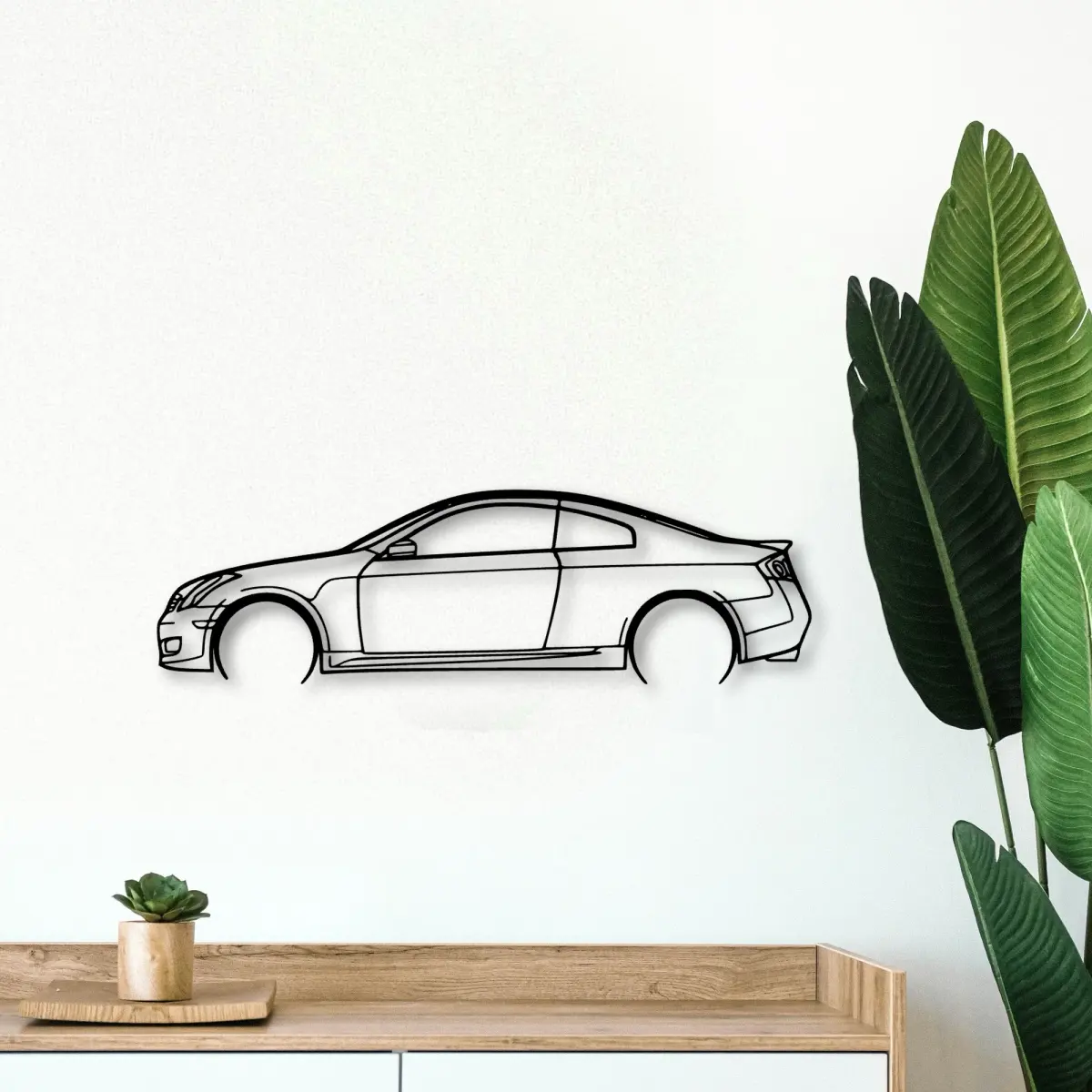
Driving culture is mostly small rituals: the prep, the playlist, the stop for coffee. A Infiniti outline is the part you keep.
The Infiniti G35 2006 dates to 2006, and that year's proportions are exactly what the cut outline keeps — the roofline and the stance are period-correct, not stylised.
At Tinvibe the Infiniti is offered as a cut outline in five options, from 50 cm to 140 cm, finished for indoor wall display. The smaller sizes suit a shelf or a study; the larger sizes take a full man cave.
Reading it from across the room
Up close you admire the cut; from across the room you recognise the Infiniti. The piece is designed so both readings land.
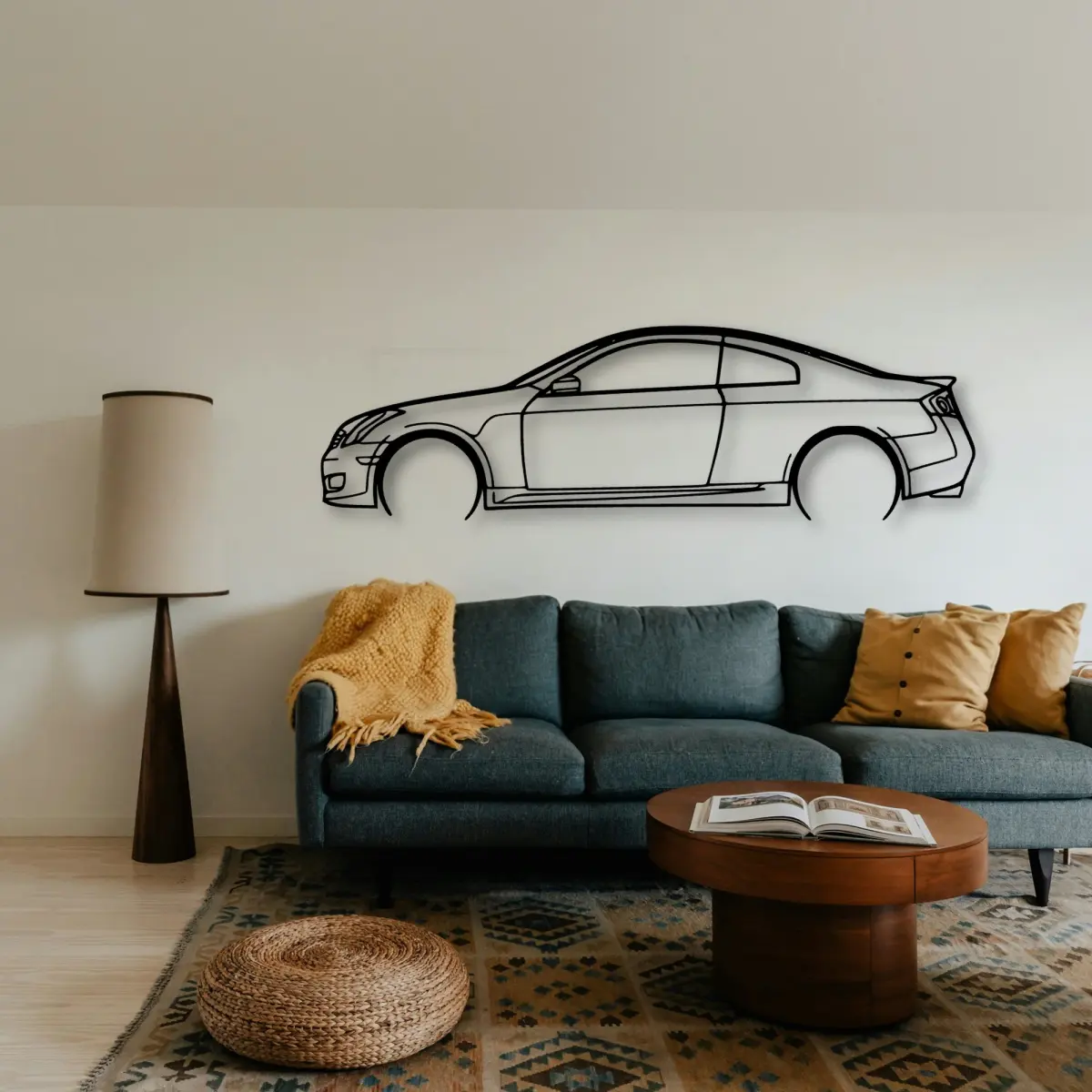
Five options for the memory
Every Infiniti shape comes in the same five options: 50 cm, 80 cm, 100 cm, 120 cm and 140 cm. The price steps with the size, from $69.95 to $209.95.
- 50 cm — a shelf or a study; an accent, not a feature.
- 80 cm — still modest, but reads across a doorway.
- 100 cm — the safe feature-wall default.
- 120 cm — for rooms where the car is the subject.
- 140 cm — the full statement piece.
More than one on the panel
A row of Infiniti outlines, each a different trip, turns a wall into a timeline you can read at a glance.
Build the set
Cars-and-coffee rituals
A Infiniti enthusiast's week has a Sunday shape: coffee, cars, and the outline that sums up the morning. The meet is the social half of the hobby.
Recognition is the whole point. The outline is built so the car reads before the words do.
Colour is optional here. The outline carries the identity, so the panel behind it can stay exactly as it is.
A shape ages better than a photograph. There is no moment to date it and no colour to fall out of fashion.
The right size is the one you forget to notice because it fits the panel so well.
A piece does not need a frame to feel finished. The cut edge is the frame.
Placement is a quiet decision. Natural sightline for a hero wall, slightly above a worktop, and well clear of a door swing that would clip it.
Cut metal has a weight that printed art lacks. The shadow it casts is part of the piece, not an accident of the light.
Hang two that differ in length, not in mood, and they read as a pair rather than a repeat.
A neutral wall is a gift. It lets the cut do the talking without competing colour.
A shape travels. Move it between rooms and it still makes sense, because the shape is the message.
A profile on the panel is a quiet kind of confidence. It does not shout the spec sheet; it simply states the shape.
Quiet rooms suit a smaller shape; loud rooms need one that can hold its own from across the space.
Light from the side reveals the cut; light from the front flattens it. Aim for the reveal.
The panel behind should be the quietest thing in the room. Let the outline be the loud part.
Scale matters more than people expect. A piece that is too small disappears; one that is sized to the panel reads as intentional from the doorway.