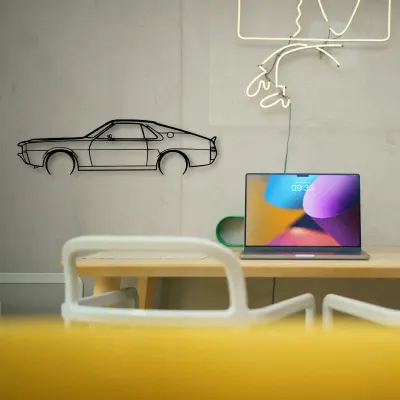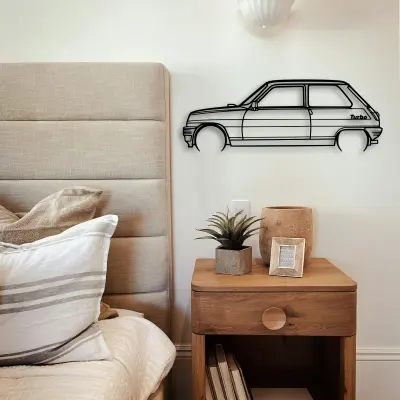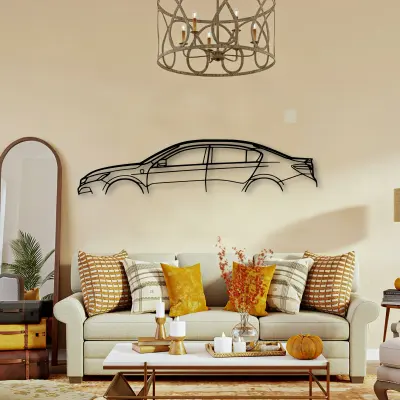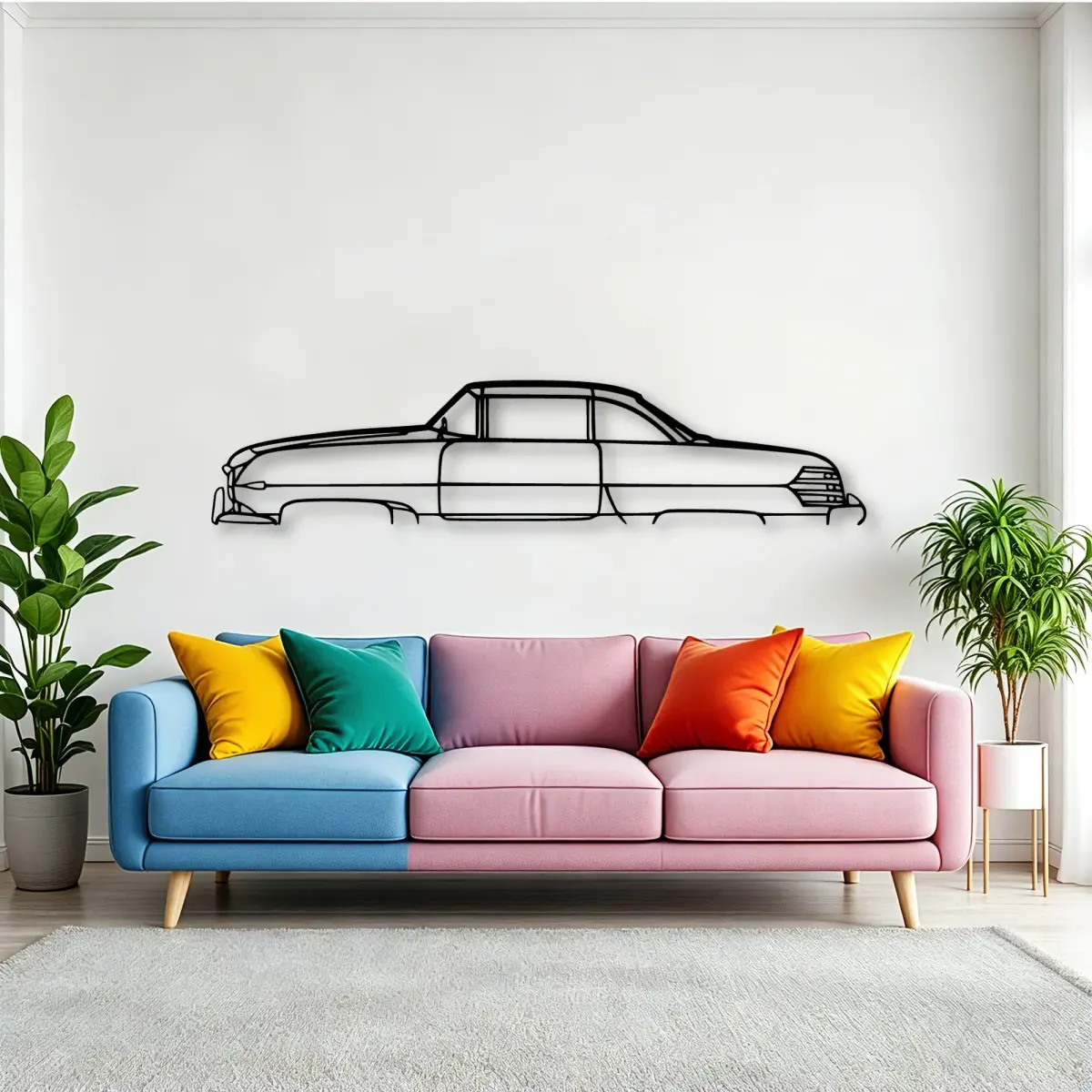
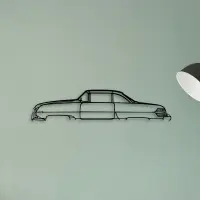
The Hudson outline reads as a shape first and a car second. Photographing it is really about capturing that shape, not the metal.
The Hudson Hudson Italia 1954 dates to 1954, and that year's proportions are exactly what the cut outline keeps — the roofline and the stance are period-correct, not stylised.
The Hudson pieces in our range are cut from sheet metal and delivered ready to mount, with the price stepping from $69.95 at 50 cm to $209.95 at 140 cm — a range that lets the same outline work by a workstation or across a full wall.
Era written into the line
Period is baked into proportion. A Hudson from one decade sits differently from another, and a shape is the fastest way to see that gap.
Honest material, no colour
A Hudson shape in steel asks the line to do all the work — there is no livery, no badge colour, no gradient to lean on.
Angle the light, not the camera
To kill glare on a Hudson cutout, lower and offset the light so it skims the surface instead of bouncing straight back.
A matte read as a fallback
If a room only offers hard frontal light, a Hudson piece with a softer finish will read cleaner than a bright polished one.
Five options, one outline
Every Hudson shape comes in the same five options: 50 cm, 80 cm, 100 cm, 120 cm and 140 cm. The price steps with the size, from $69.95 to $209.95.
- 50 cm — a shelf or a study; an accent, not a feature.
- 80 cm — still modest, but reads across a doorway.
- 100 cm — the safe feature-wall default.
- 120 cm — for rooms where the car is the subject.
- 140 cm — the full statement piece.
More than one on the panel
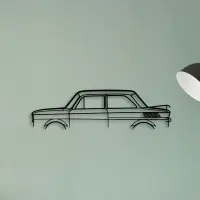
A row of Hudson outlines, each a different car, turns a wall into a timeline you can read at a glance.
Build the set
A piece does not need a frame to feel finished. The cut edge is the frame.
Colour is optional here. The outline carries the identity, so the panel behind it can stay exactly as it is.
Depth comes from the shadow. The gap between metal and wall is part of the composition, not a flaw.
A row of identical small frames fights itself. One larger outline settles the panel instead.
Pick the outline that matches the room's energy: calm spaces want restraint, busy ones want a statement.
The shape is the cheapest way to own the shape without owning the car.
Placement is a quiet decision. Natural sightline for a hero wall, slightly above a worktop, and well clear of a door swing that would clip it.
A shape travels. Move it between rooms and it still makes sense, because the shape is the message.
The room sets the size. A busy wall wants a bigger outline to hold its own; a calm wall lets a smaller piece breathe.
A shape ages better than a photograph. There is no moment to date it and no colour to fall out of fashion.
A neutral wall is a gift. It lets the cut do the talking without competing colour.