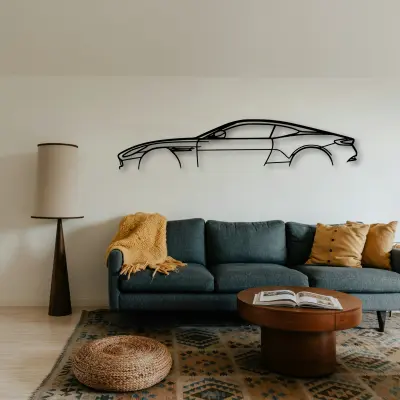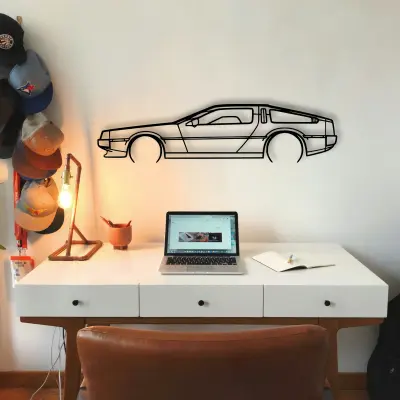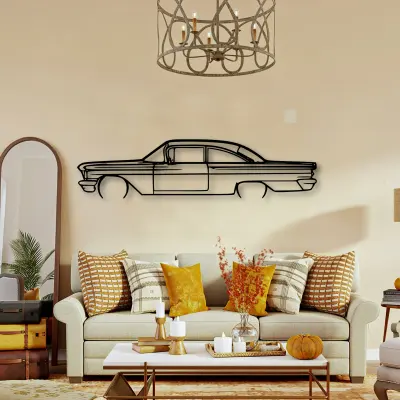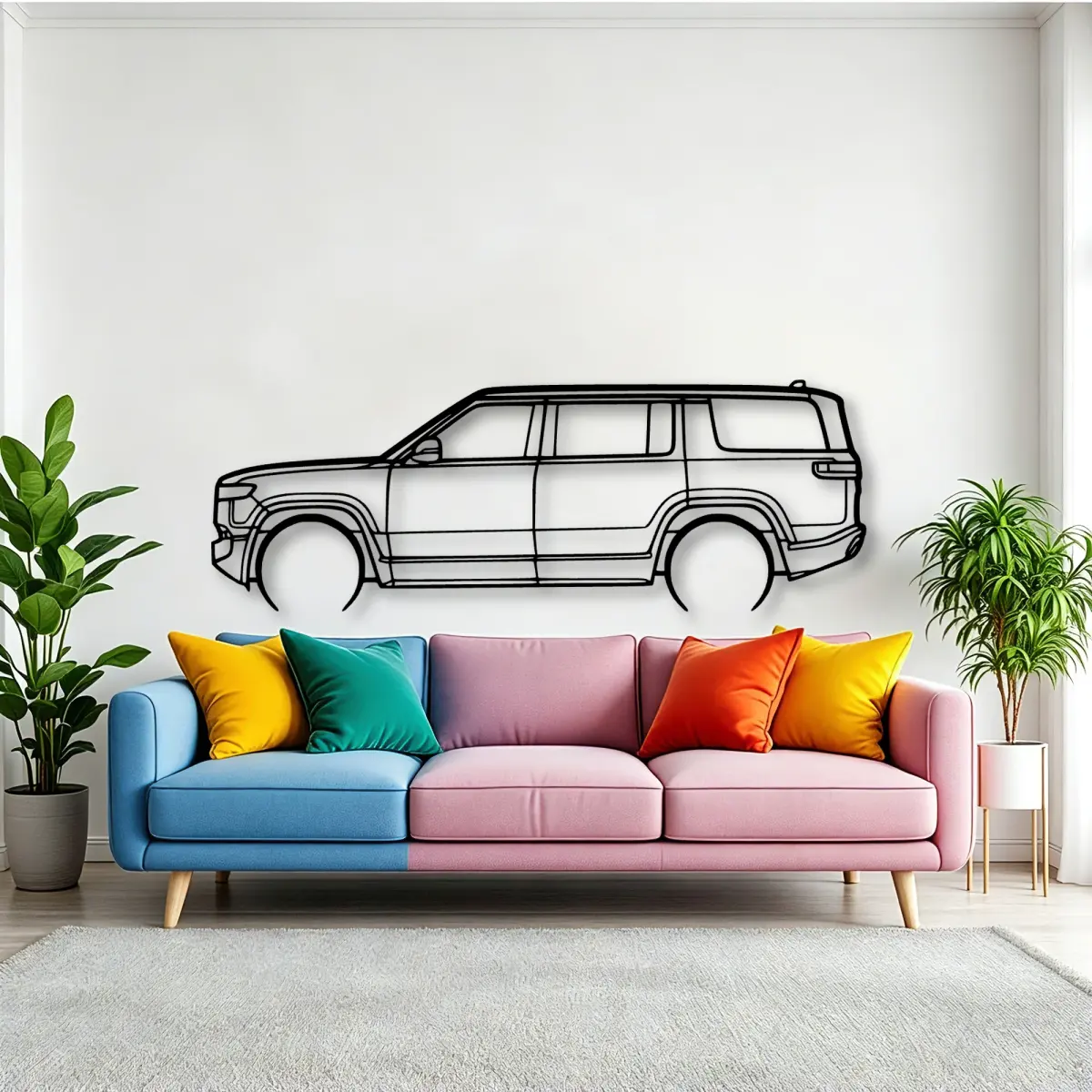
Most photos of wall decor fail for one reason: they fight the piece. A Rivian shape wants clean light and a calm background, not a clever setup.
At Tinvibe the Rivian is offered as a cut outline in five options, from 50 cm to 140 cm, finished for indoor wall display. The smaller sizes suit a shelf or a study; the larger sizes take a full den.
Five options, one outline
Every Rivian shape comes in the same five options: 50 cm, 80 cm, 100 cm, 120 cm and 140 cm. The price steps with the size, from $69.95 to $209.95.
- 50 cm — a shelf or a study; an accent, not a feature.
- 80 cm — still modest, but reads across a doorway.
- 100 cm — the safe feature-wall default.
- 120 cm — for rooms where the car is the subject.
- 140 cm — the full statement piece.
Reading it from across the room
Up close you admire the cut; from across the room you recognise the Rivian. The piece is designed so both readings land.
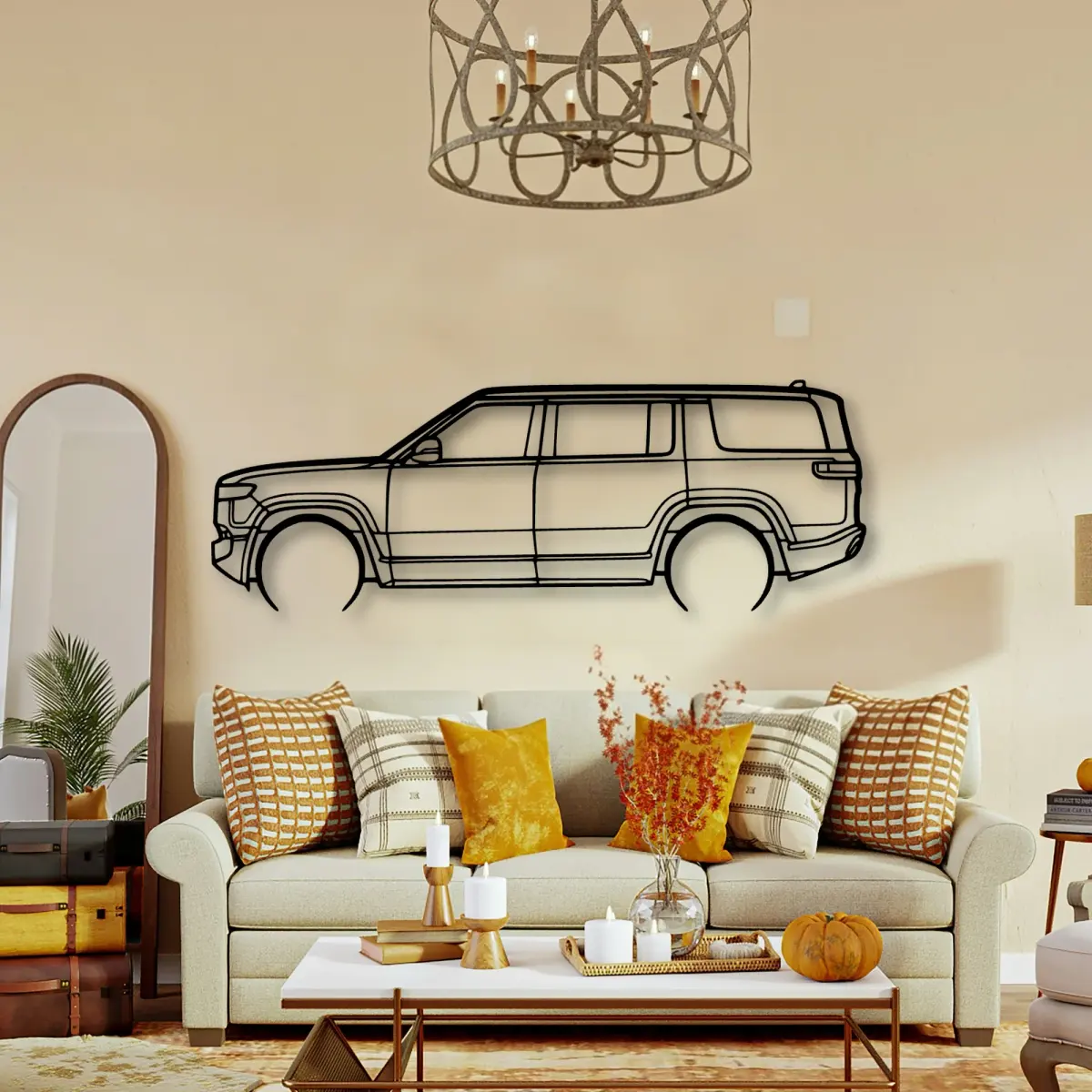
One light source beats two
A single direction of light defines the cut edge of a Rivian shape better than a flat wash from everywhere. Pick one side and let it rake the metal.
Honest material, no colour
Because the Rivian comes in bare cut metal, every proportion is exposed. That is harder than a photograph, and it is why a good outline feels earned.
More than one on the panel
A row of Rivian outlines, each a different car, turns a wall into a timeline you can read at a glance.
Build the set
Grouping works when the shapes contrast. A long low outline next to a tall upright one reads as a conversation, not a pile.
A profile on the panel is a quiet kind of confidence. It does not shout the spec sheet; it simply states the shape.
Scale matters more than people expect. A piece that is too small disappears; one that is sized to the panel reads as intentional from the doorway.
Metal keeps its line. Unlike paper, it will not curl, fade, or bow under a warm lamp.
Wall decor works best when it earns its place rather than filling a gap. A single well-chosen outline does more than a row of hesitant decoration.
Lighting decides the mood. An even wash from above flatters the edge; a single hard spotlight only hardens one corner.
Give it room to mean something. A shape left alone on a clear wall says more than the same shape lost in a crowd.
Placement is a quiet decision. Natural sightline for a hero wall, slightly above a worktop, and well clear of a door swing that would clip it.
Read it from the doorway, not up close. The whole point is the gesture the line makes at a distance.
Maintenance is close to nothing. A quick dust is enough; there are no frames to chip and no glass to clean.
Think in edges, not pictures. The cut defines the object, and the shape defines the cut.
The room sets the size. A busy wall wants a bigger outline to hold its own; a calm wall lets a smaller piece breathe.