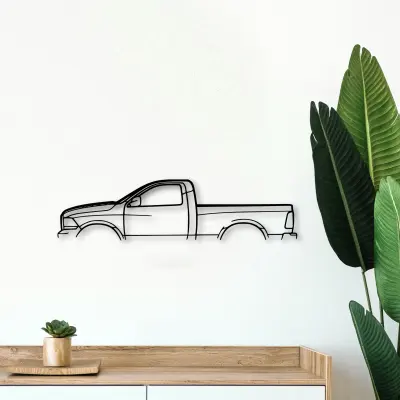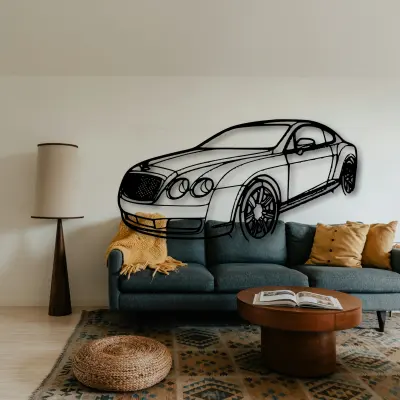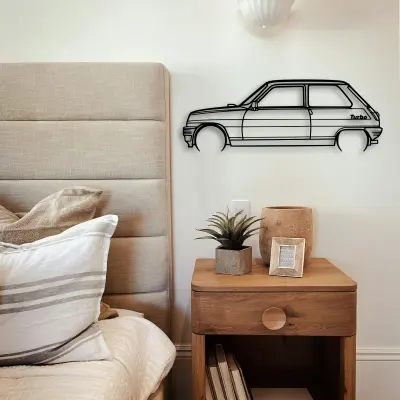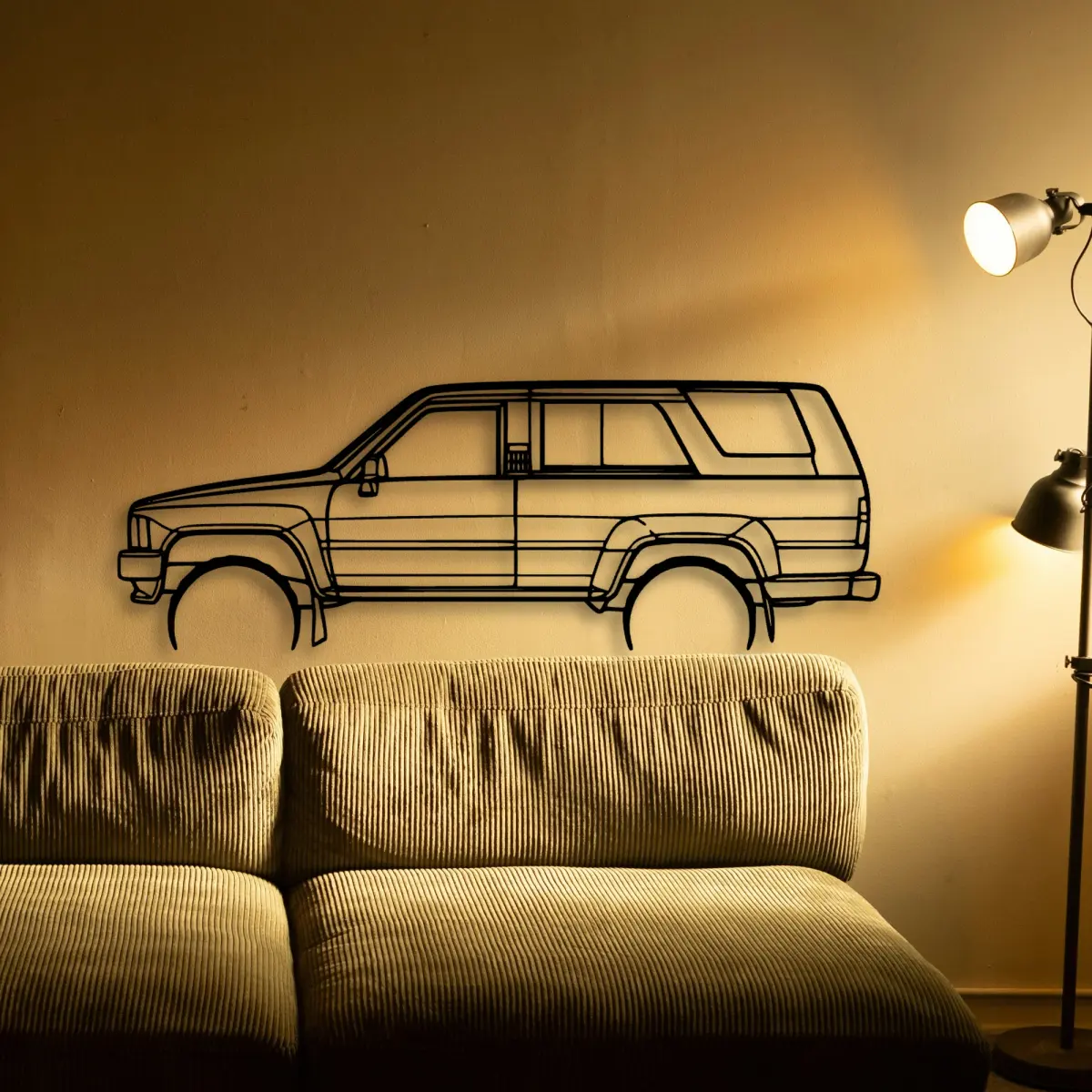
A laser-cut Toyota piece carries no colour of its own, which makes it a forgiving subject — and a demanding one, because every shadow counts.
The Toyota 4runner 1989 dates to 1989, and that year's proportions are exactly what the cut outline keeps — the roofline and the stance are period-correct, not stylised.
What makes the Toyota work as piece is that it carries no colour of its own. Cut from sheet metal and finished for indoor display, it sits quietly in almost any room while the outline does the talking.
Why it suits a studio wall
A Toyota in cut metal belongs in the spaces cars actually live in. Over a workbench or a parked car it reads instantly.
Context over close-up
A Toyota form reads best in a real room, not as a zoomed crop. Show the plane, not just the metal.
More than one on the plane
A row of Toyota outlines, each a different car, turns a wall into a timeline you can read at a glance.
Build the set
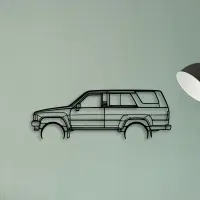
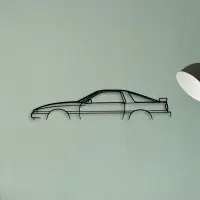
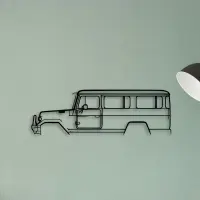
Era written into the line
You can often date a Toyota by its roof alone. The cut keeps those period cues so the shape reads as a moment without a caption.
Five sizes, one outline
Every Toyota form comes in the same five sizes: 50 cm, 80 cm, 100 cm, 120 cm and 140 cm. The price steps with the size, from $69.95 to $209.95.
- 50 cm — a shelf or a study; an accent, not a feature.
- 80 cm — still modest, but reads across a doorway.
- 100 cm — the safe feature-wall default.
- 120 cm — for rooms where the car is the subject.
- 140 cm — the full statement piece.
The shadow line is the second drawing. Where it falls tells you as much as the metal itself.
A piece does not need a frame to feel finished. The cut edge is the frame.
Give it room to mean something. A form left alone on a clear wall says more than the same shape lost in a crowd.
The plane behind should be the quietest thing in the room. Let the outline be the loud part.
Think in edges, not pictures. The cut defines the object, and the shape defines the cut.
Resist the urge to fill. An empty margin around the outline is what makes it feel considered.
Scale matters more than people expect. A piece that is too small disappears; one that is sized to the plane reads as intentional from the doorway.
Cut metal has a weight that printed art lacks. The shadow it casts is part of the piece, not an accident of the light.
Recognition is the whole point. The outline is built so the car reads before the words do.
Placement is a quiet decision. Eye level for a feature wall, slightly above a desk, and well clear of a door swing that would clip it.
A form ages better than a photograph. There is no moment to date it and no colour to fall out of fashion.
Small changes in height read as care. Keep the horizon line steady when you group more than one.
The form is the cheapest way to own the shape without owning the car.