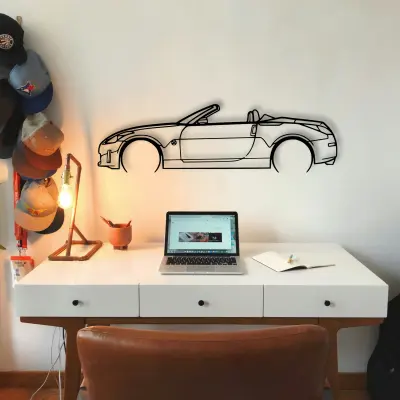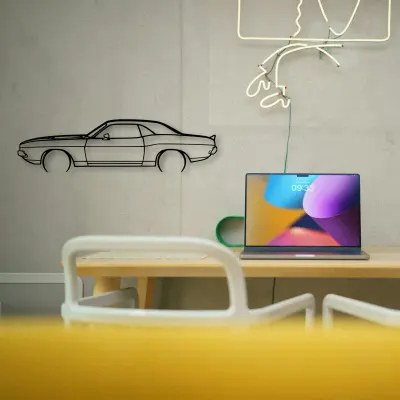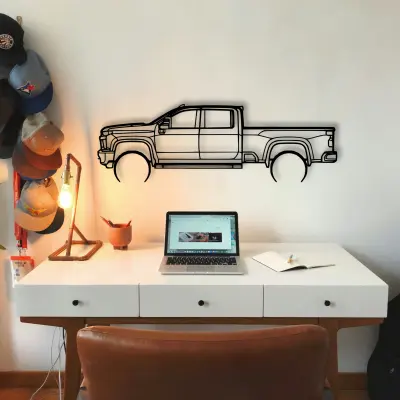
A Land Rover enthusiast does not leave the passion at the door. The drive, the stop, and the surface at home are one hobby, and an outline is the thread between them.
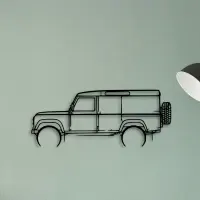
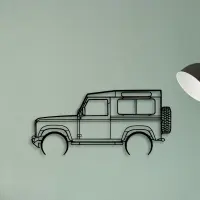
The Land Rover Defender 110 1992 dates to 1992, and that year's proportions are exactly what the cut outline keeps — the roofline and the stance are period-correct, not stylised.
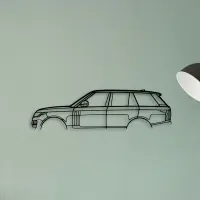
At Tinvibe the Land Rover is offered as a laser-cut outline in five size steps, from 50 cm to 140 cm, finished for indoor wall display. The smaller sizes suit a shelf or a study; the larger sizes take a full studio.
Salt air and the man cave
After a Land Rover seaside drive, the man cave is where the memory lands. An outline on the surface outlasts the salt.
Honest material, no colour
Because the Land Rover comes in bare cut metal, every proportion is exposed. That is harder than a photograph, and it is why a good outline feels earned.
Coastal roads and clean lines
A Land Rover outline loves a coastline: the long, low horizon is the same line the cutout keeps. Drive where the road meets the sea.
Five size steps for the memory
Five size steps, one outline. The Land Rover is offered from a 50 cm shelf piece up to a 140 cm statement, all cut to the same profile.
- 50 cm — a shelf or a study; an accent, not a feature.
- 80 cm — still modest, but reads across a doorway.
- 100 cm — the safe feature-wall default.
- 120 cm — for rooms where the car is the subject.
- 140 cm — the full statement piece.
Era written into the line
You can often date a Land Rover by its roof alone. The cut keeps those period cues so the shape reads as a moment without a caption.
More than one on the surface
If you collect drives, let the Land Rover be one of a set with a rule. Next to its rivals, the differences are obvious.
Build the set
Read it from the doorway, not up close. The whole point is the gesture the line makes at a distance.
An outline travels. Move it between rooms and it still makes sense, because the shape is the message.
Grouping works when the shapes contrast. A long low outline next to a tall upright one reads as a conversation, not a pile.
Recognition is the whole point. The outline is built so the car reads before the words do.
The best wall pieces are the ones you stop seeing as decor and start reading as a subject.
The room sets the size. A busy wall wants a bigger outline to hold its own; a calm wall lets a smaller piece breathe.
The surface behind should be the quietest thing in the room. Let the outline be the loud part.
Hang it where the light lands first. The edge you notice on the way in is the edge worth cutting.
Wall piece works best when it earns its place rather than filling a gap. A single well-chosen outline does more than a row of hesitant decoration.
Depth comes from the shadow. The gap between metal and wall is part of the composition, not a flaw.