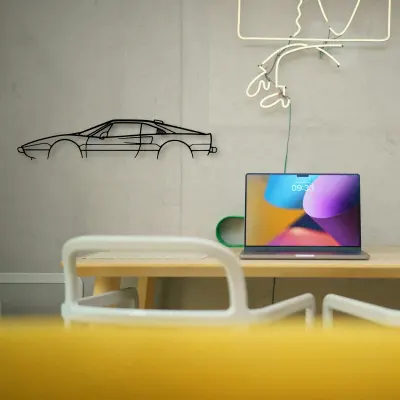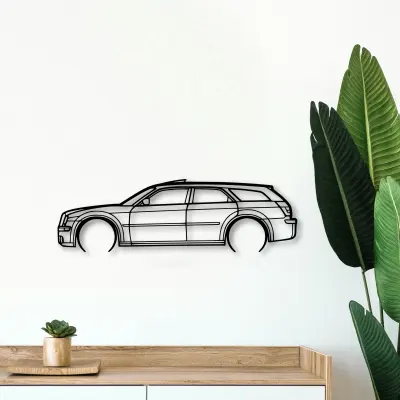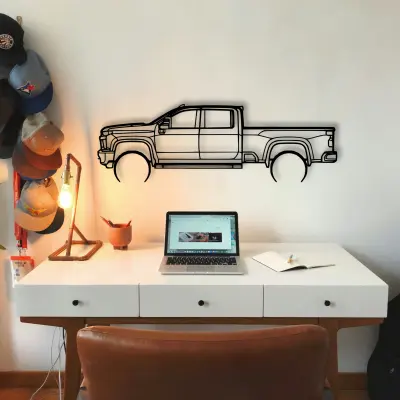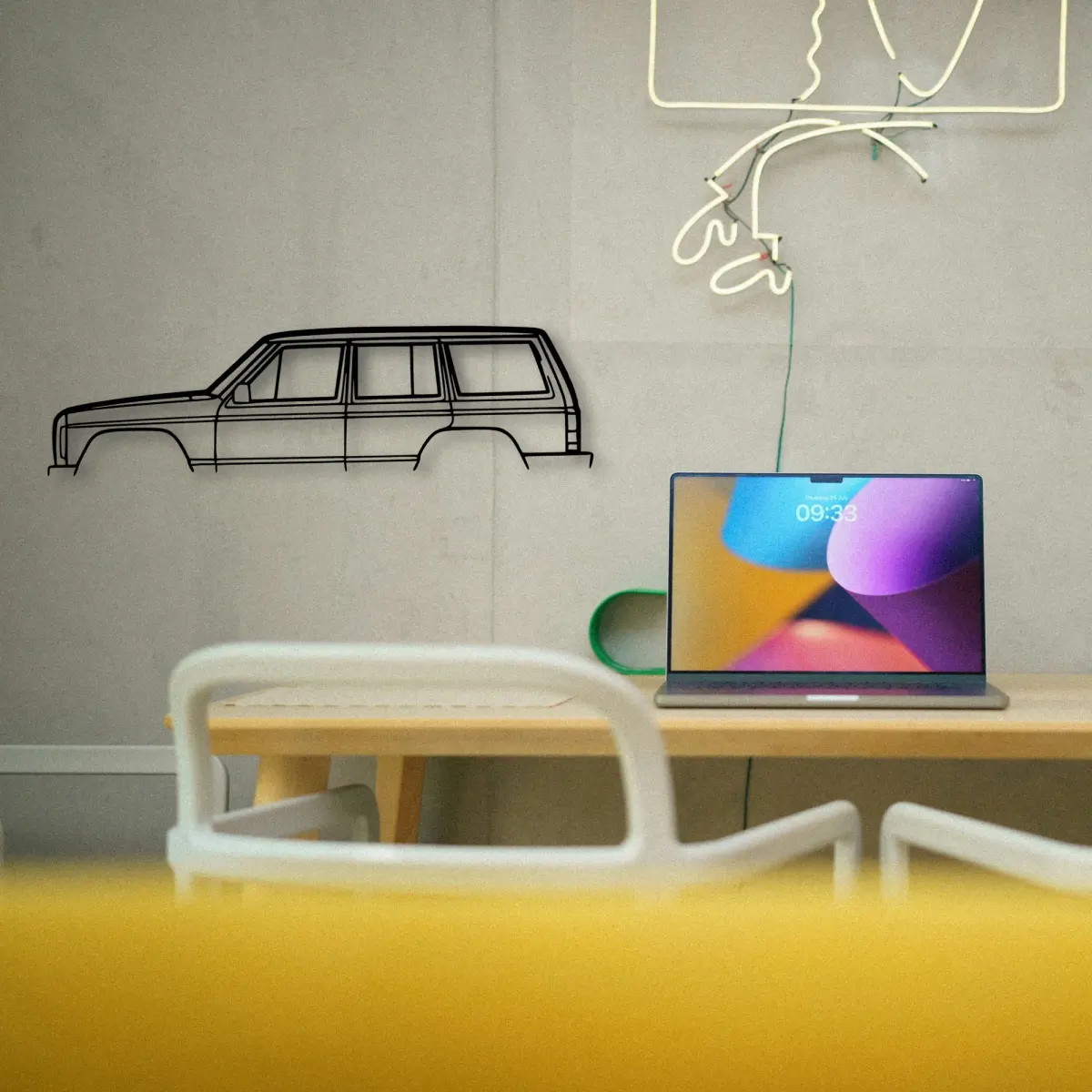
Most road trips are remembered in photos that never get printed. A Jeep cut outline turns the best of them into something you actually hang.
The Jeep Cherokee 2000 dates to 2000, and that year's proportions are exactly what the cut outline keeps — the roofline and the stance are period-correct, not stylised.
The Jeep pieces in our range are cut from sheet metal and delivered ready to mount, with the price stepping from $69.95 at 50 cm to $209.95 at 140 cm — a range that lets the same outline work over a desk or across a full wall.
More than one on the panel
A row of Jeep outlines, each a different trip, turns a wall into a timeline you can read at a glance.
Build the set
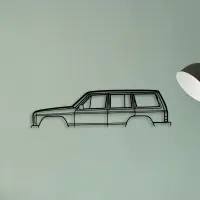
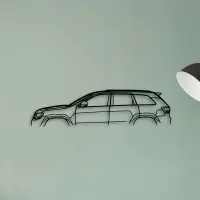
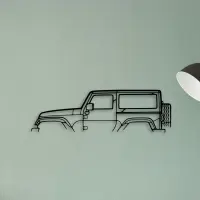
Reading it from across the room
Up close you admire the cut; from across the room you recognise the Jeep. The piece is designed so both readings land.
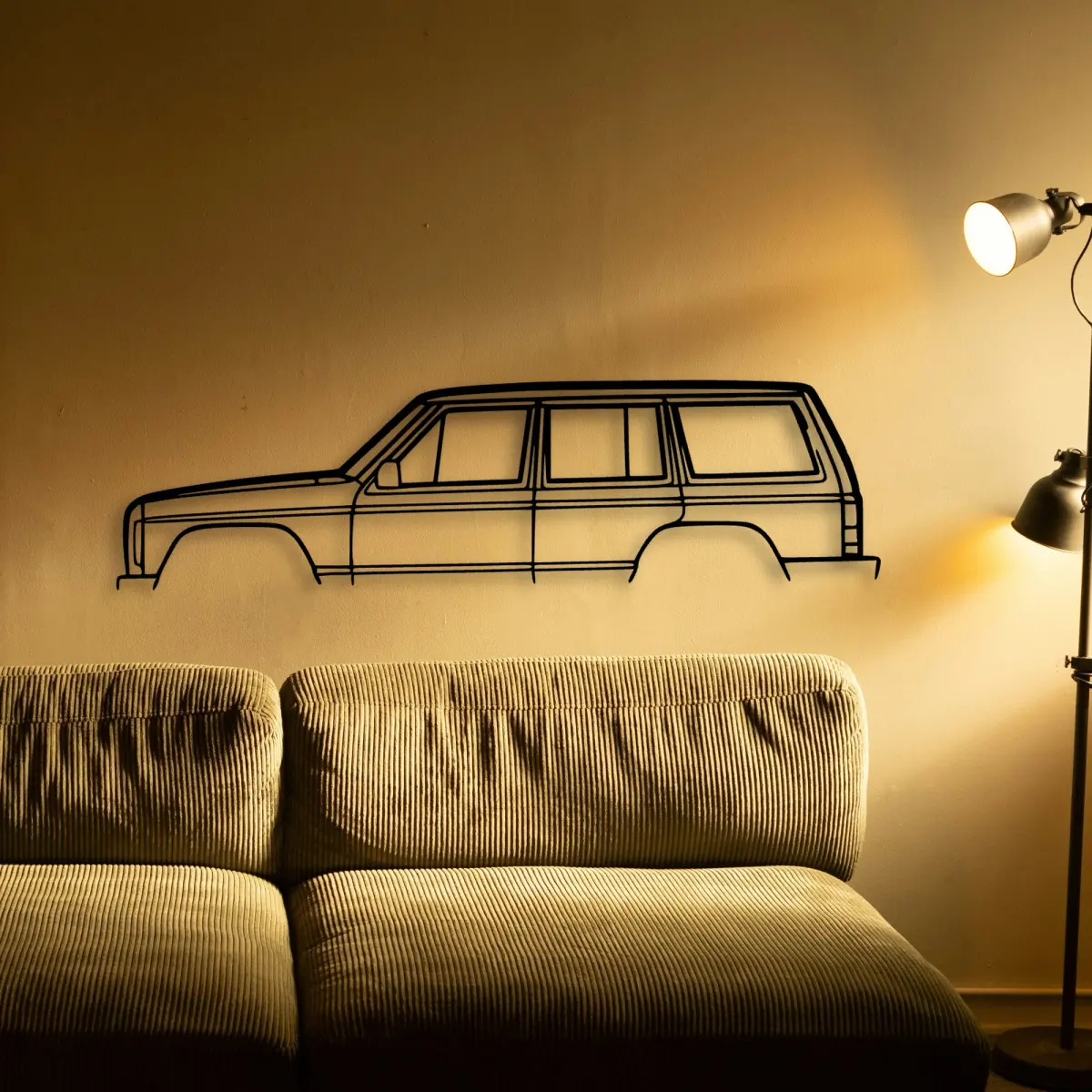
Cars-and-coffee rituals
A Jeep enthusiast's week has a Sunday shape: coffee, cars, and the outline that sums up the morning. The meet is the social half of the hobby.
What to hang after
After a Jeep meet, the panel is the recap. Hang the shape that best caught the morning and the day stays on display.
Five options for the memory
Every Jeep shape comes in the same five options: 50 cm, 80 cm, 100 cm, 120 cm and 140 cm. The price steps with the size, from $69.95 to $209.95.
- 50 cm — a shelf or a study; an accent, not a feature.
- 80 cm — still modest, but reads across a doorway.
- 100 cm — the safe feature-wall default.
- 120 cm — for rooms where the car is the subject.
- 140 cm — the full statement piece.
A row of identical small frames fights itself. One larger outline settles the panel instead.
Pick the outline that matches the room's energy: calm spaces want restraint, busy ones want a statement.
The best wall pieces are the ones you stop seeing as decor and start reading as a subject.
Colour is optional here. The outline carries the identity, so the panel behind it can stay exactly as it is.
Start with one. A single correct piece teaches the eye what the rest of the panel should do.
Metal keeps its line. Unlike paper, it will not curl, fade, or bow under a warm lamp.
A profile on the panel is a quiet kind of confidence. It does not shout the spec sheet; it simply states the shape.
Quiet rooms suit a smaller shape; loud rooms need one that can hold its own from across the space.
Grouping works when the shapes contrast. A long low outline next to a tall upright one reads as a conversation, not a pile.
A dedicated wall beats a crowded one. Give the car room and it repays the attention.
A shape travels. Move it between rooms and it still makes sense, because the shape is the message.
Scale matters more than people expect. A piece that is too small disappears; one that is sized to the panel reads as intentional from the doorway.