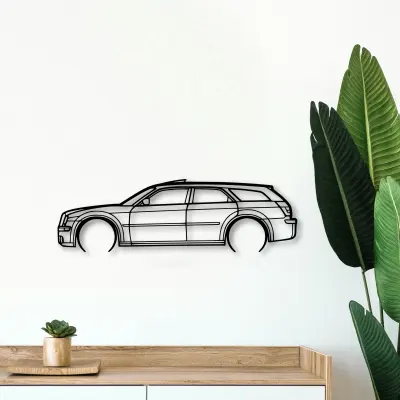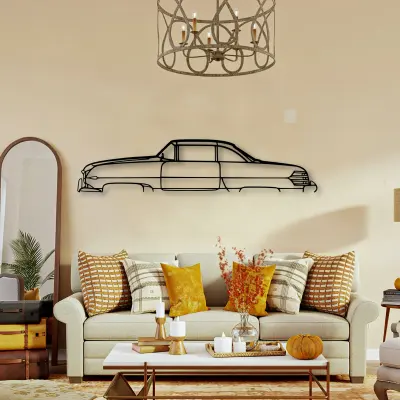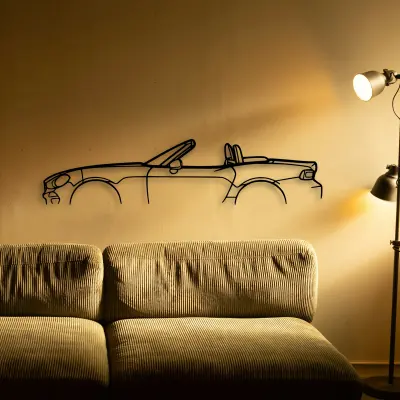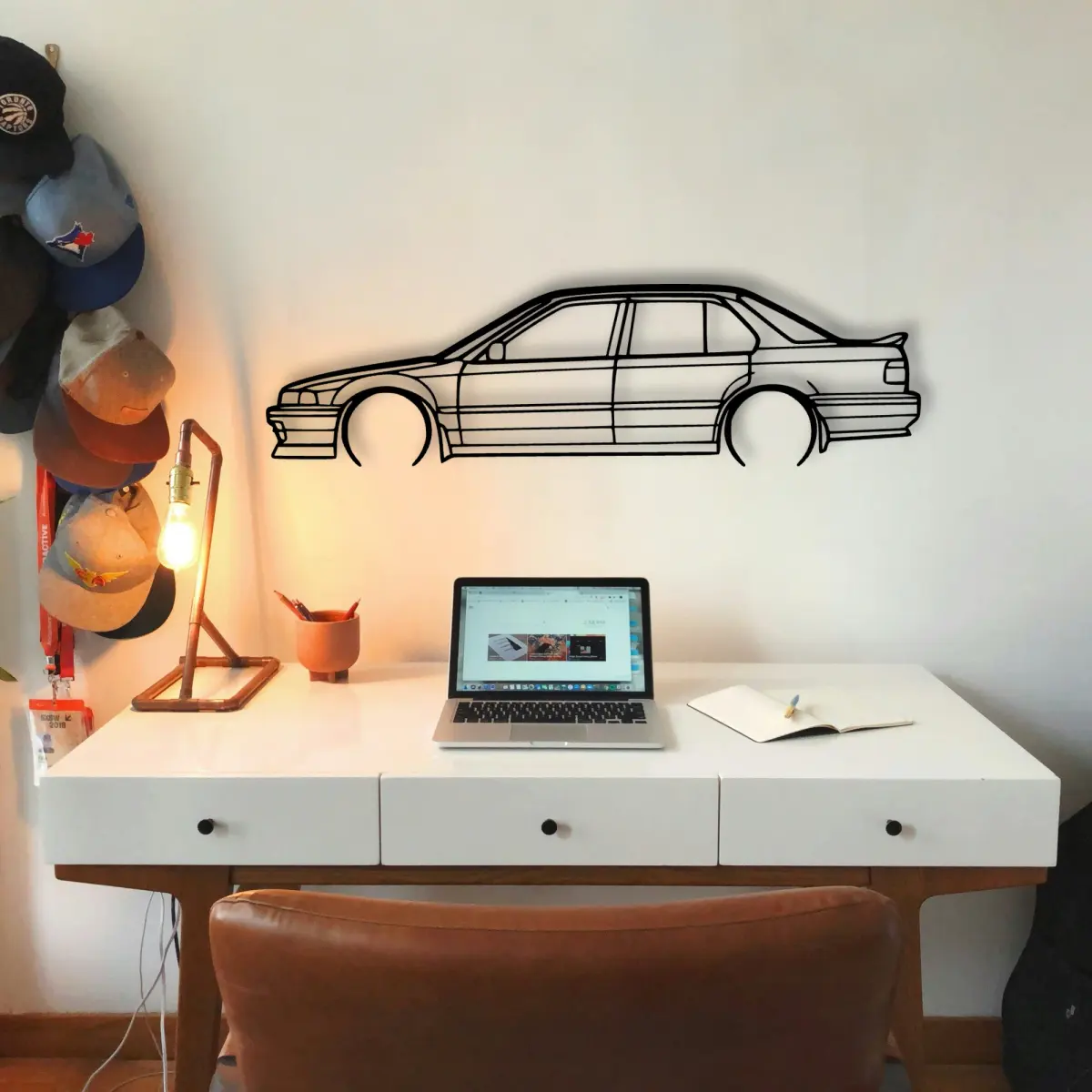
The Honda is the kind of shape people recognise instantly, which is why it works as both a road companion and a memory on the backing.
The Honda Accord 1990 dates to 1990, and that year's proportions are exactly what the cut outline keeps — the roofline and the stance are period-correct, not stylised.
The Honda pieces in our range are cut from sheet metal and delivered ready to mount, with the price stepping from $69.95 at 50 cm to $209.95 at 140 cm — a range that lets the same outline work by a workstation or across a full wall.
Why it suits a den wall
A Honda in cut metal belongs in the spaces cars actually live in. Over a workbench or a parked car it reads instantly.
The playlist is part of the drive
For a Honda enthusiast, the right soundtrack is a setting, not a distraction. Build it before you leave, not at the first corner.
More than one on the backing
If you collect drives, let the Honda be one of a set with a rule. Next to its rivals, the differences are obvious.
Build the set
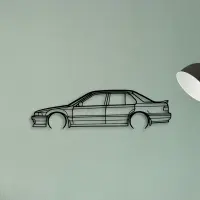
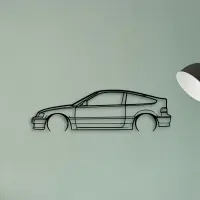
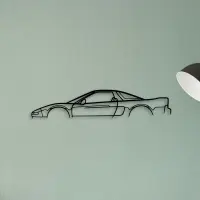
Reading it from across the room
Up close you admire the cut; from across the room you recognise the Honda. The piece is designed so both readings land.
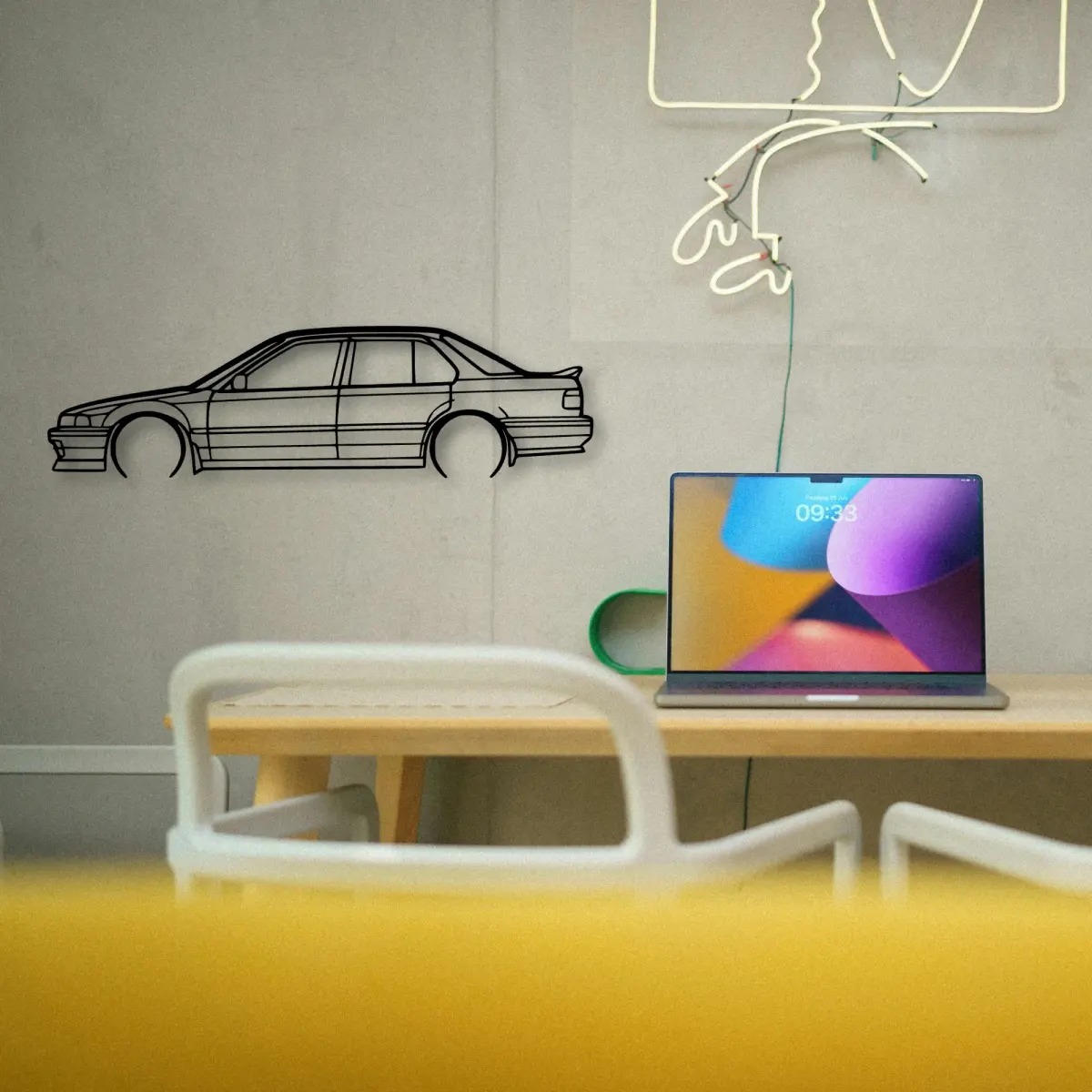
Size ladder for the memory
Size ladder, one outline. The Honda is offered from a 50 cm shelf piece up to a 140 cm statement, all cut to the same profile.
- 50 cm — a shelf or a study; an accent, not a feature.
- 80 cm — still modest, but reads across a doorway.
- 100 cm — the safe feature-wall default.
- 120 cm — for rooms where the car is the subject.
- 140 cm — the full statement piece.
The profile is the cheapest way to own the shape without owning the car.
Metal art works best when it earns its place rather than filling a gap. A single well-chosen outline does more than a row of hesitant decoration.
The right size is the one you forget to notice because it fits the backing so well.
Colour is optional here. The outline carries the identity, so the backing behind it can stay exactly as it is.
A row of identical small frames fights itself. One larger outline settles the backing instead.
A piece does not need a frame to feel finished. The cut edge is the frame.
The backing behind should be the quietest thing in the room. Let the outline be the loud part.
Think in edges, not pictures. The cut defines the object, and the shape defines the cut.
A profile on the backing is a quiet kind of confidence. It does not shout the spec sheet; it simply states the shape.
Pick the outline that matches the room's energy: calm spaces want restraint, busy ones want a statement.
A dedicated wall beats a crowded one. Give the car room and it repays the attention.
Lighting decides the mood. An even wash from above flatters the edge; a single hard spotlight only hardens one corner.
Light from the side reveals the cut; light from the front flattens it. Aim for the reveal.